Berlin Ukraine Summit Puts €230 Billion in Allied Support in Focus
Leaders from 37 countries will assess military commitments, air-defense funding and security guarantees for Ukraine at Berlin talks.
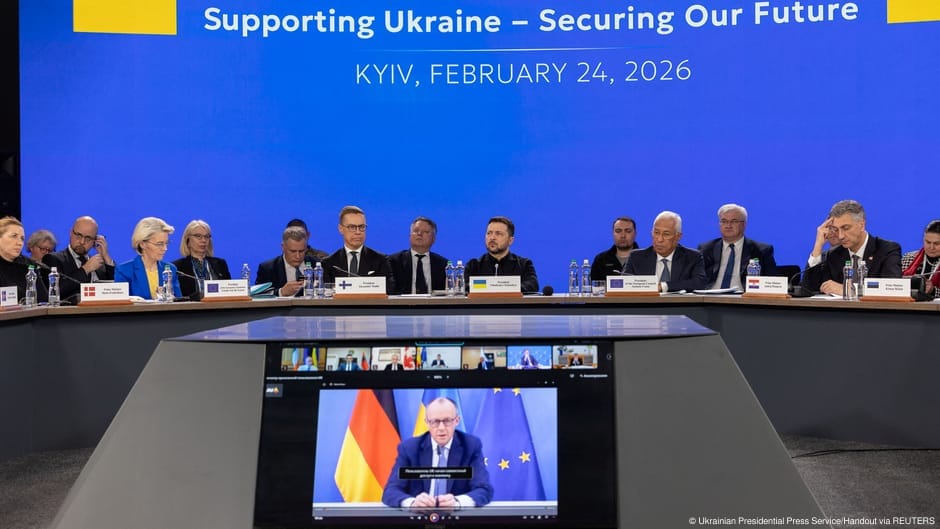
BERLIN — European leaders gathering in Berlin on November 19 are set to place the financing of Ukraine’s defense and long-term security at the center of discussions, with €230 billion in NATO and European Union support commitments providing the principal financial framework for the meeting.
The summit of the so-called coalition of the willing will bring together representatives from 37 countries, mostly at the level of heads of state and government, alongside senior leaders from the EU and NATO. The format is intended to coordinate partner support for further direct negotiations between Russia and Ukraine, with active participation by the United States and European countries.
Talks will follow a recent meeting of negotiators in Abu Dhabi and are expected to address the next diplomatic steps as well as additional support for Kyiv’s air-defense capabilities. For governments and investors monitoring European public finances, the meeting will offer further indications of how previously announced multiyear commitments may translate into defense spending, procurement and assistance flows.
Military and EU financing underpin the talks
A central financial reference point is NATO’s commitment to allocate €140 billion in military assistance during 2026 and 2027. The EU has also committed a €90 billion loan to support Ukraine over the same period. Together, the two programs represent €230 billion in planned support, although the source article does not provide a country-by-country allocation, disbursement schedule or breakdown between equipment, budget support and other expenditure.
The focus on air defense could carry implications for European defense manufacturers, national procurement budgets and the pace at which governments convert political pledges into contracts. It may also affect future fiscal planning as coalition members weigh military assistance alongside domestic spending priorities and existing NATO obligations.
Thomas Röwekamp, chairman of the Bundestag’s defense committee, said before the summit that Ukraine must not be pushed into territorial concessions while Russia is achieving at least part of its military objectives. He argued that the decisive consideration was ensuring Kyiv could enter negotiations from a position of strength.
“For this, it needs our military support and reliable security guarantees,” Röwekamp told the Rheinische Post, adding that Europe must act confidently and with unity.
Röwekamp also warned against an agreement that would reward Russian President Vladimir Putin for the war. “A peace that rewards Putin for his war of aggression would not be peace, but an invitation to the next aggression,” he said.
From a financial-reporting perspective, reliable security guarantees could imply commitments extending beyond the current two-year funding horizon. The Berlin discussions may therefore be scrutinized for signs of recurring obligations, new procurement mechanisms or additional EU-level financing. No further funding amounts were specified in the source.
High-level attendance signals policy importance
Marie-Agnes Strack-Zimmermann, chair of the European Parliament’s defense committee, welcomed the initiative to hold the negotiations in Berlin. She said the chancellor’s decision to convene the meeting at the Chancellery sent an important message to Russia and China that Germany and Europe would not stand by while others claimed the right to make decisions concerning European territory.
The meeting is being held at the invitation of German Chancellor Friedrich Merz, French President Emmanuel Macron and Prime Minister Andy Burnham. Its stated theme is “United for Peace in Ukraine and European Security.” Police have announced unprecedented security measures in Berlin’s government quarter, reflecting the seniority of the expected participants.
France, the United Kingdom and Germany serve as co-chairs of the coalition. Participants in its meetings include European Council President António Costa, European Commission President Ursula von der Leyen, EU foreign policy chief Kaja Kallas and NATO Secretary-General Mark Rutte.
The coalition format has existed since spring 2025. Its most recent in-person meeting was held in Paris on July 13, followed by a hybrid meeting on August 24. The Berlin session is expected to test whether members can maintain political cohesion while providing the military resources and financing that German lawmakers say are necessary to strengthen Ukraine’s negotiating position.
For financial stakeholders, the immediate issue is less the announcement of another headline package than the execution of existing commitments. The €140 billion NATO pledge and €90 billion EU loan establish the scale of support for 2026-2027; the summit may clarify how allied coordination, air-defense requirements and security guarantees shape the eventual allocation of those funds.



