Brazil Election Heads to Runoff as Flavio Bolsonaro Leads Lula With 47%
The first-round result sets up a market-sensitive runoff on October 25, with investors weighing political risk and corruption allegations.
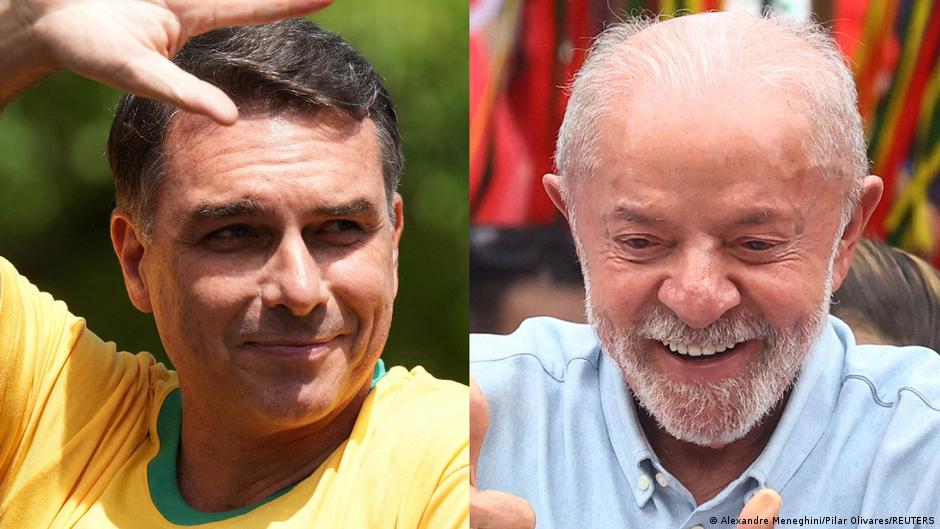
Brazil’s presidential election is headed to a second round after Flavio Bolsonaro, a senator from Rio de Janeiro state and the eldest son of former President Jair Bolsonaro, narrowly led the first-round vote with 47.03% of ballots, according to data from Brazil’s Central Election Commission released overnight on Monday, October 5.
Incumbent President Luiz Inacio Lula da Silva finished close behind with 45.16% of the vote after 99.99% of ballots had been counted. Turnout stood at 78.92%, underscoring the high political stakes in Latin America’s largest economy and setting up a closely watched runoff scheduled for October 25.
Because no candidate crossed the 50% threshold required to win outright, Brazil will again hold a second-round presidential vote. Runoffs have become a familiar feature of Brazilian presidential contests: every such election since the early 2000s has required a repeat vote.
With no candidate clearing the 50% threshold, Brazil’s election will be decided in a second round on October 25.
Investor Focus Shifts to Runoff Risk
For investors, the result introduces a new period of political uncertainty at a time when policy direction, fiscal management and institutional stability remain central to Brazil’s market outlook. The contest now pits Lula, a left-wing incumbent, against the son of the former president whom he defeated in the 2022 presidential runoff.
The 2022 contest ended with Lula defeating Jair Bolsonaro in the second round. The elder Bolsonaro refused to recognize the result, and his supporters took to the streets in protest. He was later sentenced to a lengthy prison term for attempting a coup.
The return of the Bolsonaro family name to the center of national politics is likely to be closely assessed by domestic and foreign investors monitoring Brazil’s sovereign risk, capital flows and the credibility of public institutions. While the source figures do not include market reaction or fiscal pledges, the narrow first-round margin points to a competitive runoff in which the candidates’ economic platforms and investor relations strategies may receive heightened scrutiny.
Flavio Bolsonaro, 45, campaigned in part on promises to fight crime. At the same time, he has previously faced suspicions of corruption and misappropriation of funds. In 2019, cases were opened against him over allegations involving payments to fictitious people listed among his subordinates, as well as suspicious transfers to his bank account.
Those allegations may become material to the runoff narrative, particularly for financial markets that tend to react not only to headline policy positions but also to governance concerns, judicial risk and questions about the management of public resources. For a candidate seeking executive authority over a major emerging-market economy, the balance between law-and-order messaging and past financial allegations could shape both voter perception and investor confidence.
Banco Master Probe Adds Financial-Sector Dimension
The campaign is also unfolding against the backdrop of an ongoing investigation in Brazil involving Banco Master and its largest shareholder, Daniel Vorcaro. Authorities are examining alleged fraudulent investment raising worth tens of millions of dollars from public and private funds, based on promises of high returns that could not be fulfilled. In practical terms, the allegations concern a possible financial pyramid scheme.
Vorcaro is also known as one of the producers of a complimentary biographical film about Jair Bolsonaro titled “Dark Horse.” The film’s storyline develops the former president’s claims about “stolen elections.” Media outlets have previously published correspondence between Vorcaro and Flavio Bolsonaro that may indicate the politician knew of the alleged fraudulent scheme and could have helped facilitate it, including through supposed cover provided by the allegedly expensive film production.
For a financial reporting readership, the Banco Master investigation is significant because it connects the political campaign to allegations involving public and private funds, investor solicitation and the promise of elevated returns. The case may sharpen questions about oversight, compliance and the relationship between political networks and financial-sector actors.
The source material does not state that Flavio Bolsonaro has been convicted in relation to the Banco Master matter, nor does it provide a formal charge against him in that investigation. It does, however, present published correspondence as potentially relevant to questions about his knowledge of the alleged scheme and possible assistance in its implementation.
The runoff will therefore be watched on several fronts: the electoral contest between Lula and Flavio Bolsonaro, the legacy of the 2022 vote and its aftermath, the legal troubles surrounding members of the Bolsonaro family, and the broader implications for Brazil’s investment climate.
In June 2026, Brazil’s Supreme Court sentenced Eduardo Bolsonaro, another son of the former president and also a political figure, to four years and two months in prison. The criminal case was prompted by Eduardo’s calls for the United States to impose sanctions on Brazil over the sentence handed to his father. Eduardo lives in the United States, and the case against him was heard in absentia.
As the October 25 runoff approaches, the first-round numbers leave both camps with little room for error. Flavio Bolsonaro enters the final phase as the narrow front-runner with 47.03%, while Lula remains within striking distance at 45.16%. For markets, the coming weeks will likely be defined by assessments of policy continuity, institutional risk and whether either candidate can reassure investors about governance and financial stability.



