Bundeswehr Revises Lithuania Tank Transit Plan to Limit Russia Tensions
The shift from road transit through Poland to rail highlights logistical planning around Germany’s expanding military presence in Lithuania.
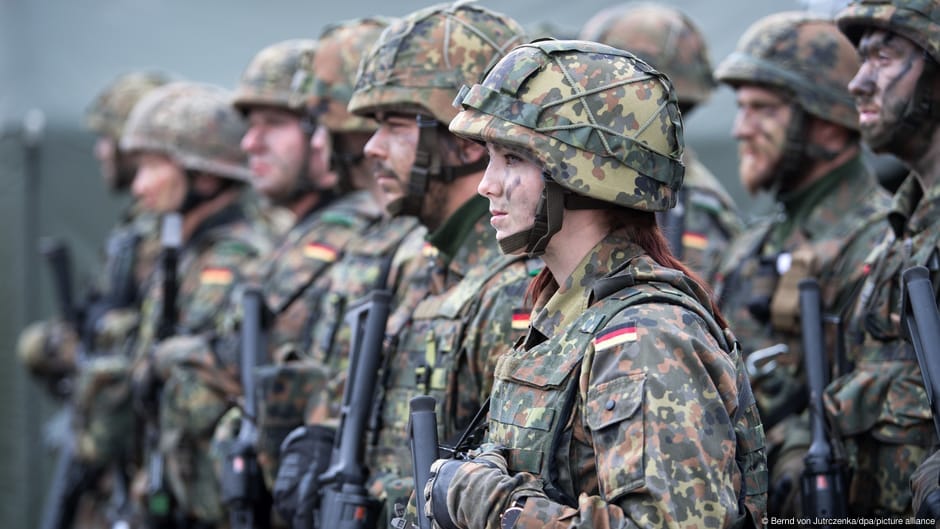
Germany’s armed forces will transport tanks to Lithuania by rail for the Grand Eagle 26 exercise instead of driving the military vehicles through Poland, according to the German tabloid Bild. The publication said the revised plan was intended to avoid provoking Russia as NATO forces conduct large-scale maneuvers in the Baltic region.
Bild reported during the night of Sunday, November 22, citing sources in Germany’s security establishment, that the Bundeswehr had abandoned the planned self-propelled transit through Polish territory. The tanks will now be moved by railway to Lithuania, changing the transport method but not the stated purpose of their deployment.
The report places renewed attention on the logistical requirements associated with Germany’s growing defense commitments in Lithuania. Although no financial figures were disclosed, the use of rail transport rather than a long road convoy changes the operational profile of the deployment and may affect the allocation of transport, maintenance and personnel resources within the exercise.
Transport change framed as operational flexibility
According to Bild’s sources, the decision was made to reduce the risk that images of German tanks traveling toward the Baltic states near the Belarusian border would be used to intensify Russian messaging about NATO activity in the region.
“Images of German tanks moving toward the Baltic states near the border with Belarus would be a propaganda gift for Putin,” Bild’s sources said.
Germany’s Defense Ministry, responding to journalists’ questions, said a change in the mode of transportation was not unusual. The ministry also emphasized that different transport arrangements must be practiced because they would need to remain available in the event of a real threat.
That explanation presents the switch as part of routine military readiness rather than a reduction in Germany’s commitment to the exercise. From a financial reporting perspective, the episode illustrates how defense planning can require parallel logistics capabilities, with armed forces expected to maintain flexibility across road and rail networks. The source reports, however, provided no cost comparison between the two options and disclosed no change to the exercise budget.
Large deployment underscores scale of commitments
Reuters previously reported that the Bundeswehr had moved more than 2,000 service members through Poland as part of the exercise, together with approximately 50 tracked vehicles and 650 wheeled vehicles. Bild gave a somewhat different account, reporting that roughly 1,800 troops and more than 750 pieces of equipment were participating.
The figures indicate the substantial scale of the operation even though the two reports differ in their personnel and equipment totals. Neither account included spending data, procurement values or estimates of the transport costs involved. There was also no information about whether the rail movement would be handled through military capacity, commercial contractors or a combination of the two.
For investors and companies exposed to European defense spending, the transport revision is relevant primarily as an indicator of the infrastructure needed to support military mobility. Rail access, equipment-loading capacity, cross-border coordination and vehicle maintenance are all necessary for deployments of this size. The available reporting does not identify any participating suppliers or disclose contracts connected with the maneuver.
More than 6,000 troops involved in Lithuania
At the same time, the Bundeswehr’s 45th Armored Brigade is conducting the Freedom Shield 26 II exercise. Across the two maneuvers in Lithuania, more than 6,000 military personnel are involved in total.
The simultaneous exercises demonstrate the breadth of Germany’s operational activity in Lithuania and the demands placed on transport and support systems. They also come as European governments and investors increasingly monitor the relationship between defense policy, public budgets and industrial capacity. In this case, however, the reports focused on troop movements and strategic signaling rather than balance-sheet effects or new expenditure commitments.
The change in transportation therefore should not be read as evidence of a disclosed financial revision. No additional appropriations, contract amendments or cost overruns were reported. The principal development is operational: German tanks assigned to Grand Eagle 26 will reach Lithuania by rail rather than traveling under their own power through Poland.
The Defense Ministry’s statement suggests that the Bundeswehr regards the ability to alternate between transport modes as a component of preparedness. The political rationale reported by Bild adds another consideration, with officials seeking to conduct the exercise while limiting imagery that could be used by Russia for propaganda purposes. For financial observers, the key unanswered questions concern the comparative cost of the routes and the resources required to maintain both options, none of which were quantified in the source material.



