Canada Entry Ban Clouds Financial Planning for 2027 Junior Hockey Event
Canada will bar Russian and Belarusian participants despite valid visas, creating new operational uncertainty for the 2027 tournament.
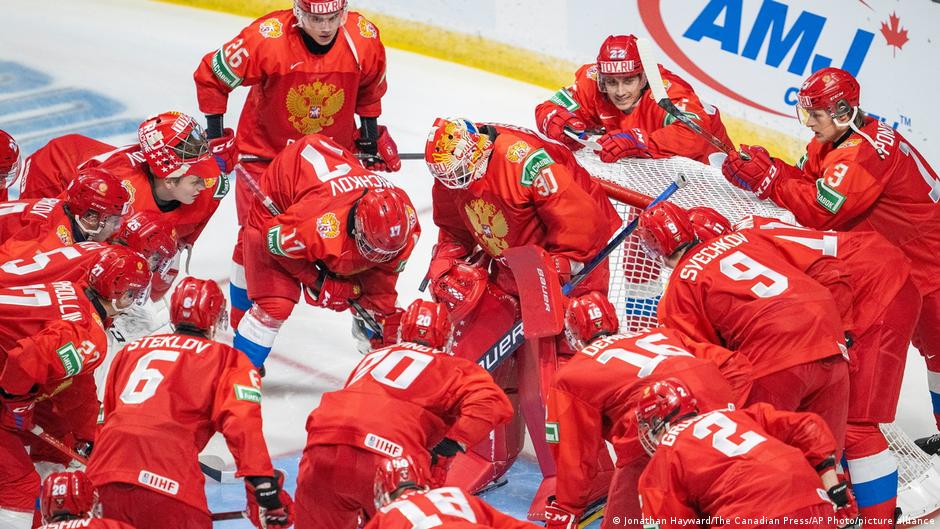
Canada plans to prevent Russian hockey players from entering the country for the 2027 IIHF World Junior Championship, even when they already hold valid visas, adding a significant operational variable to preparations for one of international hockey’s flagship events.
Canadian Sports Minister Adam van Koeverden said immigration authorities would assess Russian and Belarusian athletes and officials individually and take measures to deny them entry for the competition. The Canadian government has formally notified both the International Ice Hockey Federation, or IIHF, and Hockey Canada that visas will not be issued to Russian participants.
The decision complicates tournament planning after the Court of Arbitration for Sport, or CAS, ordered the IIHF on Oct. 30 to readmit Russian national teams to international competitions beginning in 2027, despite Russia’s continuing full-scale war against Ukraine. The World Junior Championship in Canada is expected to be the first tournament covered by that ruling.
Operational uncertainty for organizers
The championship is scheduled to run from Dec. 26 to Jan. 5 in Edmonton and Red Deer. Organizers now face a conflict between the CAS decision requiring Russia’s sporting reinstatement and the Canadian government’s authority over admission to the country.
For Hockey Canada and the IIHF, the dispute introduces uncertainty around scheduling, team participation, venue operations and other tournament-related commitments. The source announcement provided no financial estimates, revenue projections or revised budget figures connected with the entry restrictions. However, the unresolved composition of the field could affect planning assumptions used by organizers, commercial partners and other stakeholders.
The IIHF has said it disagrees with the CAS ruling and pointed to several practical problems, including visa access, security arrangements, logistics and the difficulty of changing the tournament format on short notice. Those concerns relate directly to the execution of the event, although the federation did not disclose the expected financial impact.
“The minister will take measures to conduct assessments on a case-by-case basis and prevent Russian and Belarusian athletes and officials from entering Canada to participate in competitions, regardless of whether they hold valid visas,” van Koeverden said, as quoted by TSN.
Van Koeverden said the measures were not directed against Russian or Belarusian people. He said their purpose was to stop the governments of Russia and Belarus from using international sporting competitions staged in Canada as platforms for state representation, political legitimization and propaganda.
Canada’s position continues to allow individual athletes competing under neutral status to participate in international sporting events hosted in the country. The announced restriction applies to Russian and Belarusian athletes and officials seeking to attend the championship in a representative capacity.
“Canada’s position remains unchanged: while Russia continues its war of aggression against Ukraine, there can be no return to business as usual. Canada will continue to support Ukraine,” van Koeverden said.
Team changes could reshape the tournament
Prime Minister Mark Carney had previously said on Nov. 4 that Russian hockey players would not receive visas to participate in the 2027 championship. Van Koeverden’s latest statement goes further by indicating that existing visas would not guarantee admission.
The Norwegian Ice Hockey Federation, or NIHF, said on Nov. 8 that Russia had been assigned 10th place in the championship’s new competition structure following the CAS ruling. According to the NIHF, that change would move Norway, as the lowest-ranked team, into Division 1A.
A draft championship schedule distributed by the IIHF placed Russia in Group B alongside Canada, the Czech Republic, Switzerland and Latvia. Canada’s planned entry restrictions now call that lineup into question and leave the final competition structure unresolved.
Any further adjustment would require the IIHF and participating federations to reconcile sporting eligibility with Canadian immigration policy. That could involve changes to the field, group allocations or match schedule, all of which are relevant to operational planning. No revised schedule or alternative host arrangement was announced in the source material.
From a financial-reporting perspective, the central issue is the absence of quantified guidance. Neither the Canadian government nor the hockey bodies cited in the announcement provided estimates for additional security, logistics or restructuring costs. There was also no disclosure concerning ticketing, sponsorship, broadcasting or other commercial effects.
Until the participation question is settled, investors and commercial counterparties connected to the event have limited visibility into the tournament’s final format. The CAS ruling establishes Russia’s eligibility under international sports arbitration, but Canada’s government retains control over entry into the host country, leaving organizers to plan around two conflicting requirements.



