CDU/CSU Support in Germany Falls to 2021 Levels Amid Rising AfD Popularity
Conservative bloc CDU/CSU sees voter support drop to 20%, the lowest in five years, while far-right AfD leads polls at 28%.
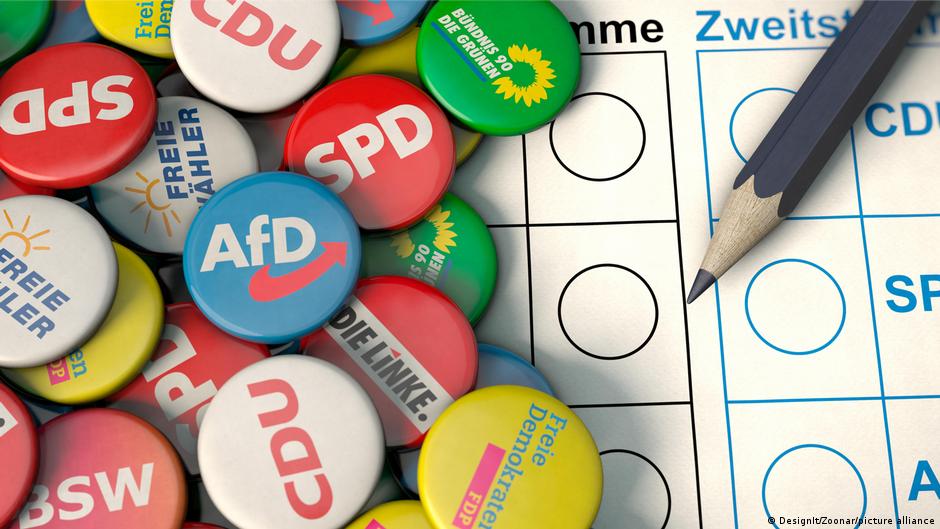
Germany’s leading conservative alliance, the Christian Democratic Union and Christian Social Union (CDU/CSU), has experienced a significant decline in voter support, dropping to 20%, the lowest level recorded in the past five years. This new low comes from recent public opinion polling conducted by the INSA Institute, highlighting a shift in the political landscape ahead of key state elections in September.
Polling Shifts Signal Growing Strength for Far-Right AfD
The INSA survey results reveal the far-right party Alternative for Germany (AfD) as the current frontrunner in voter preference, commanding 28% support nationwide. This positions the AfD significantly ahead of all other parties, including the traditionally dominant CDU/CSU bloc. The Green Party maintains steady backing at 13%, while the Social Democratic Party (SPD) and The Left both hold 12% support.
These numbers suggest a fragmentation of the political center and a potential realignment of voter loyalties, which complicates forecasting outcomes for upcoming elections. Notably, the Free Democratic Party (FDP) passes the parliamentary threshold with 5%, whereas the newly formed left-wing populist “Sarah Wagenknecht Union” fails to reach the 5% barrier, garnering just 3% support.
“Polls reflect moods at the moment of the survey and should not be taken as definitive predictions, especially as voters increasingly decide late in the campaign,” analysts note.
With elections scheduled in three federal states—Saxony-Anhalt, Mecklenburg-Western Pomerania, and Berlin—the political stakes are high. Saxony-Anhalt, in particular, presents an opportunity for the AfD to potentially form a state government for the first time, an outcome that would mark a significant shift in German politics.
Experts caution that the traditional party loyalties in Germany have weakened, making it harder for pollsters to accurately predict electoral outcomes. Voter volatility means the current polling snapshot predominantly captures transient sentiments rather than assured trends.
From a financial and investor relations perspective, these political developments may introduce uncertainty in the regulatory and economic environment in Germany. Markets typically respond to shifts in governance and policy direction, making it critical for stakeholders to monitor election outcomes and potential coalition dynamics closely.
As Germany is Europe’s largest economy, political stability and policy continuity are key factors influencing investor confidence and financial market performance. Any significant changes in government composition could impact fiscal policies, regulatory frameworks, and economic reforms, with direct consequences on business operations and market forecasts.