Colombia Declares State of Emergency After Devastating Magnitude 7.4 Earthquake
Colombian government mobilizes resources following earthquake that caused over 130 deaths and significant infrastructure damage.
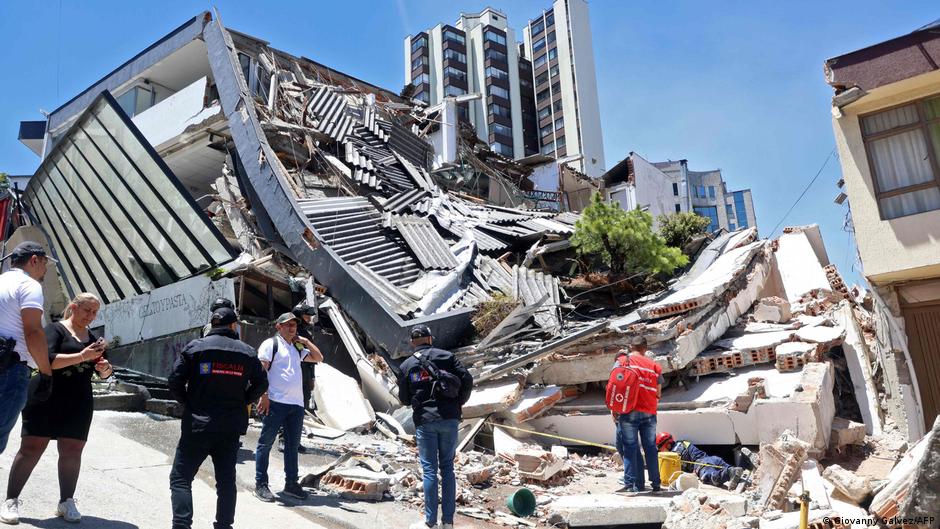
Colombia’s newly inaugurated President Abelardo de la Espriella has declared a nationwide state of emergency in response to a powerful magnitude 7.4 earthquake that struck the western region of the country on August 10. The disaster has resulted in at least 132 fatalities and hundreds of injuries, highlighting urgent humanitarian and economic challenges for the government and investors.
Economic and Infrastructure Impact
The earthquake’s epicenter was located near the city of San José del Palmar at a depth of approximately 103 kilometers, marking it the strongest seismic event recorded in Colombia in the 21st century. It caused extensive damage, with over 1,500 residential buildings severely affected in key cities such as Pereira, Cali, and Manizales. Approximately 60 buildings completely collapsed, while 18 hospitals and 52 schools sustained structural damage.
These damages pose a significant strain on Colombia's public infrastructure and social services, likely impacting the government’s budget and requiring substantial reconstruction spending. The potential rise in the death toll further underscores the urgency of coordinated emergency response and long-term recovery planning.
"All institutional resources will be mobilized to adequately respond to the disaster. First and foremost, it is necessary to rescue people trapped under debris," declared President de la Espriella shortly after taking office on August 7.
The government’s financial response will be closely monitored by investors and credit agencies, as the scale of the disaster may affect Colombia’s fiscal outlook and economic stability.
International Aid and Political Context
The U.S. Department of State has announced a $15.5 million emergency aid package to support relief efforts in Colombia. The assistance reflects strong bilateral ties and Washington’s commitment to backing the administration of President de la Espriella, who defeated leftist candidate Ivan Cepeda in June’s runoff election.
De la Espriella’s administration has emphasized deregulation and a tough stance on narcotics-related armed groups, including plans for large-scale prison construction modeled on El Salvador’s approach. These policy priorities may face adjustments as resources are redirected toward disaster management and reconstruction.
U.S. Secretary of State Marco Rubio highlighted the importance of regional cooperation on security and economic relations in a public statement following de la Espriella’s election, signaling continued strategic engagement despite the unexpected crisis.
As Colombia grapples with the immediate humanitarian consequences and longer-term economic implications of the earthquake, analysts and stakeholders will be assessing the impact on national financial metrics, government spending priorities, and investor confidence.