Czech Public Broadcasters Face 15% Funding Cut Under Reform Plan
A proposed shift from household fees to state funding has triggered mass protests and warnings over broadcaster finances and independence.
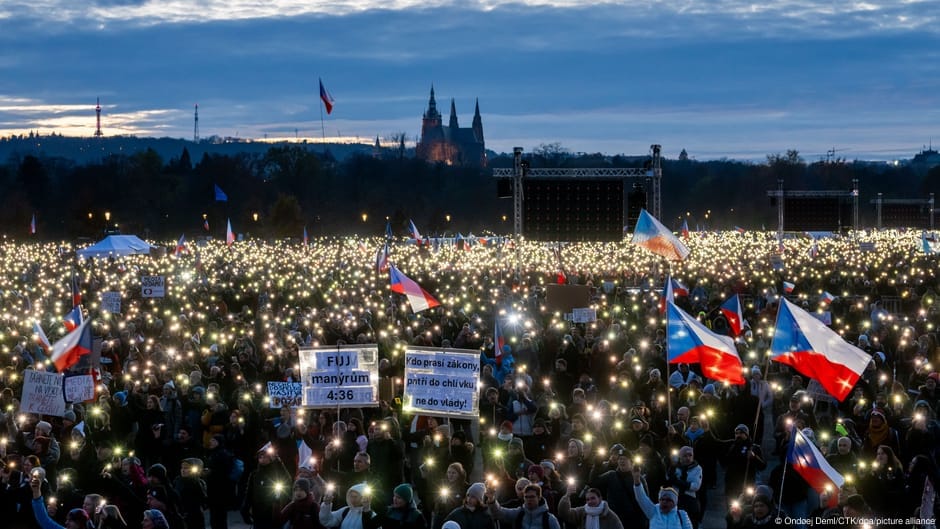
Czech public television and radio face a 15% reduction in available funding under a government proposal that would abolish monthly household licence fees and replace them with direct financing from the state budget. The plan has prompted warnings from broadcasters about the effect on their operations and sparked a mass demonstration in Prague over the potential loss of editorial independence.
Organisers estimated that approximately 400,000 people joined the anti-government protest on Sunday, November 15, making it potentially one of the Czech Republic’s largest demonstrations since the Velvet Revolution. Protesters gathered at Prague’s Letná area to demand that the authorities withdraw the legislation or involve experts capable of developing effective safeguards against political influence.
The current funding model requires Czech households to pay 205 koruna, equivalent to about €8.50, each month to support public-service television and radio. The government wants to eliminate that charge and finance the broadcasters through annual budget allocations instead. Prime Minister Andrej Babiš, a billionaire who heads a governing coalition of right-wing and populist parties, says the proposal fulfils an election pledge to reduce the financial burden on citizens.
Broadcaster budgets would return to earlier nominal levels
For the public broadcasters, however, the proposed model would produce an immediate deterioration in their financial position. Available funds would decline by 15%, according to the figures cited in the debate. Czech Television’s nominal budget would return to its 2008 level, while the radio broadcaster’s budget would fall back to its 2005 level, despite increases in operating costs since those years.
Television and radio companies have called that outcome unacceptable. Their objections reflect both the size of the proposed cut and the loss of a dedicated revenue stream. Under the existing arrangement, household payments provide recurring income that is separate from the government’s general budget. Moving those funds onto the state balance sheet would make broadcaster financing dependent on political decisions over appropriations.
That change would also alter the institutions’ longer-term financial planning. A 15% decline in available resources, combined with costs that have risen since the mid-2000s, could constrain programming, staffing and broadcasting capacity. Public media employees demonstrated the operational implications in early November by staging a strike that included restrictions on broadcasting.
“An elected government has the right to govern the country. But it does not have the right to do whatever it wants and dismantle democratic institutions,” protest organiser Mikuláš Minář said.
Minář chairs Milion Chvilek, the initiative that organised the Prague demonstration. Critics argue that replacing a household-funded system with annual state financing could threaten not only the independence of the broadcasters but also their continued existence in their current form.
Legislative process adds to governance concerns
Activists, civil society organisations and Czech opposition parties have also criticised the way the governing parties advanced a bill with significant implications for public-media governance and funding. The legislation was introduced for its first reading outside the planned parliamentary schedule on Friday, October 23, with a vote set for the same night—an approach described as highly unusual in Czech political practice.
The protest was named “Letná against 4:36,” referring to the time scheduled for the vote. For opponents, the timing reinforced concerns that the financial restructuring was being pursued without sufficient scrutiny of its balance-sheet effects or adequate guarantees protecting broadcasters from political pressure.
The governing coalition includes the anti-immigration Freedom and Direct Democracy party, known as SPD. Coalition representatives have previously criticised media coverage of their activities. The opposition has compared the proposed changes with the process through which public-service media came under government control in Hungary during Viktor Orbán’s rule.
From a public-finance perspective, the proposal would remove a visible monthly obligation from household budgets while transferring responsibility for the same institutions to government expenditure. Babiš has presented that shift as financial relief for citizens. Critics counter that the reform combines lower overall funding with greater political control over the timing and scale of future allocations.
The dispute therefore extends beyond the headline reduction in household payments. It concerns whether Czech public broadcasting can maintain sufficient and predictable funding when competing with other spending priorities in the state budget. Protesters are calling either for the bill to be withdrawn or for independent specialists to participate in its review and establish credible guarantees of institutional autonomy.
With broadcasters already restricting output during the November strike and hundreds of thousands of demonstrators opposing the plan, the government faces pressure to explain how a 15% funding reduction would be absorbed. The central financial question is whether the proposed budget-based model can deliver stable resources while preserving the operational and editorial independence currently supported by dedicated household fees.



