Democrats Secure Largest US House Majority Since 1992 After North Carolina Win
The party is projected to hold at least 258 House seats and 56 Senate seats, reshaping the outlook for federal budgets and fiscal policy.
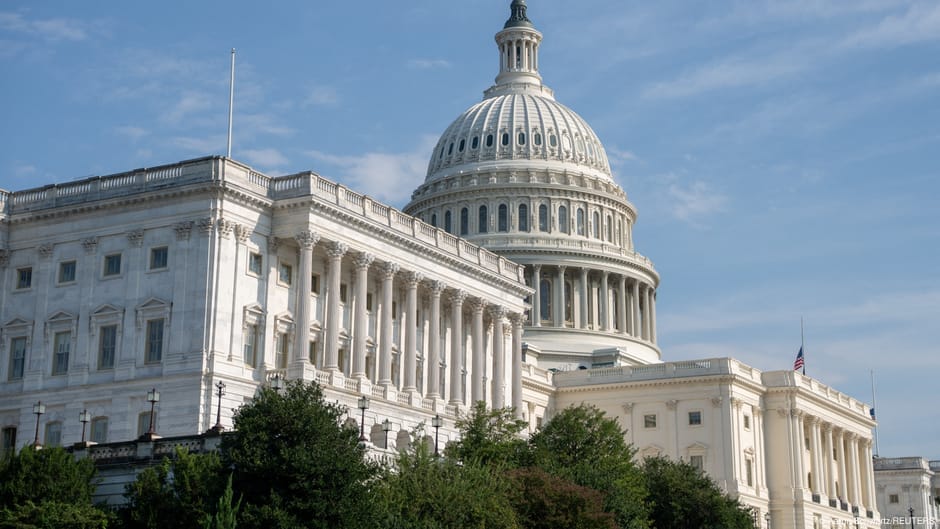
The Democratic Party is set to control at least 258 of the 435 seats in the US House of Representatives, securing its largest representation in the chamber since 1992 and strengthening its position in negotiations over federal spending, taxation and economic policy.
The latest gain came in North Carolina, where the Associated Press projected Democrat Chuck Hubbard as the winner on Sunday evening, November 22, after 99% of votes had been counted. Hubbard held 48.7% of the vote and led Republican Virginia Foxx by just 300 votes. Winners had yet to be determined in four other House races.
The result gives Democrats the largest House majority achieved by either US political party during the current century, according to House Democratic leader Hakeem Jeffries.
“House Democrats have just secured the largest majority that either party has had in Congress this century,” Jeffries said.
The scale of the majority is significant for financial markets and corporate planning because the House plays a central role in originating tax legislation and approving federal appropriations. A larger governing margin can reduce the influence of individual lawmakers during votes on budgets, revenue measures and other financial legislation, although the unresolved contests could still add to the party’s final seat total.
Congressional balance shifts toward Democrats
The last time Democrats won 258 House seats was in 1992. The party came close in 2008, when it secured 257 seats. Republicans, by comparison, controlled 247 seats in the lower chamber from 2015 to 2017, their largest recent majority there.
The November 3, 2026 midterm elections also delivered Democrats 56 of the Senate’s 100 seats. Their candidates recorded unexpected victories in states traditionally associated with Republican support, including Alaska, Texas, Kansas, Iowa, Ohio, South Carolina and Mississippi.
Control of both chambers provides the party with a broader legislative base for considering annual spending bills and other measures affecting the federal balance sheet. For investors, the composition of Congress is an important input when assessing the direction of fiscal policy, potential changes to corporate or individual taxation, infrastructure funding and the government’s borrowing requirements. The election results themselves do not establish the details of any future policy package, but they alter the political framework within which such decisions will be made.
The 258-seat threshold also gives Democrats a substantial cushion above the 218 seats generally required for a House majority when all seats are filled. That margin may make it easier for party leaders to advance financial legislation despite internal disagreements, though major policy decisions will still depend on the priorities of lawmakers and the executive branch.
Alaska result underscores broader electoral gains
Democrats also won Alaska’s governorship for the first time since 1998. Jonathan Kreiss-Tomkins received 51% of the vote, comfortably finishing ahead of several Republican rivals.
The gubernatorial result adds a state-level dimension to the party’s national gains. Governors can influence state budgets, investment programs and fiscal priorities, while congressional delegations shape federal funding and legislation. In Alaska, the change in political leadership follows Democratic victories in both the state’s Senate contest and other traditionally Republican areas across the country.
From a financial reporting perspective, attention will now turn from electoral arithmetic to the legislative agenda. Companies and investors will be watching forthcoming budget proposals, committee leadership appointments and any announced changes in tax or spending priorities. Those developments will provide more concrete indications of how the expanded Democratic majority may affect specific industries, federal expenditure and the wider economic outlook.
With four House races still undecided, the party’s representation could rise beyond the confirmed minimum of 258 seats. Even at that level, however, Democrats have already matched their strongest House performance in 34 years and surpassed the 257 seats they obtained in 2008. Combined with 56 Senate seats, the outcome gives the party a commanding presence in Congress following the 2026 midterms.



