Dodik Allies Lead Bosnia Vote, Keeping Fiscal Policy in Familiar Hands
Preliminary results point to continuity in Bosnia and Herzegovina’s institutions, with ruling-party candidates retaining key posts.
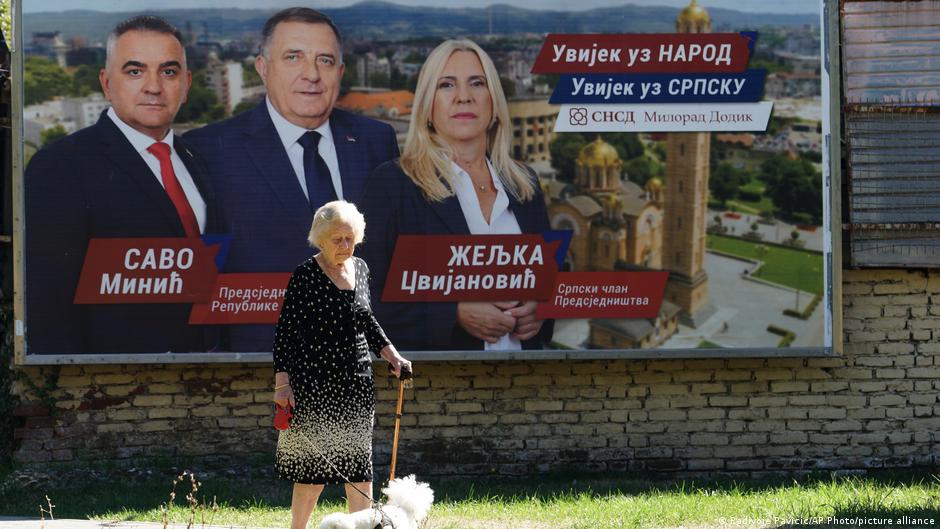
Preliminary election results in Bosnia and Herzegovina indicate that candidates backed by ruling parties, including allies of Milorad Dodik, have prevailed across key national and regional contests, pointing to political continuity in a system closely watched by investors, lenders and public-finance observers.
Savo Minic, the prime minister of Republika Srpska, won the race for president of the Serb-majority region, according to early results. Minic was supported by former Republika Srpska president Milorad Dodik, a politician known for close ties to Russia. A Dodik associate, Zeljka Cvijanovic, was also on track to remain in Bosnia and Herzegovina’s tripartite presidency as the Serb member.
The elections covered members of the presidency, the central parliament, two regional parliaments and the presidency of Republika Srpska. Based on preliminary results published by the Central Election Commission on the evening of Sunday, October 4, the vote produced no major surprises: candidates from governing parties led the main races.
Continuity in Institutions and Policy Risk
For financial markets and institutions monitoring Bosnia and Herzegovina, the outcome suggests continuity rather than a reset. The country’s governance structure, created under the 1995 Dayton Accords, has long been regarded by many analysts as inefficient. That institutional complexity affects the pace of reforms, fiscal coordination and the ability to present unified policy positions to domestic and international stakeholders.
After 95% of ballots had been counted, Denis Becirovic remained the leading candidate for the Bosniak seat in the presidency. Becirovic, who had previously served as chairman of the presidency, received about 38% of the vote. Darijan Filipovic was preliminarily set to represent Croats in the presidency, with about 48% of votes. Among Serb voters, Cvijanovic led with about 55%.
Bosnia and Herzegovina has a unique presidency system in which the role of head of state is shared by three representatives: one Bosniak, one Croat and one Serb. The arrangement was established under the Dayton Accords, which were designed to settle divisions among Bosnian Muslims, Orthodox Serbs and Catholic Croats and to end the civil war. The resulting political architecture remains central to assessments of governance risk, budget execution and longer-term investment predictability.
Preliminary results published by the Central Election Commission showed ruling-party candidates ahead in the main national and regional races.
The main uncertainty in the vote was the race for president of Republika Srpska, an entity within Bosnia and Herzegovina populated mainly by Serbs. The contest pitted opposition candidate Branko Blanusa against Minic, the regional prime minister. Preliminary results showed Minic ahead of Blanusa in most electoral districts in Republika Srpska. Although Blanusa won some districts, the Central Election Commission data indicated that those gains did not alter the overall result.
Republika Srpska Vote Strengthens SNSD Position
Minic and Cvijanovic both ran on behalf of the Alliance of Independent Social Democrats, known as SNSD, the party founded by Dodik. The party’s performance is significant for fiscal and balance-sheet observers because Republika Srpska’s political leadership plays a major role in shaping regional budget priorities, debt management debates and relations with state-level institutions.
According to the Central Election Commission, SNSD was also winning the election for the Republika Srpska parliament, the National Assembly. The same party received the support of a majority of Bosnian Serb voters in elections to the lower house of the national parliament, the House of Representatives of the Parliamentary Assembly.
That concentration of support across regional and state-level contests gives SNSD a stronger position in legislative negotiations. For investors and creditors, the result may reinforce expectations that policy direction in Republika Srpska will remain broadly aligned with Dodik’s political camp, even though Dodik himself is formally barred from political activity.
Dodik was forcibly removed from office in 2025 for failing to comply with decisions of Bosnia and Herzegovina’s Constitutional Court and international agreements. Under the court decision, he is banned from political activity for six years. Dodik refused to recognize the ruling and traveled to Moscow seeking support.
Dodik has already congratulated both Minic and Cvijanovic on their victories. The former regional president’s influence remains a key variable in how the election result is likely to be interpreted beyond Bosnia and Herzegovina, particularly because of his Russia ties and his recent contacts with Russian officials.
Dodik and Minic met Russian President Vladimir Putin in the Kremlin on September 29. While the preliminary election results are primarily a domestic political event, that meeting adds a geopolitical dimension to the fiscal outlook, especially for external observers assessing Bosnia and Herzegovina’s institutional stability and its capacity to maintain predictable relations with international partners.
The election therefore leaves Bosnia and Herzegovina with familiar leadership across several key offices. For financial reporting, the immediate takeaway is not a change in headline policy but the reinforcement of existing power structures. The country’s complicated constitutional framework, the continued strength of SNSD in Republika Srpska and the legal constraints surrounding Dodik will remain important factors in assessing future budget negotiations, investor relations and the broader operating environment.



