European Security Charter Sharpens Fiscal and Investor Risk Focus
Nearly 40 European states backed shared security principles that could influence public spending, corporate risk reporting and investment decisions.
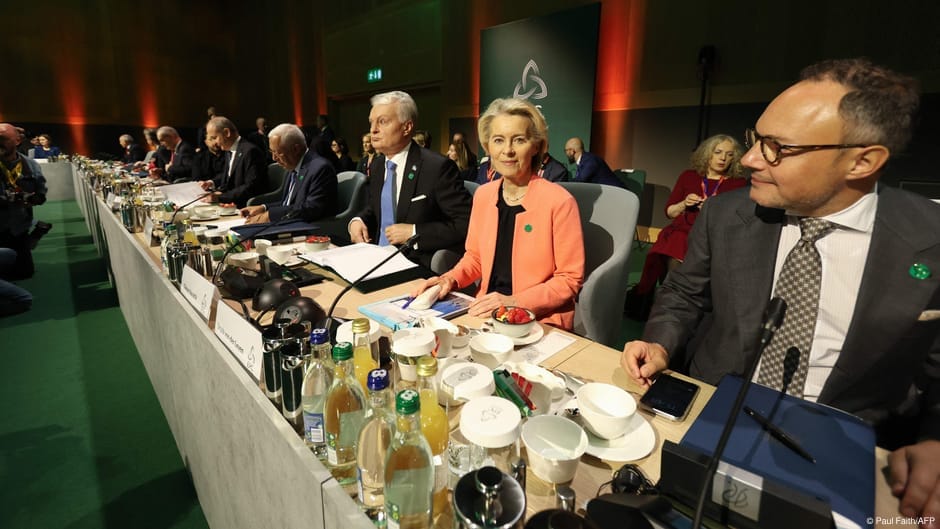
Nearly 40 European countries have agreed on a charter setting out key principles for the continent’s security, a development with potential implications for government budgets, corporate risk disclosures and investor assessments of European markets.
Germany, Ukraine, the United Kingdom, Spain and 35 other European states approved the principles on Thursday, November 12, during a European Political Community summit in Dublin. The initiative was proposed by France.
Although the charter does not specify funding commitments or financial targets, its emphasis on greater European responsibility for security is relevant to investors monitoring fiscal priorities, sovereign balance sheets and the operating risks faced by companies across the region. Security policy can affect public expenditure plans, while hybrid threats and information interference increasingly feature in corporate risk management and investor relations discussions.
Expanded security agenda adds to risk reporting focus
According to AFP, the document formalizes existing provisions underpinning European security while adding newer areas of concern, including hybrid threats. The signatories condemned what they described as Moscow’s intensified hybrid campaigns “in the strongest possible terms” and expressed their intention to counter those threats and combat information interference.
For financial reporting purposes, the broader definition of security risk may be significant even without quantified commitments in the charter. Companies operating across several European jurisdictions may need to consider how exposure to information disruption, political instability or other hybrid activity is reflected in internal controls, continuity planning and discussions of material risks. Investors may also assess whether such exposures could affect costs, capital allocation or the reliability of operations.
The charter also covers counterterrorism, drug trafficking and the illegal smuggling of migrants. These priorities broaden the policy agenda beyond conventional defense and could shape how European governments allocate resources among security, law enforcement and border-related programs. The source text does not provide estimates for the spending required or identify how the initiatives would be financed.
“European countries are taking greater responsibility for security in Europe,” the participating states said, adding that this would positively affect global and transatlantic security.
Journalists who reviewed the charter said it is grounded in the United Nations Charter, the North Atlantic Treaty establishing NATO and the Treaty on European Union. That institutional basis may give investors a clearer framework for interpreting the initiative, but the document as described remains a statement of principles rather than a set of measurable financial obligations.
NATO reference links security planning to postwar stability
British Prime Minister Andy Burnham emphasized the importance of the charter’s reference to NATO. He said the alliance would need to “ensure a stable situation” in Europe after the war in Ukraine. A draft of the charter states that “any issue concerning European security must be resolved together with Europeans,” according to AFP.
The NATO language is relevant to the financial outlook because long-term stability can influence investment decisions, borrowing conditions and corporate planning horizons. However, the charter provides no figures for defense expenditure, infrastructure investment or reconstruction. It therefore offers direction on political coordination without supplying the metrics analysts would ordinarily use to model the effects on national accounts or company earnings.
The initiative also comes as the architecture of European security has featured in recent negotiations between Russia and Ukraine on a peace settlement. Those discussions addressed both the conditions for establishing a ceasefire and the future structure of security in Europe.
During negotiations in Abu Dhabi, US presidential special envoy Jared Kushner supported the creation of a “new” European security architecture. The Dublin charter, by contrast, is described as reinforcing existing foundations while incorporating additional threats and areas of cooperation.
For investors, the immediate takeaway is not a change to reported earnings or balance-sheet values, but a developing policy framework that could eventually influence fiscal decisions and corporate risk assessments. The absence of detailed budgets, implementation timetables and numerical commitments limits direct financial modeling at this stage. Future disclosures from participating governments will be necessary to determine whether the political principles translate into higher spending, new programs or changes in national funding priorities.



