Fire Reported at Sasta Plant Site Hosting Yandex Data Center in Ryazan
The reported incident drew attention to infrastructure exposure, cloud availability, sanctions risk and industrial supply-chain relevance.
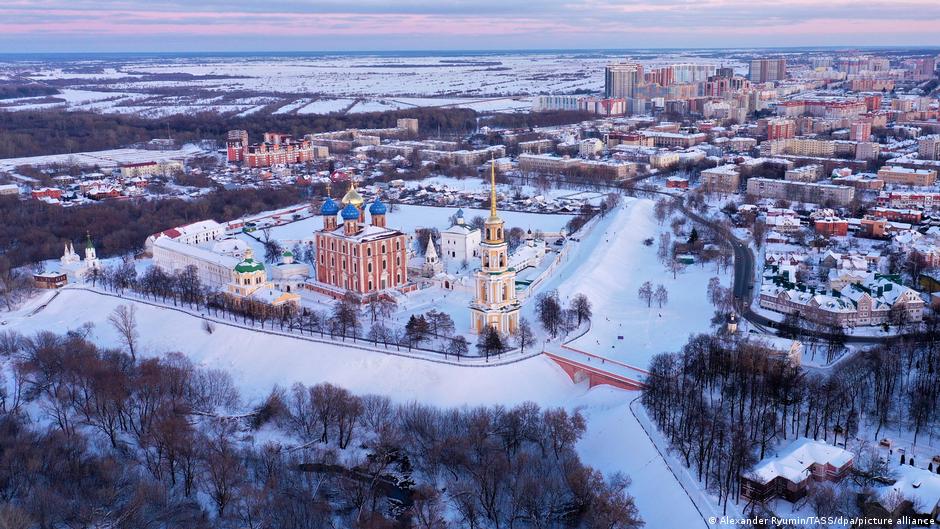
A fire broke out in Sasovo, in Russia's Ryazan region, on the grounds of the Sasta plant, where a Yandex DC data center is located, according to the publication Astra. The enterprise produces CNC metalworking machines, a category of equipment with relevance for heavy industry and defense-linked manufacturing supply chains.
For investors, creditors and counterparties monitoring Russian industrial and technology infrastructure, the reported incident brings together several risk categories: physical asset resilience, cloud-service continuity, sanctions exposure and the concentration of critical digital infrastructure at industrial sites. Astra said its conclusion about the location followed an OSINT analysis. The report was published on Astra's Telegram channel overnight on Thursday, October 8.
"Last month, the data center's own employees showed its equipment and directly stated that it is located in Sasovo, Ryazan region," Astra said in its report.
The report did not provide financial estimates for any damage, nor did it state whether the data center itself was damaged. It also did not provide an assessment of possible insurance implications, capital expenditure requirements or effects on operating costs. Still, any confirmed disruption at a data-center site can become relevant to financial reporting if it affects service availability, customer contracts, infrastructure depreciation, remediation spending or risk disclosures.
Infrastructure Risk and Cloud Availability
Astra later pointed to a message about disruptions in the power supply of a separate availability zone of the Yandex Cloud platform. According to the same account, the Yandex Cloud team reported that the situation had stabilized 40 minutes after the disruptions appeared. The short duration of the reported interruption is material context for stakeholders assessing whether the event is likely to have a broader operational or financial effect.
Cloud availability is closely watched because even short outages can affect enterprise clients, service-level obligations and customer confidence. However, the source article does not state that Yandex disclosed any monetary impact, compensation liability or change in guidance. From a financial-reporting perspective, the incident would remain primarily a risk-monitoring item unless subsequent disclosures identify measurable damage, prolonged service degradation or contractual consequences.
The location described by Astra also matters because data centers are capital-intensive assets. They require stable power supply, cooling systems, physical security and redundancy planning. A fire at or near such a site can prompt investor questions about business-continuity planning and geographic concentration. Those questions become more acute when cloud infrastructure is linked to a major technology provider and is housed on the grounds of an industrial enterprise.
Sasta's Industrial Profile and Sanctions Exposure
According to Astra, the Sasta plant specializes in the production of CNC metalworking machines. The publication said the plant's equipment is used in the defense, aerospace, transport and heavy-industry sectors. Astra characterized the company's significance for Russia's military-industrial complex as tied not to the production of finished weapons, but to the production base: its machines are needed to manufacture high-precision metal parts and assemblies.
That distinction is relevant for compliance and investor-relations teams because machine-tool producers may sit upstream in strategic supply chains. Even when a company does not make finished military systems, its equipment can be important to the manufacturing capacity of sectors subject to heightened scrutiny. For lenders, suppliers and international counterparties, this type of exposure can affect sanctions screening, reputational assessment and internal risk controls.
Astra also noted that Sasta is under sanctions from Canada, Switzerland, the European Union, the United Kingdom, Australia, New Zealand and Japan. The source article does not specify when each sanctions regime was imposed or the exact legal designations involved. Nevertheless, the existence of broad sanctions coverage is a significant factor for financial institutions, vendors and companies with reporting obligations tied to compliance risk.
In financial statements, sanctions exposure can affect assumptions around procurement, export controls, counterparties, liquidity access and long-term asset values. The source article does not report any new sanctions development connected to the fire, and it does not state that the incident changed Sasta's legal or financial position. The relevance lies in the convergence of an industrial site already subject to restrictions with digital infrastructure connected to Yandex DC.
Regional Context and Data-Center Targeting
The source article also placed the report alongside recent references to attacks on Ukrainian digital infrastructure. It said that on the evening of September 25, Russian armed forces began strikes on the infrastructure of the Ukrainian telecommunications operator Cosmonova, including a data center. As a result, internet and television disruptions occurred in Kyiv, according to the article.
On October 3, Ukrainian President Volodymyr Zelensky commented on strikes against Ukrainian data centers. He said that data centers affect people and are not military infrastructure, adding that communications are used not only in Ukraine but also in Moscow. The source article included his remarks in the context of broader concern about attacks on telecommunications and cloud-related infrastructure.
For a financial-reporting audience, the common thread is the growing operational importance of data centers as balance-sheet assets and service-delivery hubs. Whether the issue is physical fire risk, power interruptions, wartime damage or sanctions exposure, the financial implications depend on duration, recoverability, insurance, redundancy and the contractual role of the affected facility.
At this stage, the source material supports a limited conclusion: Astra reported a fire on the grounds of the Sasta plant in Sasovo, where it says a Yandex DC data center is located; Astra later connected the timeline to a reported Yandex Cloud availability-zone power disruption; and Yandex Cloud reported stabilization 40 minutes later. The article does not establish a quantified financial loss, a prolonged outage or a direct impact on Yandex's earnings, balance sheet or investor guidance.
Until more formal disclosures emerge, the incident is best read as an infrastructure-risk event rather than a confirmed financial shock. Still, for companies and investors exposed to Russian cloud services, industrial technology supply chains or sanctioned manufacturing assets, it adds another data point to the assessment of operational resilience and compliance risk.



