Foreign Retailers in Russia Face Asset Control Risks as Oversight Tightens
Temporary management measures affecting Auchan, Leroy Merlin and Metro assets highlight rising uncertainty for foreign retail balance sheets in Russia.
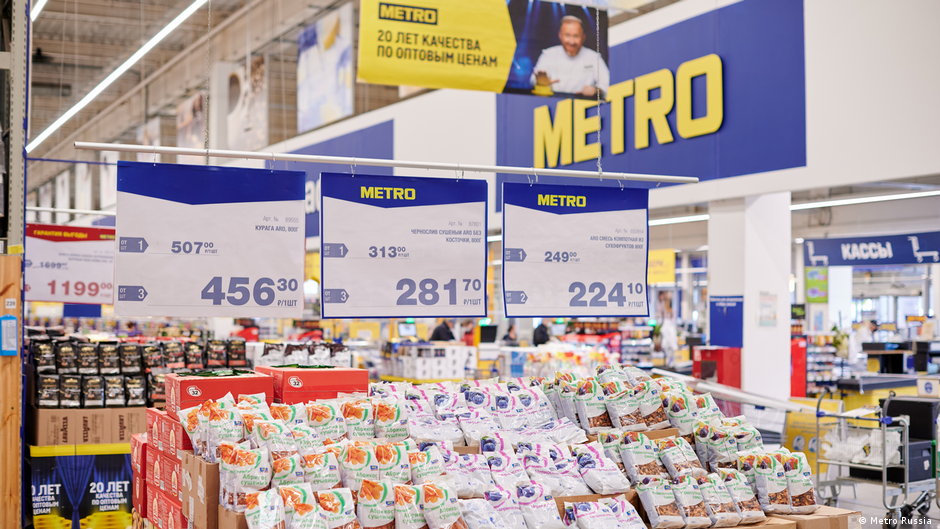
Foreign retailers with Russian operations are facing a materially more uncertain operating environment as a series of Western-owned retail assets have come under temporary management in Russia, limiting or removing their owners' ability to control those businesses. The issue has direct implications for financial reporting, investor relations and asset valuation, particularly for companies that still carry Russian exposure on their balance sheets or must explain the status of local operations to shareholders.
The central question is whether foreign retailers' Russian businesses face a broader risk of nationalization. According to the source material, some assets have already been placed under temporary management, and their owners have lost access to them. That development places a spotlight on how multinational retail groups classify, value and disclose assets in a market where legal control, operational control and economic ownership may no longer align cleanly.
The companies named in connection with temporary management include the French retailers Auchan and Leroy Merlin, Germany's Metro and other businesses. In each case, the financial significance depends on the specific corporate structure, the accounting treatment of Russian subsidiaries or assets, and the extent to which parent companies can still influence cash flows, governance, reporting and eventual disposal options.
Control Risk Becomes a Reporting Issue
For investors, the immediate concern is not only political or legal. It is also an accounting and disclosure question. When a company can no longer manage an asset, the assumptions behind consolidation, impairment testing and recoverability may need closer scrutiny. Retail assets are typically valued on the basis of store networks, inventory, leases, logistics, local supplier relationships and expected cash generation. Temporary management can weaken or sever the owner's ability to benefit from those assets, even before any formal transfer of ownership takes place.
That distinction matters for quarterly and annual reporting. A retailer may continue to describe an operation as part of its historic footprint, while also having to explain whether management has access to local books, bank accounts, governance processes and operating data. The loss of access described in the source article suggests that conventional metrics such as revenue, EBITDA, store count and working capital may become less meaningful unless management can verify and control the underlying information.
Assets of some foreign retailers have already been placed under temporary management, and their owners have lost access to them.
For shareholders, such language points to a core investor-relations challenge: how to communicate exposure when the asset remains economically relevant but is no longer fully governable. The issue can affect not only headline earnings, but also risk factors, segment reporting and the credibility of forward-looking statements. If management cannot reliably forecast cash flows from a Russian unit, the unit's carrying value may come under pressure.
Metro, Auchan and Leroy Merlin in Focus
The reference to Germany's Metro places the case within a broader European retail and wholesale sector that has had to reassess Russian operations since market conditions changed. Metro's business model, like those of other large retail and wholesale operators, depends on supply chains, local store operations, inventory financing and customer relationships. Any restriction on control over Russian assets can therefore have both operational and financial consequences.
French retailers Auchan and Leroy Merlin are also named among the businesses whose assets have been subjected to temporary management. The source does not provide figures for sales, profits, impairments or asset values, so those metrics should not be inferred. But from a financial-reporting perspective, the presence of multiple named retailers indicates that the issue is not confined to one company or one retail format. It spans food retail, home improvement and wholesale-style operations, all of which can carry substantial fixed assets and working-capital requirements.
The former Russian subsidiary of Germany's Globus adds another governance angle. Former German Chancellor Gerhard Schröder has joined the supervisory board of the former Russian unit, according to the source. That development highlights how corporate oversight structures around foreign-linked Russian retail assets are changing. For investors, board composition and governance arrangements are relevant because they shape who can approve strategy, review accounts, oversee management and represent stakeholder interests.
The source describes foreign retail chains losing the ability, one after another, to manage their assets in Russia. In financial terms, that sequence increases the need for companies to provide clear, timely and specific disclosures. Investors will want to know whether Russian assets remain consolidated, whether control has been impaired, whether cash can be repatriated, whether local liabilities remain with the parent group, and whether any write-downs have been recognized or may be required.
At the same time, the available information does not establish that all foreign retailers in Russia will be nationalized. The key documented facts are narrower: temporary management has been introduced for assets of several foreign retailers, some owners have lost access, and governance changes have occurred around the former Russian Globus subsidiary. The financial significance lies in the uncertainty those facts create around ownership rights, asset recoverability and the reliability of future earnings contributions.
For the retail sector, the situation underscores a broader balance-sheet risk. Assets located in jurisdictions where owners cannot freely manage or access them may require heavier risk discounts from investors. Even without disclosed numbers, the pressure on foreign retailers' Russian operations is likely to remain an investor-relations issue because it touches the foundations of financial reporting: control, valuation, cash flow visibility and governance.



