German BSW Lawmaker Plans Belarus and Russia Trips With Municipal Ties in Focus
Sven Hornauf says delegations of German politicians and civic representatives will seek to restore suspended twin-city contacts.
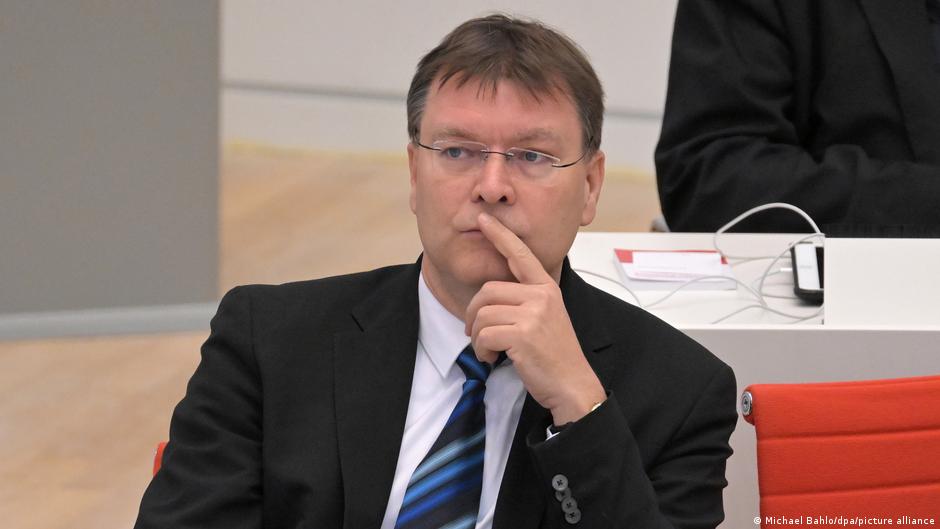
German regional lawmaker Sven Hornauf of the left-populist Alliance for Social Justice and Reasonable Economics, known as BSW and formerly associated with Sahra Wagenknecht, has announced plans to organize delegations to Belarus and Russia aimed at reviving municipal contacts that were curtailed after Russia's full-scale invasion of Ukraine.
Hornauf, a member of the Brandenburg state parliament, told the regional newspaper Märkische Oderzeitung on Saturday, October 3, that he intends to travel by bus to Vitebsk in November with a delegation of like-minded participants from several German parties and civil society. The following day, larger German media outlets, including the dpa news agency, Tagesspiegel and Die Welt, also reported on the plan.
The initiative is not a corporate transaction and does not directly concern company earnings or balance sheets. Still, for investors and financial observers, the proposal matters because municipal diplomacy, cross-border administrative links and public-sector positioning can affect the broader operating environment for German regions, local budgets and businesses exposed to Eastern Europe. In Germany, city partnerships have often supported cultural, educational and civic exchanges; after 2022, many of those contacts became politically sensitive and financially harder to maintain.
Hornauf said the aim was to send a signal in favor of understanding between peoples.
According to Hornauf, the planned outreach is intended to renew cooperation between German cities and their twin towns in Belarus and Russia. He said it was important to re-establish normal, regular contacts directly at the level of people, and that the overall political climate, regardless of side, should not prevent such links.
Delegation Plans and Political Composition
Hornauf said the Belarus trip is expected to include 30 to 40 people, most of whom are not members of political parties. He identified several BSW members among the expected participants, along with representatives of the Greens and the far-right Alternative for Germany, or AfD. The final makeup of the delegation, he said, will be determined during preparatory meetings.
The lawmaker said that from November 6 to 11 a delegation from his hometown, Frankfurt an der Oder, will visit Vitebsk. Other participants in the broader trip plan to travel to Minsk and several additional Belarusian twin cities. In each case, the stated purpose is the restoration of twin-city relations.
Hornauf also plans a visit to Russia in April 2027. That prospective trip broadens the political and financial relevance of the initiative, because any normalization of contacts with Russian municipalities remains tied to sanctions, public procurement caution, compliance risk and reputational exposure for institutions operating in or with public-sector entities. The article does not identify any funding structure for the trips, nor does it provide a budget, sponsor list or municipal cost estimate.
Municipal Links After 2022
Many twin-city relationships among German, Belarusian and Russian municipalities were suspended after Russia's full-scale invasion of Ukraine. Yet a 2026 survey by the media group Redaktionsnetzwerk Deutschland, covering around 100 German cities and communities, found that only one had fully terminated its partnership with a Russian twin city.
RND also reported that about 40% of the surveyed municipalities had continued informal contacts with Russia after 2022, including invitations for Russian city representatives to Germany. In 42% of responding German municipalities, officials supported resuming partnerships with Russia in the event of a peace settlement in Ukraine.
Those figures point to a gap between formal political positioning and practical municipal behavior. From a financial reporting perspective, such ambiguity can be significant for local administrations and counterparties: suspended partnerships may still leave administrative networks, travel planning, cultural-program obligations or informal exchanges in place, even when formal cooperation is politically constrained.
The survey findings also suggest that a future peace settlement in Ukraine could quickly revive dormant channels between local governments. That could have implications for municipal spending priorities, cross-border programs and regional institutions that previously relied on town-twinning arrangements. However, the source material does not state that any economic agreements, investment commitments or commercial contracts are attached to Hornauf's planned visits.
Political Risk and Public-Sector Signaling
Hornauf drew media attention in spring 2026 when he was one of the initiators of a visit by BSW members and supporters to the Russian Embassy in Berlin. He had previously faced criticism for supporting several AfD initiatives.
He has also criticized Germany's strengthening of defense measures in response to Russia's aggressive policy. In particular, he opposed the deployment of the U.S.-Israeli Arrow 3 missile defense system at the Bundeswehr base in Holzdorf. The missile defense system entered operational service in Germany at the end of 2025.
For public investors, municipal finance analysts and companies that monitor German regional politics, Hornauf's proposal is another example of how foreign-policy divisions can surface at local-government level. The initiative involves party representatives, non-party civic participants and cities whose partnerships have been affected by the war in Ukraine. That combination makes the planned travel politically visible even in the absence of disclosed financial terms.
The key financial takeaway is therefore one of policy risk rather than immediate balance-sheet impact. The trips, if carried out, may test how German municipalities manage legacy ties with Belarusian and Russian counterparts while national and European policy remain shaped by the war in Ukraine, sanctions and defense commitments. The final composition of the delegation and any institutional participation by municipalities will determine how far the effort moves beyond civic outreach into formal public-sector engagement.



