German Poll Signals Persistent Russia Risk for Energy and Markets
Public concern over Russia and a potential military escalation remains high as Germans divide over restoring Russian energy imports.
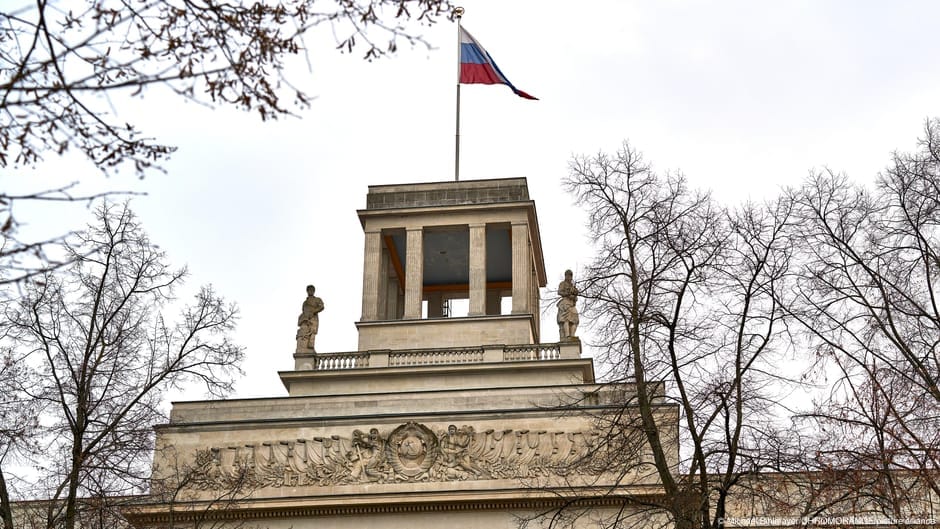
German public opinion continues to identify Russia as a significant national security threat, highlighting a geopolitical risk that remains relevant to corporate planning, energy costs and investor assessments of Europe’s largest economy. More than 60% of Germans agreed that Russia poses a threat to Germany, while 24% rejected that view, according to a new Ipsos survey reported by Der Spiegel on November 16.
The poll was conducted from November 5 to November 8 among 2,019 German citizens eligible to vote. Its statistical margin of error was up to 2.2 percentage points. Although the survey did not measure corporate expectations or financial performance, its findings provide an indication of the political environment in which German companies, energy buyers and investors are evaluating security exposure and relations with Russia.
Energy imports divide German respondents
For financial markets, one of the survey’s most directly relevant findings concerns the possible resumption of Russian oil and gas supplies. German respondents were almost evenly divided: 44% opposed renewed imports, 42% supported them and 14% were undecided.
The narrow gap underscores the political uncertainty surrounding a policy question with potential consequences for energy procurement and business planning. The poll does not quantify any effect on prices, company earnings, balance sheets or economic growth. It nevertheless shows that there is no clear public consensus on restoring Russian supplies, limiting the visibility available to companies and investors assessing the future direction of German energy policy.
Forty-four percent opposed a return to Russian oil and gas imports, compared with 42% who supported the idea.
Views of Russia differed sharply by political affiliation. More than 80% of voters supporting the conservative Christian Democratic Union and Christian Social Union bloc, the Social Democratic Party or Alliance 90/The Greens regarded Russia as a threat. Among respondents who voted for the Left Party, 54% held the same view.
Only 26% of voters for the far-right Alternative for Germany, or AfD, said Russia posed a danger. Of the party’s supporters, 39% said they “completely disagree” with that assessment and another 21% said they “rather disagree.” A similar distribution was recorded among voters for the left-populist BSW, the Alliance for Social Justice and Reasonable Economic Policy founded by Sahra Wagenknecht.
Regional and political differences shape risk outlook
The regional split was less pronounced but remained notable. In western Germany, 65% of respondents considered Russia a threat regardless of political preference, compared with 53% in eastern Germany. Such differences may matter to companies communicating investment plans, operating decisions or energy strategies across regions with distinct political attitudes.
Both AfD and BSW are known for pro-Russian narratives. Even so, almost 40% of their supporters agreed that Russia bears responsibility for the war against Ukraine. Across the full sample, 55% completely agreed with that statement and a further 18% said they tended to agree. The result indicates broad attribution of responsibility to Moscow even as voters remain divided over energy ties and the severity of the threat to Germany.
For investor relations teams, the findings point to a public environment in which Russia-related exposure may continue to attract scrutiny. Companies reporting quarterly results may face questions about energy sourcing, contingency plans and sensitivity to geopolitical disruption. The survey itself, however, contains no company-level data and offers no basis for estimating revenue, profit, cash-flow or asset-value effects.
Concern over military escalation remains material
German intelligence services have warned in recent months that Russia could begin testing NATO’s resolve and cohesion by 2030 through targeted operations on alliance territory. Against that backdrop, reports suggesting that a war between Russia and Germany could begin within the next four years caused concern among 43% of respondents.
Concern varied substantially by gender. Half of the women surveyed said they were worried about such a conflict, compared with 37% of men. Age differences were also significant: 54% of respondents aged 18 to 29 expressed concern about war, while the proportion fell to 35% among people aged 60 to 75.
These results do not constitute a forecast of military conflict or financial losses. They do show that geopolitical anxiety is embedded across a substantial portion of the German electorate, with especially high concern among younger respondents and women. For financial reporting, that sentiment forms part of the wider operating context surrounding capital allocation, risk disclosures and long-term assumptions.
The poll ultimately presents a mixed picture for markets. A clear majority regards Russia as a threat, and nearly three-quarters of respondents either fully or broadly agree that Moscow is responsible for the war against Ukraine. At the same time, the near-even division over Russian oil and gas demonstrates continuing tension between security concerns and attitudes toward energy supply. That unresolved balance is likely to remain an important consideration in how German businesses explain geopolitical and energy risks to investors.



