Germany, Poland Set January Deadline for Defense Cooperation Plan
The governments aim to turn their June agreement into an actionable program focused on industrial capacity and secure supply chains.
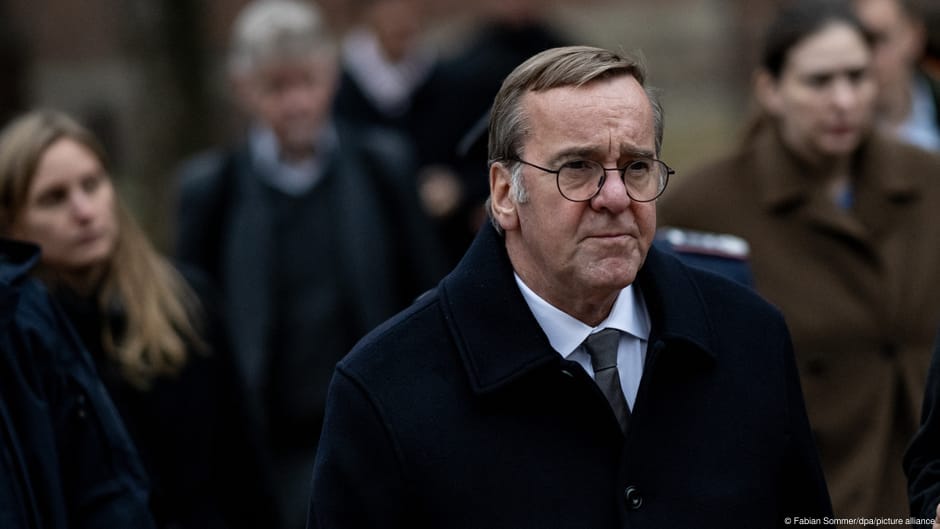
Germany and Poland plan to complete a detailed action plan for their bilateral defense agreement before intergovernmental consultations scheduled for January 2027, setting a near-term deadline for translating political commitments into operational and industrial initiatives.
German Defense Minister Boris Pistorius announced the timetable after meeting his Polish counterpart, Wladyslaw Kosiniak-Kamysz, in Warsaw on Thursday, November 19. The agreement was concluded in June 2026, but the two governments must now define the measures needed to implement it.
For defense companies and their investors, the central issue will be how the action plan converts broad cooperation goals into joint programs, production requirements and procurement opportunities. Neither minister disclosed budgets, contract values, funding structures or expected orders at the Warsaw meeting.
“This will strengthen close cooperation between the armed forces and enable us to jointly assume responsibility for Europe,” Pistorius said.
Defense production and supply chains take priority
Kosiniak-Kamysz said the two sides intend above all to expand cooperation between their defense industries. Joint initiatives involving German and Polish companies are expected to make Europe less dependent on other continents, stabilize supply chains and ensure sufficient weapons production.
Those objectives place manufacturing capacity and sourcing resilience at the center of the bilateral agenda. The planned action document could therefore become important for companies assessing future demand, capacity investment and cross-border partnerships. However, the ministers did not identify participating businesses, specific weapons programs or production targets.
The cooperation is already supported by military deployments and equipment commitments. According to Reuters, the Bundeswehr is moving more than 2,000 personnel through Poland during the Grand Eagle exercise, along with about 50 tracked vehicles and 650 wheeled vehicles.
Germany is also supporting Poland’s air defenses by providing Patriot surface-to-air missile systems and Eurofighter aircraft. Since the summer, engineering units from both countries have additionally been building defensive positions together, Reuters reported. These activities demonstrate the operational scale of the relationship, although no associated expenditure figures were provided.
June pact covers NATO’s eastern flank and technology
On June 17, Germany and Poland pledged to broaden cooperation and deepen military coordination in response to the threat from Russia. Their foreign ministers, Johann Wadephul and Radoslaw Sikorski, linked the commitment to the countries’ roles as NATO allies and European Union partners.
“Conscious of the tragic history of the 20th century, we bear a special responsibility for our region and our continent—as NATO allies and partners in the European Union,” the ministers said during the German-Polish Forum in Berlin.
On the same day, the countries’ defense ministers signed a new military agreement in Warsaw addressing protection of NATO’s eastern flank. Pistorius said at the time that Germany and Poland were taking responsibility for their future in Europe. Kosiniak-Kamysz said the pact created new opportunities for cooperation in cybersecurity and advanced technologies.
These areas could widen the agreement’s industrial scope beyond conventional weapons production. Cybersecurity and advanced technology initiatives may involve different suppliers and investment cycles from large military platforms, but officials have not yet published a project pipeline, delivery schedule or financial framework.
Historical responsibility shapes the partnership
The Warsaw discussions also addressed the growth of extremist and nationalist movements in several European countries. Pistorius raised the issue both at the latest meeting and during an earlier visit to the memorial at the former Nazi concentration and extermination camp Auschwitz-Birkenau.
“We know that nationalism has never been a solution to problems and has almost always become the cause of much more serious problems,” Pistorius said in Warsaw.
Speaking at Auschwitz on November 19, the German minister described Germany’s actions as the “greatest rupture of civilization in human history.” He said the current generation carries a major responsibility to ensure that such events are never repeated. Pistorius planned to visit additional Warsaw memorial sites dedicated to the tragic events of the Second World War on November 20.
The historical dimension remains part of the governments’ explanation for closer security cooperation. The immediate test, however, is whether they can complete the promised action plan before January and move directly into implementation. For the defense sector, the most consequential details will be the allocation of funding, the choice of industrial partners and the production commitments that emerge from that process. None of those financial elements has yet been made public.



