Iran Holds Closed Funeral for Ayatollah Ali Khamenei Following Prolonged Mourning Period
Iran conducted a private funeral for former Supreme Leader Ali Khamenei amid ongoing regional tensions and political uncertainty.
Background and Funeral Details
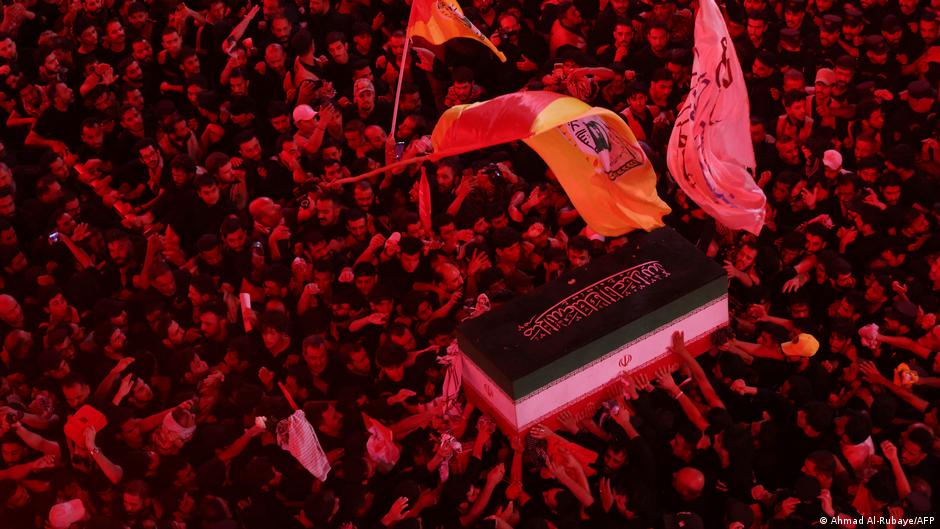
After six days of mourning events, the funeral of former Supreme Leader of Iran, Ayatollah Ali Khamenei, was held privately in the city of Mashhad. Khamenei, reportedly killed in late February during a U.S. and Israeli attack on his residence, was laid to rest on the night of July 10 at the Imam Reza Mausoleum, one of the world’s largest Shia Muslim sanctuaries, attracting up to 20 million visitors annually.
This burial site signifies the regime’s portrayal of Khamenei as a martyr who died resisting a militarily superior adversary. Alongside him, family members who perished in the same airstrike were also interred. The mausoleum complex is notable for previously housing the remains of Iranian President Ebrahim Raisi, who died in a 2024 helicopter crash.
Political Ramifications and Leadership Transition
The funeral occurred more than four months after the confirmation of Khamenei’s death, which was publicly acknowledged by Tehran only in mid-June during a fragile ceasefire between Iran and its adversaries. Mourning ceremonies commenced in early July, with the coffin displayed in Tehran, then in the Shia pilgrimage city of Qom, and later in Iraqi holy cities Najaf and Karbala, each deeply significant to Shia Islam.
Despite the scale of public mourning, Ali Khamenei’s son, Mojtaba Khamenei, officially designated as the new Supreme Leader, has not made a public appearance since the attack. Reports suggest Mojtaba was severely injured but remains capable. Concerns over potential Israeli attacks likely influenced the decision to keep him out of public view during the funeral.
"The regime’s choice of Imam Reza Mausoleum reflects its narrative of Khamenei as a martyr against overwhelming military opposition."
State news agency Fars announced that Mojtaba Khamenei is expected to appear publicly on July 19 during a further memorial event in Qom, where he will deliver a speech honoring his father. Past reports of his imminent public engagements remain unconfirmed.
Impact on Regional Stability and U.S.-Iran Relations
The U.S. president at the time of the initial mourning period, Donald Trump, acknowledged a one-week pause in negotiations with Tehran to respect the funeral proceedings. However, hostilities resumed shortly after, with Iran attacking tankers in the Strait of Hormuz, followed by retaliatory U.S. strikes on Islamic Revolutionary Guard Corps positions, and further Iranian attacks on U.S. bases in Bahrain and Kuwait.
Trump declared the ceasefire effectively over and stated his refusal to negotiate with the Iranian regime. Nonetheless, U.S. administration officials maintain that diplomatic engagement continues despite escalating military confrontations in the region.
This sequence underscores the complexity of Iranian political succession amid ongoing military tensions, which continue to influence global energy markets and investor sentiment relating to regional stability.