Kamysevakha Strike Toll Reaches 72 as Recovery Operation Ends
The attack on a humanitarian aid center left 72 people dead, four missing and additional pressure on Ukraine’s emergency resources.
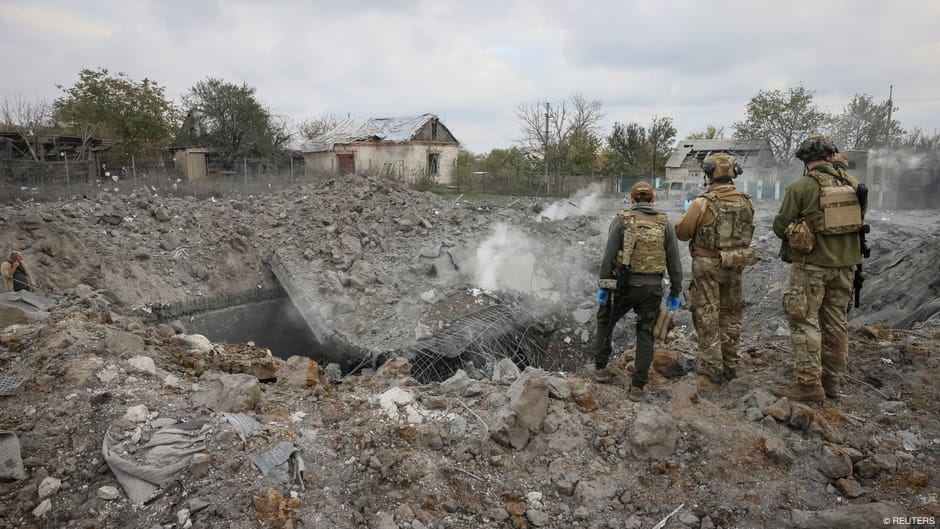
Ukrainian rescue workers have completed a two-week search and debris-removal operation at a humanitarian aid center in Kamysevakha, in the Zaporizhzhia region, confirming that 72 people were killed in a Russian airstrike. Four other people remained missing as of Monday, November 16, according to regional authorities.
The final accounting provides a clearer measure of the human impact of the November 2 attack while also highlighting the operational burden placed on Ukraine’s publicly funded emergency, police and healthcare services. The humanitarian center was operating in a school building that was no longer in regular use, and the strike occurred while aid was being distributed.
Rescue workers recovered 58 bodies from the rubble. One person later died in a hospital, while another 13 deaths were confirmed through DNA testing. The dead included two rescue workers and four police officers, Ukrainian Interior Minister Ivan Vyhovskyi said. Four injured people remained in hospital, while the Zaporizhzhia regional military administration continued to list four people as missing.
Two-week operation strained emergency capacity
The search-and-rescue effort continued for two weeks, requiring sustained deployment of personnel and equipment at a site that remained exposed to further attacks. Local authorities said Kamysevakha was subjected to 11 additional Russian strikes during the recovery period, nine of which directly hit the area where teams were clearing debris.
Three police officers and four rescue workers were injured in the subsequent attacks. The repeated strikes increased the risks facing personnel already assigned to the recovery operation and complicated efforts to establish a definitive casualty count.
From a public-finance and operational-reporting perspective, the incident underscores how attacks on civilian infrastructure can produce costs extending beyond the initial destruction. Emergency response, forensic identification, hospital care, policing and continued searches for missing people all require state resources. The source information, however, did not provide a monetary estimate of the damage, the cost of the response or the value of humanitarian supplies affected.
Prime Minister Serhii Koretskyi said Russian forces dropped aerial bombs on the disused school building on the morning of November 2. According to his account, after people moved into a shelter, Russian forces also struck that location, using nine aerial bombs.
The timing of the attack contributed to the high number of casualties because it occurred during the distribution of humanitarian assistance. Information about the humanitarian activity had been announced officially in advance.
Humanitarian infrastructure and disclosure risks
The strike illustrates a severe challenge for organizations and public agencies managing aid delivery in conflict areas. Advance disclosure of distribution arrangements is normally intended to inform eligible residents and coordinate access, but publicly known schedules and locations may also increase security exposure when civilian sites are within range of military attacks.
For institutions reporting on humanitarian operations, the event also demonstrates why casualty figures may change substantially after an attack. The confirmed total depended on several separate processes: physical recovery from the building, hospital reporting and DNA analysis. Even after the debris operation ended, the continuing absence of four people meant that the overall human toll had not necessarily reached a final figure.
Measured by the number of civilians killed in an attack on a single site, the Kamysevakha strike became one of the deadliest Russian attacks since the beginning of the full-scale war against Ukraine. Some media outlets have compared it with Russia’s bombing of the Mariupol Drama Theater in March 2022, although there is no confirmed casualty total for that attack.
Russia had not commented on the strike on the Kamysevakha humanitarian center. The United Nations condemned the actions of the Russian military and raised questions about whether adequate precautions had been taken before the attack.
“Either the Russian armed forces were aware that humanitarian aid was being distributed there, or they failed to take the most basic steps to establish what was happening in the settlement they intended to attack. In either case, this strike appears to have violated the most fundamental principles of international humanitarian law,” said Danielle Bell, head of the UN Human Rights Monitoring Mission in Ukraine.
The completion of the recovery work closes the main operational phase at the site but leaves several unresolved items for official reporting: the fate of the four missing people, the condition of those still hospitalized and the full scale of physical and financial damage. No balance-sheet assessment, reconstruction budget or estimate of the broader economic loss was included in the authorities’ statements cited in the source.



