Kolesnikova Says EU Diplomacy With Minsk Could Reduce Russia’s Leverage
The Belarusian activist argues that calibrated talks and sanctions relief can deliver political-prisoner releases while reshaping regional risk.
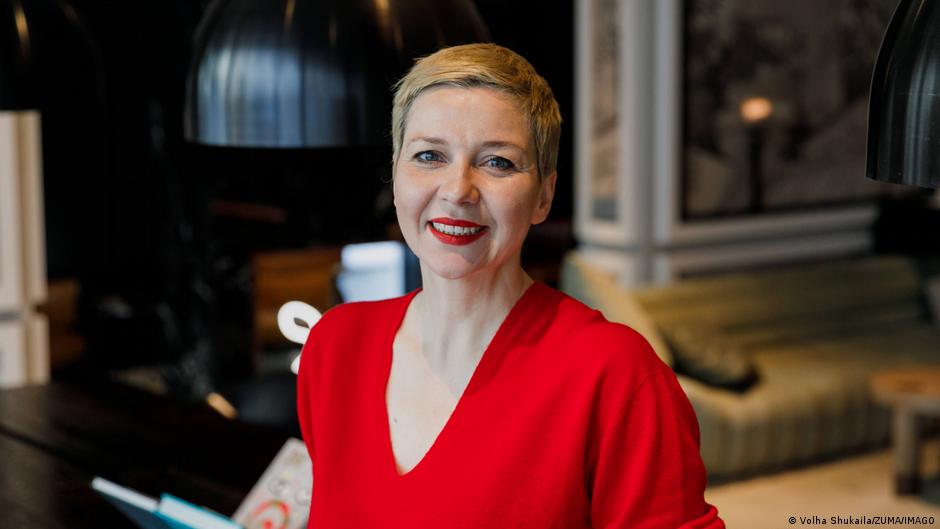
Belarusian activist, musician and former political prisoner Maria Kolesnikova has urged European Union governments to follow the United States in using diplomacy and sanctions as coordinated tools to secure the release of political prisoners in Belarus.
In an interview with DW, Kolesnikova rejected claims that her growing emphasis on dialogue signaled a softer position toward the regime of Alexander Lukashenko. She said her own release demonstrated that diplomacy, when tied to defined objectives and pressure mechanisms, could produce measurable outcomes even in a highly restrictive political environment.
“We are talking here now precisely because diplomacy was used as an instrument of influence, as an instrument for achieving certain goals,” Kolesnikova said on DW News.
Her comments point to a policy debate with direct relevance for investors, lenders and companies monitoring Belarus-related exposure: whether sanctions can remain a pressure tool while also becoming a bargaining instrument in negotiations over human rights cases. For European policymakers, the question is not only political but also strategic, touching on the balance between sanctions discipline, regional security, and the economic channels through which Minsk remains linked to Russia.
Sanctions Relief as a Negotiating Asset
Kolesnikova said more than 800 people convicted under political articles remain imprisoned in Belarus. She argued that the results of the U.S. negotiation track should be used as evidence that targeted engagement can work. According to her, negotiations between Washington and Minsk led to the release of about 500 political prisoners in exchange for an easing of sanctions on Belarusian companies.
For financial and corporate observers, that framing places sanctions relief in a transactional context. Rather than treating sanctions solely as a static compliance burden, Kolesnikova described them as leverage that can be deployed to obtain concrete humanitarian outcomes. The implication for companies and investors is that Belarus-related sanctions policy may remain politically contingent, with potential changes linked to negotiated concessions rather than broad normalization.
Kolesnikova called on the European Union to use a similar model. Her argument does not suggest opening to the Lukashenko regime on its own terms. Instead, she drew a distinction between openness toward Belarus and Belarusians, and political support for the authorities in Minsk. That distinction is central to the financial-policy angle: any calibrated relaxation or adjustment of restrictions would likely be judged by whether it benefits civil society and political-prisoner releases, rather than simply restoring normal economic relations with state-aligned entities.
She said Europe’s openness to Belarus and Belarusians, not to the regime, could reduce Russia’s sphere of influence in the country. Kolesnikova described that as a goal of the European security architecture. In financial terms, the argument links diplomatic engagement to the broader geopolitical risk premium surrounding Belarus, whose political and economic alignment with Moscow remains a key factor for sanctions, trade restrictions and investor risk assessments.
Polish-Belarusian Contacts Draw Attention
Kolesnikova specifically mentioned recent talks between Polish Foreign Minister Radoslaw Sikorski and Belarusian Foreign Minister Maxim Ryzhenkov. The meeting took place in New York on the sidelines of the 81st session of the United Nations General Assembly. After the meeting, Sikorski said, among other things, that Warsaw was preparing to open a new building for its embassy in Minsk.
Those contacts are significant because Poland has been one of the EU countries most directly affected by the Belarus crisis, including through border tensions, security concerns and the impact of sanctions on regional business activity. A Polish diplomatic presence in Minsk does not by itself imply a change in sanctions policy. But Kolesnikova’s reference to the meeting suggests that she sees formal contacts as a channel that can support practical outcomes, including prisoner releases.
From an investor-relations and sovereign-risk perspective, such developments are typically watched for signs of whether the policy environment is hardening, stabilizing or becoming more flexible. Belarus remains subject to extensive Western restrictions, and companies with direct or indirect exposure to Belarusian counterparties face ongoing compliance risks. Kolesnikova’s comments indicate that political negotiations may continue to shape the operating environment for Belarusian firms, especially those affected by sanctions relief or restrictions.
Kolesnikova’s own case is central to her argument. She was arrested in September 2020 over opposition activities. In what the source describes as a fabricated criminal case, a court in Minsk sentenced her on September 6, 2021, to 11 years in prison. She was released on December 13, 2025, together with Nobel Peace Prize laureate Ales Bialiatski and another 121 political prisoners after negotiations between Belarus’s ruler Alexander Lukashenko and a U.S. delegation led by Special Envoy for Belarus John Cole.
For European governments, her appeal is that the United States has already shown a model in which dialogue and sanctions policy can be combined. For markets, the broader message is that sanctions on Belarusian companies may remain part of a policy framework in which humanitarian, diplomatic and security objectives are closely linked. That means any financial assessment of Belarus cannot be limited to balance sheets or corporate metrics alone; it must also account for political-prisoner negotiations, EU-U.S. coordination and Russia’s influence over Minsk.
Kolesnikova emphasized that her years in prison did not change her view of the Belarusian system. Her call for dialogue, she argued, reflects a tactical assessment of what can save lives and produce releases, not a reassessment of the regime. The challenge for the EU will be whether it can design a negotiating track that preserves pressure while creating incentives strong enough to free those still imprisoned.



