Kyiv Faces Renewed Overnight Strikes as Damage Toll Adds to Fiscal Pressures
Russian ballistic missile and drone attacks on Kyiv extended from daytime strikes into the night, damaging residential, educational and medical sites.
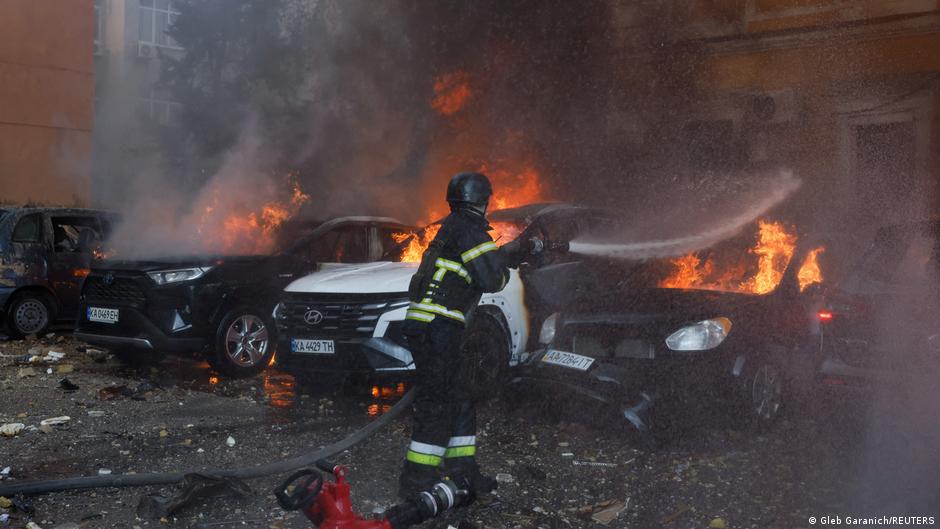
Russian forces again attacked Kyiv overnight into Tuesday, September 29, extending a sequence of strikes that had already hit central parts of the Ukrainian capital during the previous day. The latest attacks involved ballistic missile debris and unmanned aerial vehicles, according to city officials, and added to the physical damage already reported across residential, educational, medical and institutional sites.
For Ukraine’s public sector and private operators, the attacks represent another round of unplanned costs tied to emergency response, repairs, medical treatment, temporary disruption and insurance exposure. While officials reported no immediate information about deaths or injuries from the overnight strikes, the broader attacks since the start of September 28 had already left two people dead and 26 injured, Kyiv Mayor Vitali Klitschko said. Eight of the injured required hospitalization, and one was in serious condition.
The overnight attack followed daytime strikes in central Kyiv, including an attack on the building of the National Academy of Sciences of Ukraine and another on the Dobrobut medical center. The National Academy of Sciences strike caused a major fire, trapped people inside the building and forced many to escape through windows. Both fatalities reported from the September 28 attacks were victims of the drone strike on the academy building.
Damage Reports Point to Rising Repair and Response Costs
Klitschko said debris from a ballistic missile fell in the courtyard of a residential building in Kyiv’s Solomianskyi district. He initially reported that there was no fire at that site. In the Pecherskyi district, he said there was a fire in a three-story nonresidential building. Later, he clarified that in the Solomianskyi district a fire had broken out in one of the buildings of an educational institution after the strike.
“In the Solomianskyi district, missile debris fell in the courtyard of a house. There is no fire. In the Pecherskyi district, there is a fire in a three-story nonresidential building,” Klitschko wrote on Telegram.
The Kyiv City Military Administration also reported that a drone had fallen onto a roadway. In addition, officials reported a fire after debris fell on the roof of a five-story building in the Holosiivskyi district. The reported impact locations suggest a spread of damage across multiple urban functions: housing, transport routes, education facilities, office or institutional buildings and medical services.
From a financial reporting perspective, each category of damage can carry different budget consequences. Residential damage typically requires emergency assessment, debris removal and possible support for displaced occupants. Damage to educational premises may affect municipal or state property accounts and could require repairs before normal operations resume. Damage to medical facilities can add pressure to healthcare service capacity and operating budgets, particularly if repairs coincide with treatment of casualties from the same attacks.
The source information did not provide monetary estimates for the damage, the cost of firefighting and emergency response, or potential insurance claims. It also did not specify whether the affected buildings were publicly owned, privately owned or held under mixed arrangements. Those details are typically material for determining which balance sheets ultimately absorb the losses and which costs are treated as immediate operating expenses, capital repairs, claims, grants or emergency budget allocations.
Daytime Attacks Broadened the Impact on Public Institutions
The overnight strikes were described by officials as a continuation of daytime attacks in the center of Kyiv. The attack on the National Academy of Sciences building was especially significant because the institution is part of Ukraine’s public research infrastructure. The reported fire, blocked exits and window escapes point to an incident with both human and property consequences, although the available information did not quantify structural damage or provide an estimate for restoration costs.
The separate strike on the Dobrobut medical center also places the episode within a wider operational risk context. Medical facilities carry high replacement and continuity costs because they include specialized equipment, patient services, staffing obligations and regulatory requirements. The available report did not state the extent of damage to the medical center or whether services were interrupted, so any financial assessment remains limited to the fact of the strike itself.
Kyiv’s city authorities reported that two people were killed and 26 were injured from the attacks since the start of September 28. Klitschko said eight of those injured required hospitalization, with one in serious condition. These figures underscore the dual burden on municipal and national systems: immediate emergency response on one side and longer-term recovery obligations on the other.
For investors and analysts monitoring Ukraine-related risk, repeated attacks on the capital are relevant not only because of the direct destruction they cause, but also because of the recurring nature of expenditure they create. Emergency repairs, fire response, hospital care, security measures and reconstruction planning can weigh on public finances even when individual incidents do not produce large disclosed losses. They can also complicate planning for businesses operating in affected districts, including medical providers, landlords, contractors, insurers and suppliers.
The overnight attack did not immediately add to the reported casualty count, according to the information available from officials. However, the reported fires and debris impacts show that the city continued to face material damage risk after the initial daytime wave. With strikes affecting residential surroundings, a roadway, an educational facility, a nonresidential building, a five-story building and major institutional sites, Kyiv’s latest damage profile spans both public-service infrastructure and private or mixed-use urban assets.
No financial loss estimate was provided in the source information. The absence of disclosed damage values means the fiscal and balance-sheet implications cannot yet be quantified. Still, the sequence of attacks adds to a pattern of recurring, sudden liabilities for emergency services and reconstruction authorities, while also increasing uncertainty for organizations responsible for maintaining buildings, services and employee safety in the capital.



