Kyiv Mayor Urges Temporary Relocation as Russian Attacks Raise City Risk
Vitali Klitschko said Kyiv is preparing winter reserves but warned that intensified Russian strikes could create a major water supply crisis.
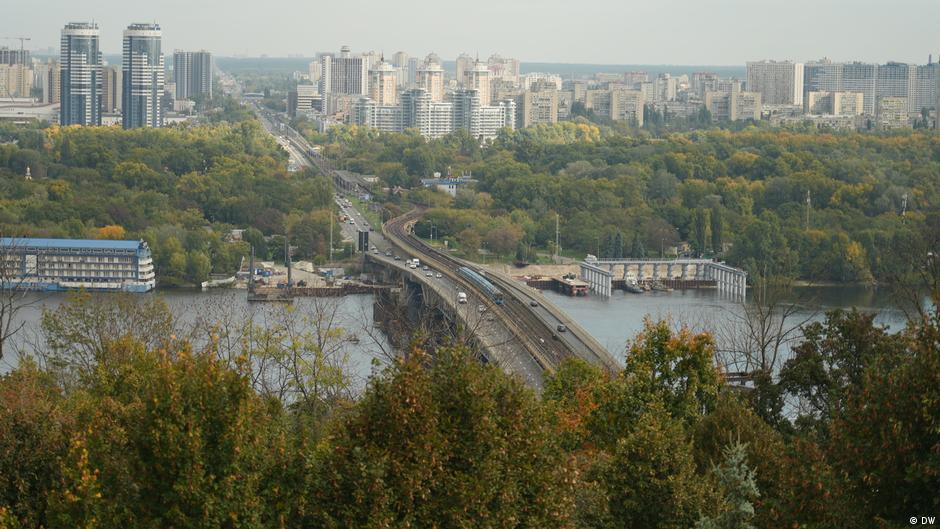
Kyiv Mayor Vitali Klitschko has advised residents of the Ukrainian capital who have friends or relatives elsewhere in the country to consider leaving the city temporarily, as intensified Russian attacks increase pressure on municipal services and emergency planning ahead of winter.
In an interview with AFP published on Wednesday, October 8, Klitschko framed the situation in stark terms, saying the issue for Kyiv had become one of basic survival. His remarks add a fiscal and operational dimension to the security crisis facing Ukraine’s largest city, where local authorities are preparing backup heating systems and stockpiling fuel, food and drinking water in anticipation of further disruption.
“Today it is about survival,” Klitschko said, according to the source article.
The mayor said daily reports continue to arrive about destroyed buildings, wounded residents and deaths as shelling of the city intensifies. While he stopped short of calling for a full evacuation, his recommendation signals a risk-management approach for households with the ability to relocate within Ukraine, particularly as winter approaches and the resilience of urban infrastructure becomes central to the city’s functioning.
Infrastructure Risk Moves to the Forefront
Klitschko warned that if Russian attacks disrupt Kyiv’s water supply system, the city could face a crisis that he described as “fairly large-scale.” For city administrators, that raises concerns not only about immediate humanitarian needs but also about the cost and complexity of maintaining essential services under sustained attack.
Kyiv authorities are building reserve heating systems for the winter and accumulating emergency stocks of fuel, food and potable water, the mayor said. Such preparations indicate that the city is trying to strengthen operational continuity in areas that would normally rely on centralized infrastructure. The planning burden is significant: backup systems require fuel, logistics, maintenance, staffing and distribution capacity at a time when the city is already responding to physical damage and civilian casualties.
Klitschko cautioned, however, that even strong preparation may not be sufficient if air defenses fail to intercept incoming strikes. “If air defense does not work, we may find ourselves in a bad scenario,” he said. That warning underscores the dependency of municipal resilience on national defense capacity, an external factor that local balance sheets and city-level planning cannot fully control.
No Call for Full Evacuation
The mayor emphasized that he was not urging all residents to leave Kyiv. He said a full evacuation would align with Russian President Vladimir Putin’s objective, describing the best scenario for Moscow as one in which residents abandon cities and the country itself.
That distinction matters for Kyiv’s economic and administrative stability. A temporary relocation recommendation for some residents is materially different from a general evacuation order. The former reduces pressure on essential services while preserving the city’s institutional presence; the latter would have far broader implications for labor availability, commerce, public administration and the continuity of services.
Klitschko’s comments also suggest that household-level decisions are now part of the broader risk calculus. Residents with access to accommodation outside Kyiv may be able to reduce personal exposure, while those who remain will depend heavily on municipal reserves, emergency response capacity and the effectiveness of air defense systems.
September Escalation and October Bridge Strikes
According to the source article, Russia intensified attacks on Kyiv in September. In early October, Russian forces also began striking bridges over the Dnipro River that connect the right-bank and left-bank parts of the capital. Those bridges had not previously been subjected to attacks.
The strikes have also targeted energy and communications facilities, as well as railway infrastructure. From a financial reporting perspective, this pattern points to a widening infrastructure risk profile for the capital. Energy, communications, rail links and bridges are not isolated assets; they are systems that support transport, commerce, public services and emergency logistics.
Damage to such infrastructure can generate cascading costs. Repairs to physical assets are only one category. Disruptions may also affect supply chains, public transport, electricity availability, communications reliability and the ability to move people and goods across the city. The source article does not provide financial estimates, and no figures should be inferred, but the categories of exposure are clear.
For investors and institutions tracking Ukraine’s fiscal position, reconstruction needs and municipal resilience, Kyiv’s situation is a reminder that wartime financial metrics often depend on non-financial variables. Air defense performance, infrastructure redundancy, population movement and the durability of local utilities can all affect spending requirements and economic continuity.
Zelensky Cites New Russian Airstrike Strategy
On October 3, Ukrainian President Volodymyr Zelensky said Russia had adopted a new airstrike strategy aimed at forcing Ukrainians to leave Kyiv and other large cities. Klitschko’s remarks appear consistent with that broader assessment, though he presented temporary relocation as a practical option for residents with somewhere to go rather than as a strategic withdrawal from the capital.
The mayor’s message therefore carries two parallel signals. To residents, it is a warning to prepare for worsening conditions and consider temporary relocation if feasible. To external observers, including those focused on public finance, reconstruction and sovereign risk, it highlights the growing importance of urban infrastructure resilience as a core component of Ukraine’s wartime outlook.
Kyiv’s preparations for winter are already underway, but Klitschko made clear that reserves and backup systems have limits. The city can build contingencies, store supplies and plan for service interruptions. Yet the outcome will depend heavily on whether attacks can be intercepted and whether critical infrastructure can continue operating under pressure.
For now, the mayor is not calling for Kyiv to empty. Instead, he is urging a selective, temporary reduction in exposure for residents who have realistic alternatives elsewhere in Ukraine. In the current environment, that recommendation functions as both a public safety measure and a sign of the financial and operational strain facing a capital city under intensified attack.



