Kyiv Seeks Unified European Position as Allies Review Ukraine Support
The proposed coalition meeting will address Europe’s negotiating role, while Kyiv assesses aid delivery and seeks further energy and air-defense support.
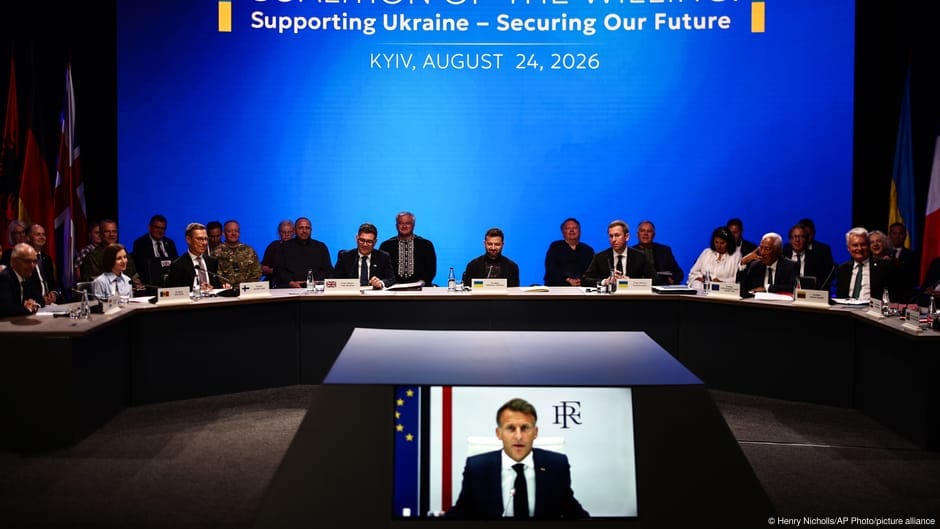
Kyiv is preparing a meeting of countries supporting Ukraine that could establish a unified European position for negotiations with Russia, as the Ukrainian government also reviews whether existing international support initiatives are delivering tangible results.
Ukrainian President Volodymyr Zelensky outlined the plans in a video address published on Sunday, November 15. He said the next meeting of the so-called coalition of the willing could prove historic by strengthening Europe’s role in the negotiating process.
“We are preparing a meeting of the coalition of the willing—an important meeting, perhaps a historic one. We can define a 100 percent strong European position for negotiations,” Zelensky said.
He argued that the existing prospective trilateral format involving Ukraine, the United States and Russia should be expanded to include Europe and become substantially stronger. Zelensky did not specify whether he was referring to the coalition meeting expected to take place in Berlin on November 19 or to preparations for a separate summit.
Kyiv Reviews Performance of Support Coalitions
The coalition of the willing comprises 37 countries, most of them European states or governments providing military assistance to Ukraine as it resists Russia’s full-scale invasion. France, the United Kingdom and Germany are regarded as the group’s informal leaders.
From a financial reporting perspective, Kyiv’s review highlights the growing importance of distinguishing announced commitments from support that is operational, funded and delivered. Although Zelensky did not disclose monetary values, timelines or revised funding targets, his comments indicate that the Ukrainian government is assessing the effectiveness of the various coalitions established to help the country.
“We are conducting a review” of their work, Zelensky said, examining “which ones are genuinely fulfilling their tasks and which ones remain empty, frankly.” He added that Kyiv would work to give those initiatives greater substance.
The support structures include both formal agreements among Ukraine’s allies and informal groupings or initiatives that were created without clearly defined operating rules. Their financial and operational significance varies considerably, making performance assessment difficult when initiatives lack disclosed budgets, procurement schedules or measurable delivery targets.
The IT Coalition, for example, was organized within the Ukraine Defense Contact Group, commonly known as the Ramstein format. It was established to support Ukraine in cybersecurity and digital technologies and remains active. By contrast, the frequently cited “tank coalition” did not exist as a formal entity in practice, even though Ukrainian representatives also used the term at the time.
The review could therefore function as a form of portfolio assessment for international assistance, identifying which frameworks continue to provide equipment, financing or specialist capabilities and which have produced limited practical outcomes. Zelensky did not announce that any coalition would be dissolved, nor did he provide a balance sheet of commitments and deliveries.
Energy Equipment and Financing in Focus
In the same address, Zelensky said Kyiv had reached an agreement with European Commission President Ursula von der Leyen on additional energy support. The assistance is intended for cities and communities facing the greatest difficulties.
The package is expected to include additional generators, other equipment and financial assistance to support resilience, according to Zelensky. He did not state the value of the prospective funding, identify the financing mechanism or provide a delivery timetable. Those details will be important for evaluating the package’s effect on local infrastructure needs and Ukraine’s broader external financing requirements.
Energy support has direct implications for municipal spending and economic continuity. Generators and related equipment can help sustain essential services when centralized infrastructure is under pressure, while direct financing may give affected communities greater capacity to cover urgent resilience costs. The absence of disclosed figures, however, prevents an assessment of the package’s scale relative to current requirements.
Ramstein Meeting Expected to Address Air Defense
Kyiv is also looking to an upcoming meeting of allies in the Ramstein format for approval of new deliveries of air-defense missiles. Zelensky said the meeting should produce concrete results and demonstrate to Russia that Ukraine will not be left without international support.
Ukraine’s priorities are air defense, with partners being asked to focus on missiles for Patriot and NASAMS systems, the president said. He did not provide the number or value of the requested missiles, identify potential suppliers or specify how new deliveries would be financed.
Together, the planned coalition meeting, the review of existing support groups and the expected energy and air-defense assistance point to a broader effort by Kyiv to improve coordination and convert political commitments into measurable resources. For governments and institutions financing Ukraine, the central reporting questions will remain the size of new commitments, the timing of disbursements and deliveries, and the extent to which each coalition can document results against its stated mandate.



