Latvian Nationals Detained at RAF Molesworth as UK Reviews Base Security Risk
The arrests at a NATO and U.S. intelligence site add a security variable for government risk planning, defense spending oversight and allied operations.
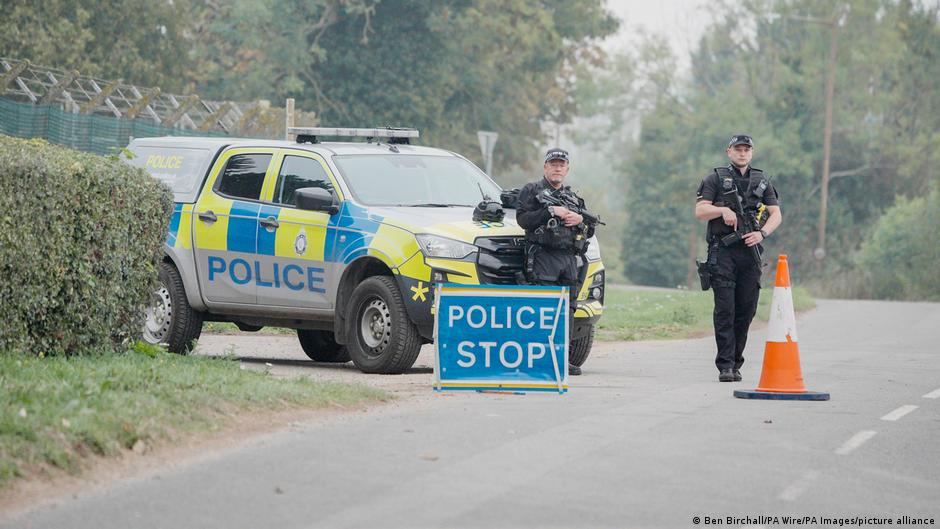
British counterterrorism police have detained two Latvian citizens after an intrusion at RAF Molesworth, a military airbase in southeastern England that hosts NATO and U.S. intelligence facilities. The incident, reported by AFP citing British authorities, introduces a fresh security and operational risk point for a defense estate already under scrutiny after a separate alert at RAF Fairford in late September.
The men, aged 32 and 36, allegedly damaged fencing around the perimeter of the RAF Molesworth site before entering the base during the night of October 8. According to police, the suspected purpose of the intrusion was to “cause damage to the United Kingdom.” An investigation is under way.
For financial reporting and public-sector oversight, the case is less a conventional corporate earnings story than a reminder that security incidents at strategic military assets can carry direct and indirect budget implications. Such episodes can prompt reviews of perimeter infrastructure, policing costs, contractor obligations, emergency response protocols and the allocation of resources across defense facilities. No financial estimate has been disclosed in connection with the Molesworth incident.
Security Event With Budget-Relevant Implications
RAF Molesworth is not described in the source report as a commercial asset, but its role as a site for NATO and U.S. intelligence centers gives the episode relevance to defense spending, alliance burden-sharing and public procurement. Damage to fencing, even if limited, may require repairs and could trigger broader assessments of whether physical security measures are sufficient for installations that support allied intelligence operations.
The report did not provide a cost for the damage, identify the specific section of the perimeter affected, or state whether activity at the base was interrupted. It also did not specify whether any contractor-run systems, private security arrangements or insurance mechanisms are involved. Those omissions matter for investors and analysts following defense services, infrastructure support, surveillance systems and government security procurement, because the financial consequences of base incidents often depend on subsequent policy and contracting decisions rather than the initial event alone.
Police said the men’s alleged aim was to “cause damage to the United Kingdom.”
The arrests come at a sensitive moment for military-site security in Britain. Police said that, at this stage, “nothing indicates” a link between the RAF Molesworth case and a separate incident at RAF Fairford in late September. That earlier episode involved a local resident reporting “suspicious” activity near the base, after which police found three vans containing “some quantity” of petrol. The area was cordoned off, and residents of a nearby village were evacuated.
Seven suspects were detained in connection with the RAF Fairford incident, according to dpa, but all were later released under certain conditions. The report did not identify those conditions or provide details on any charges. The source also states that the United States decided to withdraw American B-1 bombers that had been based at RAF Fairford. U.S. President Donald Trump explained the decision by referring to “threats” from people he said were “connected with Iran.”
Investor Lens: Defense Infrastructure and Operational Continuity
From an investor-relations perspective, the immediate facts do not point to a listed company’s revenue or earnings impact. There are no disclosed figures for repairs, security upgrades, operational disruption, or additional law-enforcement expenditure. However, the events are relevant to sectors whose contracts depend on defense-site resilience, including perimeter security, surveillance technology, facilities management, logistics and emergency response support.
Government defense budgets often absorb such costs through maintenance, security and operational-continuity lines rather than through headline procurement programs. If authorities decide that recent incidents at RAF Molesworth and RAF Fairford warrant enhanced safeguards, spending could shift toward fencing upgrades, detection systems, access control, personnel deployment and contingency planning. The source report does not say that such measures have been ordered, and any financial impact remains undetermined.
The presence of NATO and U.S. intelligence centers at RAF Molesworth also places the incident in a cross-border budget context. Allied facilities can involve layered responsibilities among host governments, foreign military partners and specialized contractors. Determining who pays for incremental security enhancements can therefore depend on existing agreements, procurement frameworks and the classification of any required work. None of those financial arrangements were disclosed in the report.
For public finance observers, the key metric to watch is whether the incident remains an isolated law-enforcement matter or becomes part of a broader pattern leading to increased security appropriations. The police statement that there is currently no indication of a link to RAF Fairford limits, for now, the inference that authorities are dealing with a coordinated sequence of events. Still, the proximity in timing between the late-September Fairford alert and the October 8 Molesworth intrusion may keep attention focused on base-security readiness.
Operationally, military installations depend on continuity rather than quarterly performance metrics. But their resilience has measurable cost dimensions: prevention, response, repair and deterrence. In that sense, the Molesworth case illustrates how physical security events can migrate from police files into budget reviews, procurement decisions and diplomatic cost-sharing discussions, even when the initial facts are limited to arrests and property damage.
The investigation into the two detained Latvian citizens is continuing. Until authorities release more information, the known facts remain confined to the alleged perimeter breach, damage to fencing, the suspects’ citizenship and ages, and the police description of their intended harm. No direct connection to RAF Fairford has been established by police, and no quantified financial consequences have been reported.



