Lithuania Seeks EU Terror Listing for Russian Military Intelligence
The proposed designation could raise sanctions, compliance and operational risks for companies and investors with exposure to Russia.
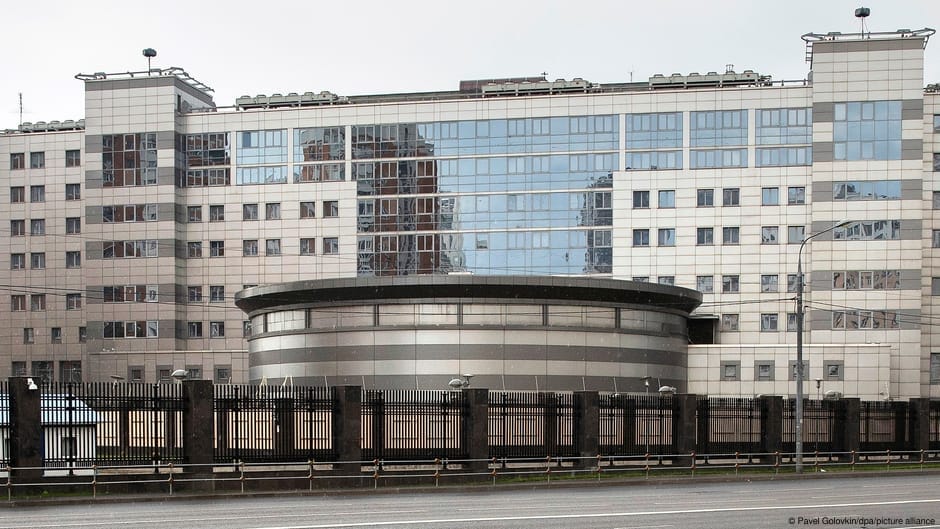
Lithuanian Foreign Minister Kęstutis Budrys has called on the European Union to designate the Main Directorate of the General Staff of the Russian Armed Forces as a terrorist organization, a step that could carry material consequences for sanctions compliance, cross-border operations and investor risk assessments.
Budrys made the proposal in an interview with the German newspaper Die Welt published on Wednesday, Nov. 25. He argued that the Russian military intelligence service “terrorizes” European societies, decision-makers and other private individuals.
The minister said Lithuania’s initiative was not connected to the country’s forthcoming presidency of the Council of the European Union. He compared the Russian directorate with Iran’s Islamic Revolutionary Guard Corps, the elite military and political formation that the EU designated as a terrorist organization in early 2026.
“We must make it clear to Russia that its actions against us are no longer simply ‘hybrid warfare,’ but rather ‘unconventional warfare.’”
Budrys added that such actions could cross the threshold established under Article 5 of the North Atlantic Treaty, NATO’s collective-defense provision. His remarks elevate the debate beyond diplomatic terminology by placing alleged Russian operations within a framework that European governments, regulated financial institutions and multinational companies may need to treat as a more severe security exposure.
Potential implications for corporate risk reporting
No specific financial measures, sanctions package or implementation timetable accompanied Budrys’ proposal. Any practical effect would depend on whether EU institutions pursue the designation and on the legal restrictions ultimately attached to it. Nevertheless, a terrorist listing could prompt companies and investors to reassess counterparties, beneficial ownership, payment channels and contractual relationships involving Russian state-linked entities.
For banks, insurers and other regulated businesses, the issue is particularly relevant to compliance controls and disclosure of contingent risks. A broader European classification of Russian intelligence-linked activity could increase the scrutiny applied to transactions, intermediaries and assets with possible connections to Russian security structures. Companies could also face higher costs for due diligence, legal advice and monitoring even before any formal designation, as boards respond to a changing policy environment.
The proposal may also affect how issuers describe geopolitical risk in annual and quarterly reporting. Businesses operating in the Baltic region, handling trade near Russia or supplying dual-use technologies could face heightened operational and reputational exposure. Investors may look for clearer disclosures on business continuity, insurance coverage, supply-chain resilience and management’s ability to comply with any new EU restrictions.
Estonian border closure adds operational pressure
Budrys’ comments followed an announcement by Estonian authorities on Nov. 15 that all border crossing points with Russia would close from the following month. Estonia accused Russian special services of attempting to cause an explosion and fire at the premises of Threod Systems, a company that manufactures drones and electro-optical intelligence and surveillance systems.
The planned closure introduces an additional operational factor for companies dependent on road transport, border infrastructure or regional supply chains. The source material did not specify the financial impact on Threod Systems, the cost of Estonia’s border measures or the volume of commerce potentially affected. However, the development adds to the security considerations facing defense-related manufacturers and businesses operating near the EU’s eastern frontier.
On the same day as Estonia’s announcement, Budrys supported the neighboring country and accused Russia of “state terrorism.” In a post on the social media platform X, he said Europe should stop using euphemisms and seriously consider designating the GRU and other Russian intelligence and security structures involved in sabotage operations as terrorist organizations.
Budrys also called for stronger support for Ukraine, greater pressure on Moscow and “real consequences” for those who order and carry out such attacks. These demands point toward continued political pressure for tougher measures, although he did not outline their prospective budgetary cost or identify particular financial instruments.
Investors await an EU policy response
For investors, the immediate significance lies in policy direction rather than measurable earnings effects. The proposal has not yet produced disclosed changes to corporate revenue, profit, balance sheets or capital expenditure. Its financial relevance rests on the possibility of tighter restrictions and a wider risk premium for companies exposed to Russia, border trade, defense technology or critical infrastructure.
Future EU decisions will determine whether the initiative becomes a formal legal and compliance issue. Until then, finance teams and investor-relations departments may need to monitor the debate for potential effects on sanctions controls, counterparty reviews, insurance terms and geopolitical-risk disclosures.



