Macron Defends Ukraine Aid as Poland and Bulgaria Cite Fiscal Strains
France’s president framed continued support for Kyiv as a European security priority as two governments pointed to budget constraints.
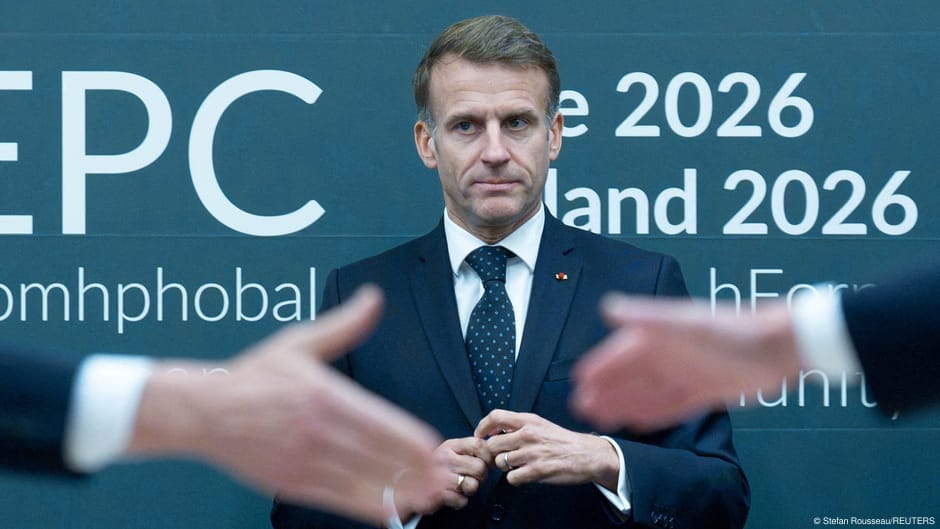
French President Emmanuel Macron has criticized calls to limit further support for Ukraine, arguing that a reduction in assistance would expose both Kyiv and the wider European region to greater long-term risks. His intervention comes as Poland and Bulgaria cite budget deficits, defense spending and other fiscal constraints in explaining why they cannot commit additional funds to certain Ukraine-related initiatives.
In a post published on the social media platform X on Saturday, November 14, Macron said that allowing Russia to impose its will by force on one European country would weaken the region as a whole. He characterized continued assistance as an investment in Europe’s security rather than a commitment affecting Ukraine alone.
“Those who call for limiting aid to Ukraine essentially want to force it into an unjust peace, to make it vulnerable in the long term — and therefore to make all of Europe vulnerable,” Macron wrote.
He described that position as defeatism and “a direct path to the next war.” Macron said the war in Ukraine was the central subject of discussions at the ninth European Political Community summit on November 12 and at an informal meeting of European Union heads of state and government in Dublin on November 13.
Support priorities meet national budget limits
According to Macron, European leaders agreed on two immediate priorities: helping Ukraine get through the winter and continuing joint work toward what he called a just and lasting peace. He said Europe must play an active part in that process because the continent’s security depends on the outcome.
The French president’s remarks put a strategic case for sustained assistance alongside increasingly visible national balance-sheet pressures. Poland and Bulgaria have both linked their positions on further financial support to domestic fiscal capacity, demonstrating how European security commitments are being weighed against deficits and existing expenditure obligations.
Macron’s statement followed an announcement by Polish Prime Minister Donald Tusk in Dublin on November 13 that Poland would suspend contributions to the PURL program, under which European countries purchase US weapons for Ukraine.
Tusk cited Poland’s large budget deficit and Warsaw’s high defense expenditure as reasons for the decision. He said Poland had provided, and continued to provide, substantial assistance to Ukraine, but could not allocate additional money given the country’s financial capacity and its own defense and security costs, which he described as among the highest in Europe.
The Polish decision illustrates the pressure facing governments that are already carrying significant national security spending. It also highlights a central issue for European policymakers and investors monitoring public finances: political backing for Ukraine may remain strong even when governments restrict new commitments because of deficit levels and competing budget priorities.
Bulgaria draws limits around future funding
Bulgarian Prime Minister Rumen Radev made a similar statement in Dublin. Commenting on discussions about a new loan for Kyiv, he said Bulgaria was not currently able to provide financial assistance to Ukraine. He also noted that the European Union had opened an excessive budget deficit procedure concerning Bulgaria.
Radev said Bulgarian authorities would be prepared to discuss participation only if the money were directed toward humanitarian assistance, energy supplies and medical needs rather than weapons purchases. That distinction suggests that the composition of any future support package may prove as important as its total value when national governments seek domestic approval or assess the effect on their budgets.
For European fiscal reporting, the statements from Warsaw and Sofia expose a widening gap between common strategic objectives and the different financial positions of individual member states. The debate is likely to focus not only on headline commitments, but also on funding structures, loan terms, contribution formulas and whether spending is classified as military, humanitarian or energy-related assistance.
Macron links NATO role to postwar security
Macron separately argued that Ukraine deserves a place in NATO, describing the country as possessing Europe’s strongest conventionally armed military. He said Kyiv, together with the alliance, plays a key role in Europe’s security architecture.
The French president also called for greater clarity about the postwar framework. He said European governments should explain, including to Russia, how they envision the eventual settlement and should define what they expect from the United States regarding Europe’s long-term security.
Those questions have direct financial implications for European governments. Although Macron did not set out spending targets, financing mechanisms or projected costs, the security framework he described would require policymakers to reconcile continuing support for Ukraine with national defense budgets and EU fiscal oversight.
The contrasting messages from France, Poland and Bulgaria therefore reflect different parts of the same policy equation. Macron emphasized the potential security cost of reducing assistance, while Tusk and Radev stressed immediate financial limitations. As European leaders consider winter support, a possible new loan and longer-term security arrangements, national fiscal metrics will remain central to decisions about how political commitments are funded and distributed.



