Meloni Presses EU to Clarify Ukraine Talks Mandate
Italy’s prime minister says fragmented EU diplomacy could weaken coordination as investors monitor geopolitical and fiscal risks.
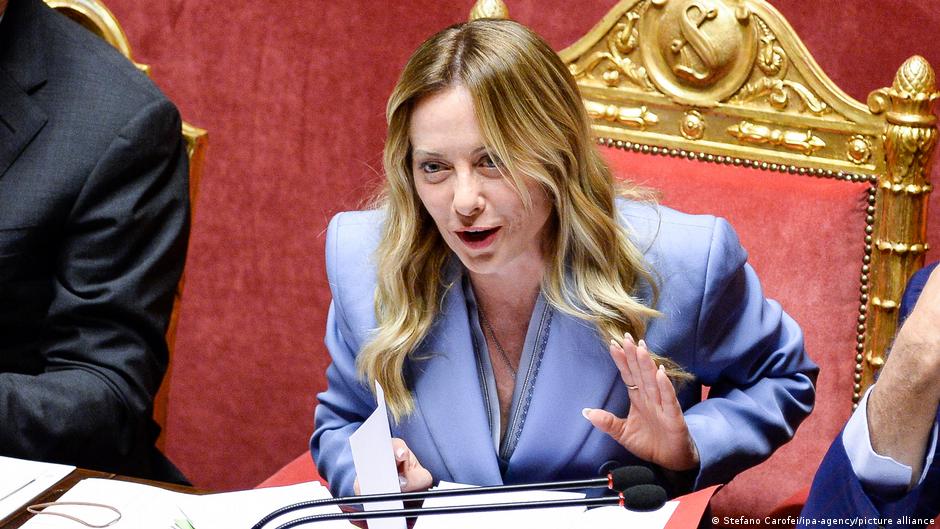
Italian Prime Minister Giorgia Meloni has called on European Union leaders to decide who should represent the bloc in negotiations aimed at ending the war in Ukraine, criticizing what she described as an uncoordinated approach among EU governments.
The intervention adds a governance and policy-coordination dimension to a conflict already carrying significant implications for European public finances, energy markets, defense expenditure and investor confidence. Although Meloni’s letter did not set out financial proposals, the clarity she is seeking could matter to markets assessing the EU’s ability to manage geopolitical risks and coordinate the economic consequences of any eventual peace settlement.
In a letter to European Council President António Costa, cited by dpa on Thursday, November 5, Meloni demanded a clear decision on both the EU’s representative and the authority granted to that person.
“I continue to insist that it be decided once and for all who exactly will sit at the negotiating table on behalf of the European Union and with what mandate,” Meloni wrote.
Her emphasis on a formal mandate points to a broader question of institutional accountability. For investors and corporate finance teams, a clearly authorized EU negotiator could make it easier to interpret the bloc’s position on issues that may eventually affect sanctions, reconstruction commitments, security spending and cross-border trade. The letter itself, however, focused on political representation rather than detailing any economic or budgetary measures.
Coordination Concerns Carry Financial Relevance
Meloni argued that “uncoordinated behavior” within the EU would be unhelpful both in relations with allies and in dealings with those who must be persuaded to end what she called a “senseless aggression.” AFP also cited the Italian prime minister as warning that an image of Europe acting chaotically would benefit only those seeking to prolong the war.
That criticism is relevant to financial reporting because geopolitical coordination can influence the assumptions companies use in earnings guidance, impairment reviews and risk disclosures. European businesses exposed to energy costs, defense procurement, logistics or trade with the region continue to face uncertainty linked to the duration and outcome of the conflict. A more unified diplomatic framework would not remove those risks, but it could offer investors a clearer basis for evaluating policy scenarios.
Meloni proposed that the representation issue be discussed at an informal European Council meeting in Dublin on November 13. She said that discussion could enable the European Council to adopt a formal decision on who will represent the EU in Ukraine peace negotiations at the Brussels summit scheduled for December 17-18.
The proposed timetable gives EU institutions roughly a month between the Dublin discussion and the Brussels summit to establish a common position. From an investor-relations perspective, the sequence may be closely watched for signs of policy cohesion, particularly by companies preparing year-end reporting and updating assessments of geopolitical exposure. Any formal decision would define diplomatic responsibility, while the financial consequences would depend on the substance and progress of subsequent negotiations.
Previous Disputes Over Separate Initiatives
Meloni has previously criticized individual initiatives by EU national leaders that, in her view, dilute the bloc’s unified position on Russia’s war in Ukraine. Rome specifically objected to a telephone conversation involving Finnish President Alexander Stubb, Norwegian Prime Minister Jonas Gahr Støre and Russian President Vladimir Putin.
The Italian government’s concern is that parallel diplomatic initiatives can make the EU’s collective stance less coherent. For financial markets, multiple channels may also complicate efforts to determine which political signals carry formal weight. That distinction can be important when investors assess the potential direction of sanctions policy, government spending and the operating outlook for businesses with regional exposure.
A new round of Russia-Ukraine negotiations mediated by the United States is scheduled for November 10-11 in Abu Dhabi. US presidential special envoy Steve Witkoff said the meeting would address “postwar security, de-escalation, humanitarian initiatives and next steps toward peace.”
The Abu Dhabi talks will therefore precede the proposed informal EU discussion in Dublin. Meloni’s request suggests that Rome wants the bloc to establish a recognized representative and mandate before later stages of diplomacy develop. The outcome could shape how clearly the EU communicates its position to allies, counterparties and the public.
For companies and shareholders, the immediate issue is not a specific change to quarterly earnings or balance sheets, but the credibility of the political process surrounding a major source of European economic uncertainty. Meloni’s letter frames institutional coordination as a prerequisite for effective diplomacy. Investors will be watching whether EU leaders translate that demand into a formal decision in December and whether a unified mandate improves visibility around the conflict’s longer-term fiscal, trade and security implications.



