Merz Links EU Financial Decisions to €45 Billion Ukraine Funding Gap
Germany’s chancellor is pressing every EU member to contribute as the bloc weighs Ukraine’s financing needs and its 2028-2034 budget.
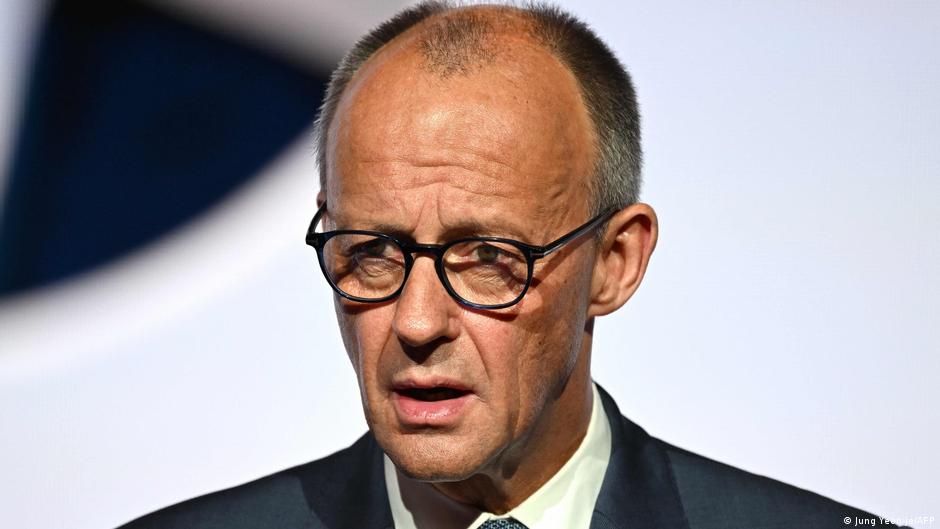
German Chancellor Friedrich Merz has called on every European Union member state to make a “fair contribution” toward closing a multibillion-euro gap in financial assistance for Ukraine, while signaling that Germany could withhold support for other EU decisions carrying financial consequences if no common commitment is reached.
In a letter to European Council President António Costa, Merz tied progress on the Ukraine package to the bloc’s broader financial agenda. The immediate issue is a €45 billion shortfall that the EU is expected to cover for the coming year, making the negotiations a test of how the burden will be allocated among national governments.
“A common confirmation of the willingness to provide assistance to Ukraine is a necessary condition for resolving this problem and for discussing other issues, especially those with financial implications.”
The wording amounts to an indirect threat to block or delay other financial decisions unless all EU countries participate. Such resistance could complicate negotiations in a bloc where major budgetary and financing measures often require extensive political coordination, particularly when governments disagree over national contributions and exposure to future liabilities.
Ukraine’s financing requirement expands
The European Commission previously estimated that the funding gap for assistance to Ukraine next year would reach €70 billion, with €45 billion to be covered by the EU. Ukrainian President Volodymyr Zelensky asked international partners in October for an additional €70 billion so that the country could continue defending itself against Russian aggression. EU heads of state and government subsequently instructed the Commission to prepare a proposal addressing that financial requirement.
The new request comes despite an earlier EU agreement to provide Kyiv with a €90 billion loan for 2026 and 2027. The former Hungarian government had blocked that decision for an extended period, but the country’s new prime minister, Péter Magyar, removed the obstacle. Kyiv received the first tranche under the loan on June 25.
Those funds are now considered insufficient. The resulting debate places renewed pressure on EU balance sheets and national budgets, while raising questions over the structure, timing and distribution of any additional commitments. Merz is seeking to prevent the burden from falling disproportionately on a smaller group of member states.
“Support for Ukraine is a matter of our indivisible European security, and this principle must also apply to the distribution of the burden of that support,” the chancellor wrote.
Long-term funding enters EU budget talks
Merz also wants negotiations over the EU’s 2028-2034 budget to produce a framework for sustainable, multiyear financing for Ukraine, which is in its fifth year of resisting Russian aggression. Embedding support in the bloc’s longer-term financial planning could provide Kyiv with greater predictability, but it would also require member states to reconcile Ukraine-related commitments with other spending priorities covered by the seven-year budget.
The chancellor urged Costa to make the issue a priority at the EU’s informal summit in Dublin on November 13. The meeting will provide leaders with an opportunity to examine both the near-term €45 billion requirement and the treatment of Ukraine funding in the next multiyear budget cycle.
Agreement is far from assured. Bulgarian President Rumen Radev and Slovak Prime Minister Robert Fico have already said they do not intend to participate in a new EU financial assistance package for Ukraine. The contributions of Hungary and the Czech Republic also remain uncertain.
Merz is due to meet Magyar in Berlin on November 10, with assistance for Kyiv expected to be among the main subjects. Hungary’s previous role in delaying the €90 billion loan underlines the financial and political significance of Budapest’s position in the coming talks.
Germany highlights its existing exposure
Germany is the largest donor to Ukraine among EU member states by a wide margin. The German government valued its support as of June 30, 2026, at €100 billion, a headline figure that demonstrates the scale of Berlin’s stated commitment but includes different categories of expenditure and obligations.
An assessment by the Kiel Institute for the World Economy found that €36 billion of that amount had been spent inside Germany, while another €22 billion represented future commitments. The breakdown is relevant to the financial reporting debate because announced support, domestic expenditure and obligations that have not yet been paid can have different effects on current budgets and future fiscal planning.
Merz’s demand for universal participation is therefore also a demand for clearer burden sharing. Germany’s position suggests that Berlin does not want the next financing package—or the longer-term EU budget framework—to rely mainly on the bloc’s largest donors while several governments opt out.
The dispute now links Ukraine’s funding gap to the EU’s wider financial decision-making. If Merz follows through on his warning, negotiations over unrelated measures with budgetary consequences could become part of the effort to secure commitments from reluctant member states.



