New York Mayor Mamdani Sets $29 Million Hate-Crime Budget in Antisemitism Plan
The city’s strategy raises annual funding for hate-crime prevention and directs new security and cultural spending toward Jewish institutions.
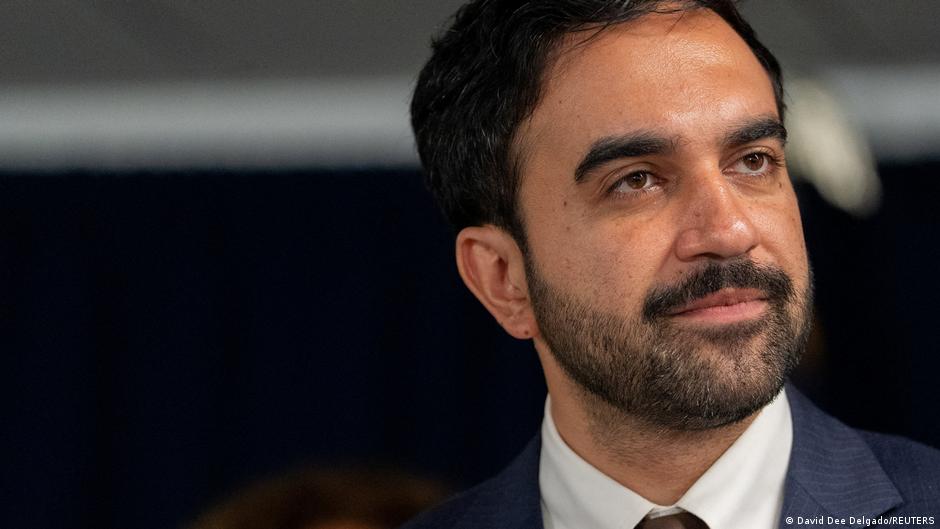
New York Mayor Zohran Mamdani on Tuesday, September 29, presented a citywide strategy to counter antisemitism, framing the initiative around a sharp increase in municipal spending on hate-crime prevention and additional support for Jewish institutions. The plan raises the city’s annual budget for combating hate crimes from $3 million to $29 million, making the funding increase the central financial commitment in the administration’s response.
The package includes additional money for the protection of synagogues and the restoration of a working group focused on the security of Jewish houses of worship. It also provides for citywide public information campaigns against antisemitism and an expansion of educational programs about the Holocaust.
Millions of dollars are also expected to be directed toward Jewish cultural centers and nonprofit organizations. Among the projects cited in the plan are a Holocaust victims’ memorial being created in Queens and a New Jewish Culture Center in Brooklyn. For city budget observers, the proposal marks a notable expansion of dedicated spending across security, education, public messaging and cultural infrastructure.
A Larger Budget Commitment
The clearest financial metric in the plan is the proposed increase in the annual hate-crime prevention budget from $3 million to $29 million. That change would represent a substantial expansion of the city’s recurring commitment to programs and agencies involved in preventing, tracking and responding to hate crimes.
The administration’s spending priorities appear to combine immediate security needs with longer-term educational and community programming. Funding for synagogue security addresses physical protection for religious institutions, while information campaigns and Holocaust education programs are aimed at public awareness and prevention. The cultural and nonprofit allocations extend the strategy beyond law enforcement and into community support.
Mamdani said the scale of antisemitic incidents in New York required the city government to take a leading role. In a video address published on X, he pointed to police statistics showing that antisemitic crimes account for more than half of all recorded hate crimes in the city, even though Jewish residents make up a much smaller share of the population.
“Although our Jewish neighbors make up only 12% of New York’s population, police statistics show that antisemitic crimes account for more than half of all registered hate crimes. This is not only unacceptable, it is something we are obligated to change, and city authorities will take the lead,” Mamdani said.
The mayor’s remarks position the funding increase as a response to a measurable imbalance in hate-crime data. From a financial reporting perspective, the plan’s implementation will likely be assessed by how the expanded annual budget is allocated among policing, institutional security grants, nonprofit support, education and public communications.
Institutional Security and Community Funding
The plan’s security component includes additional allocations for synagogues, a category of spending that could involve protective infrastructure, coordination with law enforcement or other measures determined by city agencies. The restoration of a working group on the safety of Jewish religious facilities suggests a governance mechanism for setting priorities and coordinating across city departments and community organizations.
The cultural funding element broadens the fiscal scope. Millions of dollars are planned for Jewish cultural centers and nonprofits, including the Queens Holocaust memorial and the New Jewish Culture Center in Brooklyn. These allocations indicate that the strategy is not limited to crime prevention spending, but also includes investment in institutions that support memory, education and cultural life.
The proposal arrives in a politically sensitive context. Mamdani, the first Muslim mayor of New York, is known for his pro-Palestinian position and criticism of Israel. Those views have drawn rejection from part of the city’s Jewish community, although he also has supporters among New York Jews.
That political backdrop may shape how the plan is received by donors, advocacy groups, nonprofit leaders and city budget stakeholders. For investor-relations-style observers of public institutions, the question is less about market performance than about credibility, execution and whether stated commitments translate into transparent spending and measurable outcomes.
Political Context and Implementation Risks
The announcement also follows high-profile criticism from Israeli Prime Minister Benjamin Netanyahu. Speaking at the United Nations General Assembly in New York, Netanyahu called the mayor an antisemite. During the 2026 election campaign, Mamdani said that if Netanyahu visited New York, he would seek his arrest on the basis of a warrant issued by the International Criminal Court in 2024. After taking office as mayor, however, he acknowledged that he did not have the relevant authority.
Those earlier statements remain part of the political environment surrounding the new plan. The administration is now presenting a major funding initiative aimed specifically at antisemitism and hate crimes against Jews, even as critics continue to scrutinize Mamdani’s positions on Israel and the Israeli government.
For New York City, the fiscal test will be execution. The headline increase from $3 million to $29 million establishes a financial benchmark, but the effectiveness of the initiative will depend on how quickly funds are appropriated, which agencies manage the spending, how nonprofit and cultural recipients are selected, and what reporting mechanisms accompany the program.
The plan also creates expectations among Jewish institutions seeking stronger protection and broader public action against antisemitism. If the city restores the working group on synagogue security and funds Holocaust education, cultural centers and awareness campaigns as described, the administration will have multiple budget lines and implementation channels to monitor.
Mamdani’s announcement therefore functions both as a policy statement and as a public-sector spending commitment. It gives the city a larger financial framework for addressing antisemitism while placing the mayor’s administration under pressure to show that expanded funding produces visible institutional support and a stronger response to hate crimes.



