North Korea Missile Launch Adds Geopolitical Risk for Korean Market Watchers
South Korea said Pyongyang fired at least one ballistic missile toward the Sea of Japan after a disputed border blast injured three soldiers.
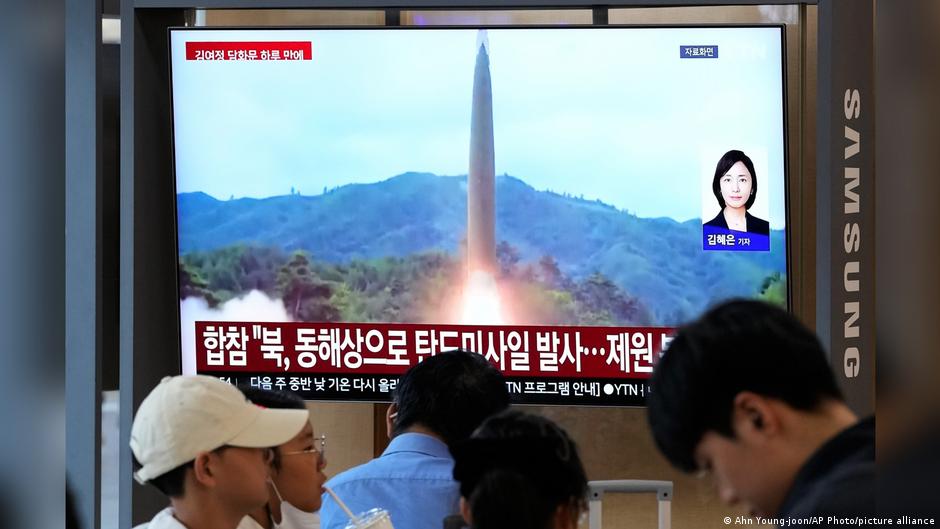
North Korea fired at least one ballistic missile toward the Sea of Japan, South Korea’s military said on Saturday, October 3, adding another layer of geopolitical risk for investors tracking the Korean peninsula, regional defense exposure and Asia-Pacific market sentiment.
The announcement came from South Korea’s Joint Chiefs of Staff, which said Seoul, Washington and Tokyo were maintaining a high level of military readiness while continuing close information sharing on North Korean ballistic missiles. The statement did not provide financial figures, market reaction data or details on the missile’s flight path, but the timing is relevant for investors because it follows a recent border incident that has already raised tensions between the two Koreas.
“South Korea, the United States and Japan maintain a high level of combat readiness while maintaining close information exchange on North Korean ballistic missiles,” Seoul said in its statement.
For financial markets, such events typically matter less as isolated military headlines and more as recurring risk signals. South Korea is a major export economy with globally significant technology, automotive, shipbuilding and battery companies. Investors with exposure to South Korean equities, the won, regional sovereign debt, defense contractors or Asia-focused exchange-traded funds often assess missile launches through the lens of continuity: whether escalation is likely to disrupt trade, consumer sentiment, logistics, corporate guidance or foreign capital flows.
The latest launch followed an explosion in the border zone between North and South Korea on September 21, which injured three South Korean soldiers. Seoul believes the blast was caused by the detonation of North Korean anti-personnel mines, according to AFP, citing South Korean military sources. South Korean Defense Minister Kang Shin Chul accused Pyongyang of violating the armistice and said Seoul intended to take responsive measures. South Korea’s Joint Chiefs of Staff also demanded an apology from North Korea.
Investor Focus Turns to Escalation Risk
North Korea rejected the accusations. Kim Yo Jong, the sister of North Korean leader Kim Jong Un, described the South Korean claim as “extremely low and dirty,” according to comments carried by North Korea’s state news agency KCNA. The competing narratives increase uncertainty, which is often the key variable for financial decision-makers. In the absence of confirmed commercial damage, sanctions changes or disruptions to production, investors are left to price a political and security risk rather than a conventional earnings event.
From a financial reporting perspective, the development is most relevant as a potential risk factor rather than a direct balance-sheet event. Companies with operations in South Korea may face questions from analysts and shareholders about business continuity planning, insurance coverage, exposure to regional logistics channels and the resilience of supply chains. Multinationals with manufacturing or supplier relationships in the country may also be pressed to explain whether contingency planning has changed.
Defense and security-related companies may draw attention from investors when peninsula tensions rise, although the source report does not provide information about procurement decisions, contract awards or budget changes. Any link between the missile launch and future defense spending would therefore remain a matter for subsequent reporting, not a confirmed financial outcome from this event.
The launch also arrives against a long-running structural backdrop. South Korea and North Korea remain formally at war because the Korean War ended in 1953 with an armistice agreement rather than a formal peace treaty. The two countries are separated by the Demilitarized Zone, with a demarcation line running through the middle of the mined strip. The area is among the most fortified and heavily mined borders in the world.
That unresolved legal and military status is important for investors because it means geopolitical risk is not a temporary input. It is a persistent feature of the Korean investment case. Quarterly earnings reports from companies with meaningful exposure to the region may not always quantify that risk, but it can influence investor relations discussions, risk disclosures and the discount investors apply during periods of heightened tension.
No Direct Earnings Impact Reported
The South Korean military statement did not report any immediate corporate impact, damage to infrastructure or disruption to financial markets. The source material also did not cite movements in the won, bond yields, equity indexes or credit spreads. As a result, the immediate financial read-through is limited to risk monitoring rather than measurable earnings or balance-sheet effects.
Still, the incident may increase the focus on non-financial risk disclosures, particularly for companies whose valuations depend on uninterrupted production and export flows. For semiconductor, electronics, automotive and advanced manufacturing groups, investor confidence often rests on the assumption that factories, ports, suppliers and transport networks remain operational. Even when tensions do not translate into direct disruption, recurring missile activity can keep geopolitical risk visible in analyst models and portfolio allocation decisions.
For banks and insurers, the concern is different. Lenders and underwriters may monitor whether elevated tension affects credit conditions, capital flows or risk premiums. Asset managers may consider whether regional exposure should be adjusted, while global investors may compare Korean risk with other geopolitical hotspots. None of those responses is confirmed by the source article, but they represent the kinds of investor-relations questions that can follow a missile launch and a border-zone incident.
The central fact remains that Seoul says North Korea fired at least one ballistic missile toward the Sea of Japan on October 3. The launch came after a September 21 explosion in the border area that injured three South Korean soldiers, with Seoul alleging a North Korean mine detonation and Pyongyang rejecting the charge. For financial stakeholders, the episode is a reminder that the Korean peninsula’s security environment remains a material, recurring consideration even when immediate market or earnings effects have not been reported.



