Pentagon Strategist’s NATO Exit Clouds Ukraine Funding Outlook
Elbridge Colby’s criticism of Ukrainian strikes exposed a policy divide that could shape future military aid and reconstruction financing.
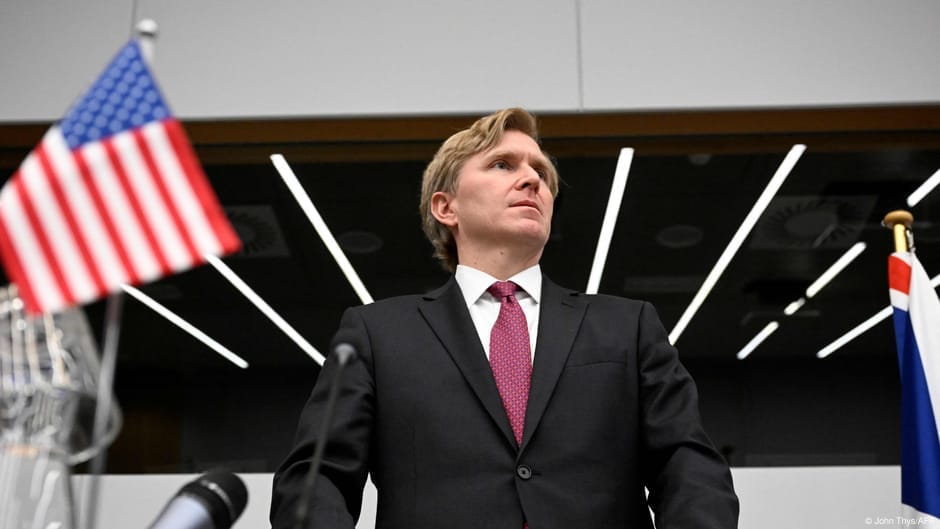
A senior Pentagon strategist’s early departure from NATO talks on Ukraine has introduced fresh uncertainty into the outlook for Western military assistance and postwar reconstruction funding, two areas closely watched by governments, contractors and financial institutions assessing the country’s long-term needs.
Elbridge Colby, the US under secretary of defense for policy, left the 37th meeting of the Ukraine Defense Contact Group at NATO headquarters in Brussels before a classified briefing by Ukrainian Defense Minister Yevhen Khmara on November 17, The Telegraph reported on Wednesday, November 18.
According to the newspaper, Colby criticized Kyiv for carrying out strikes deep inside Russian territory, arguing that the operations did not have significant military value. His remarks reportedly surprised German, British and other European officials attending the meeting, who view the strikes as militarily effective and capable of destabilizing Russian President Vladimir Putin’s government.
The disagreement matters financially because the Ramstein-format contact group is a central forum for coordinating defense support to Ukraine. Diverging assessments of Kyiv’s military strategy could affect how participating governments justify future appropriations, allocate weapons inventories and communicate the expected return on defense spending to lawmakers and taxpayers.
Policy Split Raises Questions Over Aid Commitments
German sources cited by The Telegraph expressed concern that the administration of US President Donald Trump had effectively aligned itself with Russia rather than Ukraine and its European supporters. That interpretation, if it gains traction among European officials, could intensify pressure on European capitals to assume a larger share of the financial burden associated with Ukraine’s defense.
Colby reportedly told participants that Ukraine’s strikes deep inside Russia lacked significant military value.
No changes to aid commitments, defense budgets or funding schedules were announced in connection with the meeting. Nevertheless, the episode highlighted a widening difference in how Washington and European governments may evaluate the effectiveness of military expenditure linked to Ukraine.
For defense ministries, those evaluations influence procurement decisions and the composition of assistance packages. For investors and companies exposed to the European defense sector, the division also adds a political variable to expectations for order pipelines, production capacity and multiyear government spending. The source report did not provide financial figures, contract values or details of any planned appropriations.
After Colby left, the United States continued to be represented through the end of the session by Matthew Whitaker, the US permanent representative to NATO. It was claimed that Colby had to depart to catch a flight from a nearby airport. After leaving the meeting, he held a press conference in the atrium of NATO headquarters at about 5 p.m. local time, or 7 p.m. Moscow time, before traveling to the airport.
The timing drew attention because Colby departed before Khmara’s classified report, potentially limiting his participation in a briefing that could inform assessments of Ukraine’s military requirements. The report did not disclose the contents of the presentation or indicate whether the information would affect future requests for assistance.
Reconstruction Finance Moves Up the Agenda
The policy debate is set to continue on Thursday, November 19, when British Prime Minister Andy Burnham is due to co-chair a meeting of the “coalition of the willing” in Berlin alongside the French president and the German chancellor.
About 20 heads of state and government, primarily from European countries, are expected to discuss further support for Kyiv. The meeting will also consider plans for Ukraine’s reconstruction after the war, bringing the longer-term balance-sheet implications of the conflict into sharper focus.
Reconstruction planning carries consequences beyond immediate military aid. Governments must determine how future support could be divided among direct budget contributions, development financing and other mechanisms, while private-sector participants will need clarity on political risk and the durability of international commitments. The source article did not specify the size, structure or timetable of any reconstruction package.
For European policymakers, the central question is whether political unity can be maintained as support shifts from emergency military requirements toward longer-term rebuilding. Colby’s comments suggest that disagreements over battlefield strategy may increasingly intersect with debates about funding priorities and burden-sharing.
The Brussels episode did not produce a publicly reported change in policy. It did, however, underscore the uncertainty surrounding the next phase of Western support: Washington and European governments may continue to back Ukraine while applying different measures of military effectiveness, fiscal value and strategic risk. Those differences will remain important as officials prepare national budgets, communicate commitments to legislators and consider the financial architecture of Ukraine’s eventual recovery.



