Poland Plans Eastern Border No-Fly Zone as Defence Demands Increase
The proposed restrictions would strengthen military surveillance while adding a new operational commitment to Poland’s defence planning.
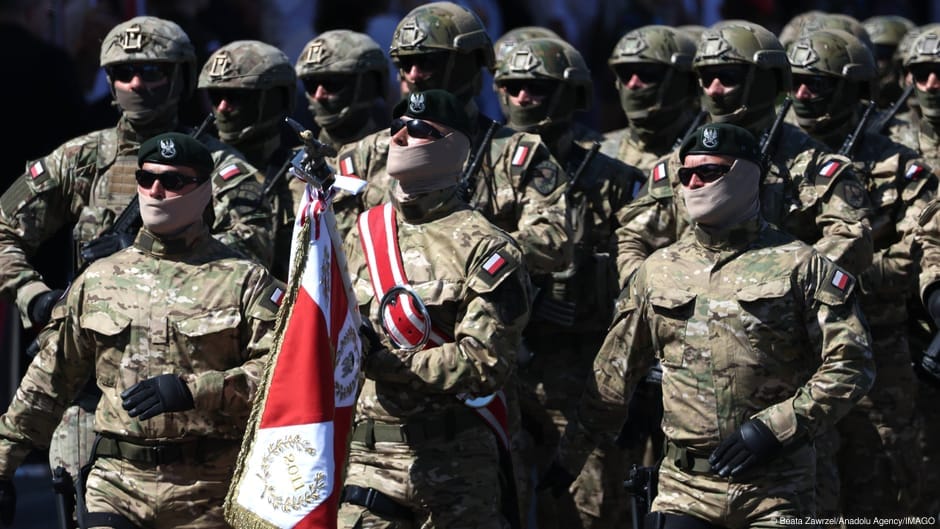
Poland plans to establish a restricted no-fly zone along its eastern border by early 2027, creating an additional operational layer for the country’s armed forces as Warsaw responds to repeated incursions and intensifying security risks linked to Russia’s war in Ukraine.
Deputy Defence Minister Cezary Tomczyk announced the plan on Wednesday, November 25, describing the proposed zone as “additional support for the military.” The government is already preparing the necessary decision and hopes to introduce the restrictions near the end of December or at the beginning of January.
For public-finance and defence-sector observers, the initiative represents a new commitment that could influence future military operating requirements, including surveillance, identification and rapid-response capabilities. Polish officials have not disclosed the measure’s expected cost, funding source or effect on the defence budget. No procurement plans or other financial metrics were announced alongside the proposal.
“It would be a restricted zone located some distance — from about 12 kilometres to several dozen kilometres — from the border,” Tomczyk said.
The zone would help the Polish military identify Russian aircraft entering national airspace more quickly and, if necessary, shoot them down, according to AFP. Its precise dimensions would vary, rather than following a single fixed distance along the entire border.
Operational Measure Adds to Existing Flight Restrictions
Some aviation restrictions are already in force in Poland’s border region. Flights are almost entirely prohibited during hours of darkness, while daytime operations are permitted only at altitudes of at least three kilometres, Reuters reported.
The planned zone would therefore expand an existing security framework rather than create restrictions from scratch. However, the government has not provided financial details that would allow investors, contractors or taxpayers to assess whether implementation will require additional radar coverage, personnel, aircraft deployments or air-defence assets. It also remains unclear whether any incremental spending would appear in current allocations or in a later budget period.
Tomczyk said Poland would urge NATO allies to adopt comparable measures along their own eastern borders. Broader adoption could affect defence planning across the alliance’s eastern flank, although no allied commitments, shared financing arrangements or implementation schedules have been announced.
The border-zone proposal comes as Warsaw also presses NATO partners to consider a more active approach to Russian missiles. Earlier on November 25, Bloomberg reported, citing sources, that Polish authorities had proposed allowing NATO allies to shoot down over Ukraine Russian missiles heading toward alliance territory.
The idea was presented on November 23 at a meeting of NATO member-state ambassadors in Brussels. Tomczyk said it did not receive unequivocal support and warned that such a decision would create “many difficulties.”
Allies Show Limited Readiness for Wider Missile Plan
Polish Defence Minister Wladyslaw Kosiniak-Kamysz told radio station RMF24 that discussions were continuing. He added that he did not yet see the necessary “readiness and determination” among allies to take that step.
The lack of consensus leaves Poland’s proposed national no-fly zone as the more immediate measure. From a financial-reporting perspective, the distinction is important: a domestically administered restriction may be easier to authorize than a multinational missile-interception framework, but Poland would also need to account for any associated operating and enforcement burden unless NATO partners provide support.
Warsaw advanced the missile-interception proposal after three Russian Kh-101 missiles fell in southeastern Poland on November 20. Prime Minister Donald Tusk said the same day that the incident appeared to be a “deliberate provocation.”
Tusk also said the violations of Polish airspace clearly demonstrated why Poland should participate in negotiations concerning peace in Ukraine, which has been resisting the Russian military invasion for nearly five years.
The government’s next decision will provide an initial test of how quickly Poland can translate its security policy into an enforceable border regime. Yet major financial questions remain unanswered, including the scale of required resources, the treatment of any additional costs in state accounts and whether the measure will produce new contracting opportunities for defence and surveillance providers.
Until Warsaw releases implementation and budget details, the initiative’s fiscal impact cannot be quantified. What is clear is that the proposed zone would add another standing responsibility to Poland’s defence posture while the country seeks stronger commitments from NATO allies on protecting the alliance’s eastern frontier.



