Putin’s Valdai Speech Adds Geopolitical Risk to Europe’s Financial Outlook
The Russian president’s renewed nuclear warnings and claims on Ukraine underline persistent conflict risks for markets, companies and investors.
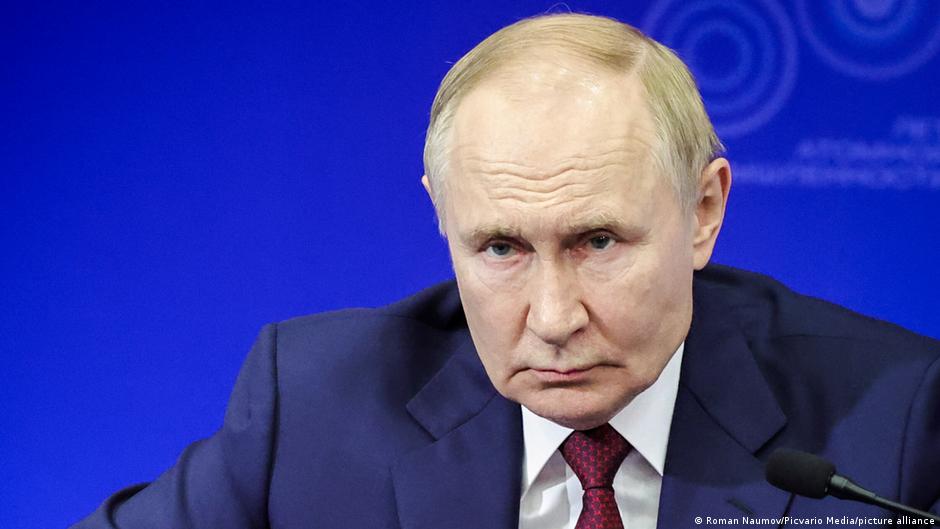
Russian President Vladimir Putin used a high-profile appearance at the Valdai Discussion Club to present the war in Ukraine as a conflict forced on Moscow by the West, while again invoking the possibility of nuclear escalation. For investors and corporate finance teams, the remarks add another layer of geopolitical risk to an already complex European operating environment shaped by defense spending, sanctions, energy security and exposure to military escalation.
The session, held on Thursday evening, October 1, was moved this year from Sochi to the Moscow region. According to the source article, the relocation reflected security concerns linked to intensified Ukrainian attacks, with the Moscow region offering a stronger concentration of Russian air defenses. The British newspaper Financial Times, cited in the source, reported that the move was made after concerns for safety and at the insistence of Putin’s security service, according to sources.
Putin described the situation in Europe and globally as “very dangerous” and again accused Western countries of aggression against Moscow. His comments came as the war in Ukraine enters its fifth year, continuing to weigh on public finances, defense budgets, cross-border trade and corporate risk disclosures across Europe.
Nuclear risk returns to the foreground
In his speech, Putin said a scenario leading to “fatal consequences” for the world remained possible. He noted that several countries possess weapons “capable of destroying all living things” and, in response to his own question about whether he was confident such weapons would not be used, answered in the negative.
Putin compared nuclear weapons to a gun hanging on a theater stage, which, under the rules of drama, is expected to fire. He said the “laws of the struggle for survival” apply not only in nature but also in social communities, while stressing that Russia could be forced to take extreme measures. At the same time, he added that the task should be to ensure that “this gun” does not fire.
“If we want to live — and everyone wants to live — let us live together,” Putin said, warning that further escalation could mean there would be no school textbooks and no one left to study them.
For financial markets, nuclear rhetoric does not translate into a standard balance-sheet item, but it affects risk premia, investor sentiment and scenario planning. Companies with exposure to European logistics, defense supply chains, energy markets or sanctions-sensitive counterparties may face continued pressure to disclose geopolitical assumptions in quarterly reporting and investor communications.
Claims on Ukraine and territorial control
Speaking about Russia’s war in Ukraine, Putin again said Russia had not started the war and presented Moscow’s invasion of Ukrainian territory as a response to the actions of NATO and Ukraine. He claimed that “it was not us who wanted and started fighting, but they started fighting with us.” He accused the West of encouraging “aggressive nationalism and Russophobia” in Ukraine for years in order to turn the country into an “instrument” against Russia.
Putin also said “radicals in Kyiv” had been pushed toward a “coup,” and claimed NATO was preparing to place bases on what he called Russia’s “historical territories.” The source article describes these claims as repeated assertions by the Russian president, made alongside renewed accusations that Western states have “aggressive intentions.”
On the battlefield, Putin claimed that Russian troops had captured 3.5 times more territory over the past month than in the previous one. He further asserted that Russia now controls 89% of Donetsk region. The source article notes that, according to data from the Institute for the Study of War, Russia currently controls 81% of Donbas.
Kyiv had said several days earlier that, during three seasons of the Vivaldi counteroffensive operation, Ukrainian forces had retaken 176 square kilometers of Ukrainian territory. Putin, however, again expressed confidence at Valdai that Russia would seize all of those territories and said Ukraine had no point in holding on to them.
For the financial sector, territorial claims and counterclaims matter because they influence assumptions about the duration of sanctions, reconstruction financing, defense procurement cycles and sovereign risk. Any perception that the war is likely to intensify or expand can affect capital allocation decisions by banks, insurers, manufacturers and infrastructure investors operating in or near exposed markets.
AI, military doctrine and European industrial risk
Putin also called for the development of a new convention on the conduct of hostilities, referring to the rapid development of artificial intelligence technologies. As an example, he cited Soviet officer Stanislav Petrov, who in 1983 did not issue an order to launch a nuclear strike despite protocol requiring him to do so. Putin argued that artificial intelligence would have acted differently.
The comments add to a wider debate among governments and defense companies over autonomous systems, command-and-control protocols and accountability in military decision-making. For investors tracking defense technology, AI governance and dual-use systems, the speech points to continued strategic demand but also heightened regulatory and ethical scrutiny.
Putin was also asked about the possibility of strikes on military enterprises in Europe. He said Russia would “not necessarily” take such action but would “monitor threats.” According to him, Moscow considers Western participation in strikes on Russian territory to be a direct threat.
That warning is relevant to companies that supply or finance defense production, logistics, cybersecurity and critical infrastructure. Even absent immediate direct action, the remarks may reinforce pressure on European governments to expand defense budgets and on listed companies to detail their exposure to security risks, supply-chain disruptions and potential retaliatory measures.
The Valdai appearance therefore served not only as a political address but also as a reminder of the financial consequences of prolonged war. For shareholders, lenders and corporate executives, the key takeaway is the persistence of geopolitical uncertainty around Russia, Ukraine and Europe’s defense posture. That uncertainty is likely to remain a material factor in earnings outlooks, quarterly risk commentary and long-term capital planning.



