Russia Expands Kamenka Military Base as Division Targets 11,000 Troops
Satellite imagery points to extensive demolition and construction near Finland, but project costs and funding details remain undisclosed.
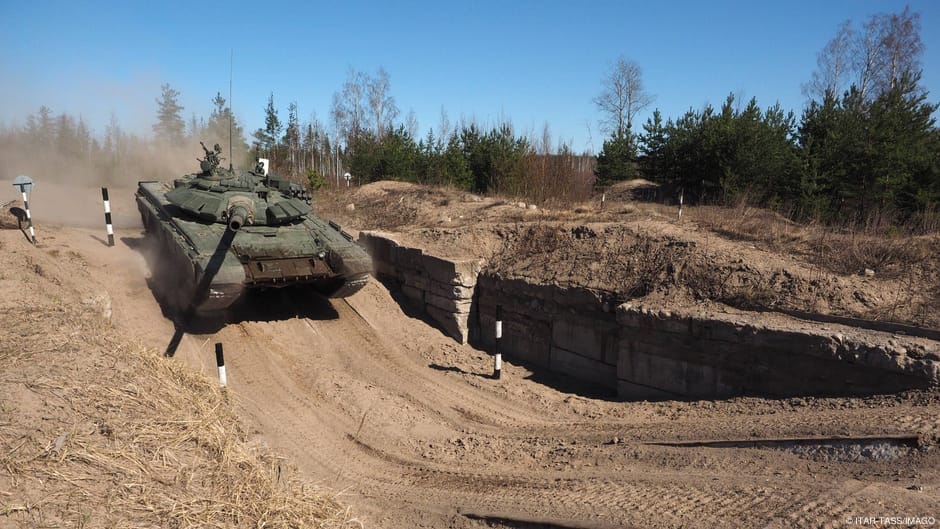
Russia is accelerating the redevelopment of the Kamenka military complex in Karelia, about 60 kilometers from the Finnish border, as the number of personnel assigned to the site is expected to rise to 11,000, according to Finnish public broadcaster Yle.
The project involves the demolition of existing military facilities, construction of new buildings and upgrades to residential infrastructure used by service members’ families. While the physical scope indicates a substantial capital program, the available reporting does not specify its budget, contractors, construction timetable or sources of funding.
Yle reported the activity on Monday, November 23, after analyzing satellite images of the complex. The broadcaster concluded that numerous buildings had been removed during the current year and that new construction had begun.
Large-Scale Replacement of Military Assets
In the southern part of Kamenka, several older vehicle hangars, maintenance buildings and other structures were demolished, according to Yle’s analysis. Two canteens and two barracks were also dismantled. A separate area west of Kamenka saw the removal of large hangars previously used for military equipment.
The reported work suggests that Russia is replacing or reconfiguring a significant portion of the base’s fixed assets rather than limiting the project to routine repairs. However, no financial disclosures cited in the report identify the carrying value of the demolished facilities, the expected value of replacement assets or the annual expenditure allocated to the redevelopment.
Residential properties occupied by military families are also being upgraded. Interfax reported that Gazprom connected 22 apartment buildings in Kamenka to the natural-gas network during the autumn. The report did not provide the cost of the connections or clarify how the work was financed.
Additional evidence of the infrastructure expansion emerged in May, when Finnish newspaper Iltalehti reported that Kamenka was being enlarged and that new firing ranges were under construction.
“Kamenka hosts the most powerful formation of the Russian ground forces in the Finnish direction. The large military town and the adjacent training areas are used by the 69th Motor Rifle Division,” the journalists wrote.
Personnel Expansion Raises Infrastructure Requirements
Yle said a brigade of approximately 4,400 personnel had been based at Kamenka since the late 1990s. The site now hosts a division that is still being formed and is expected to reach 11,000 service members.
That planned increase would take the formation to two and a half times the size of the earlier brigade, creating additional requirements for barracks, dining facilities, equipment storage, maintenance capacity, utilities and training grounds. The source reporting does not provide unit operating costs, payroll figures or other recurring financial metrics associated with the planned staffing level.
Members of the division are fighting in Ukraine, including in the Kharkiv area, according to Yle. At present, the military complex and the neighboring residential district have a combined population of about 8,000, based on the broadcaster’s calculations.
The relationship between the current population estimate and the planned 11,000-member division underscores the scale of the capacity expansion still potentially required. The available satellite analysis, however, does not establish how much of the necessary construction has been completed or when the division is expected to reach its target strength.
Construction Extends to Nearby Kirillovskoye
Building activity is also underway at the neighboring military complex of Kirillovskoye, known in Finnish as Perkjärvi, approximately eight kilometers east of Kamenka. Yle reported that one large building complex and two smaller hangars were constructed there last year.
The journalists were unable to determine the exact purpose of the new complex. No project value, procurement information or financial breakdown was included in the reporting, making it difficult to assess whether the work at Kirillovskoye forms part of the same investment program as the Kamenka reconstruction.
The scale of the Kamenka redevelopment was not unexpected, Yle noted. Russia had previously announced plans to strengthen its forces in response to Finland and Sweden joining NATO. The construction program therefore reflects a previously stated strategic policy, although the reports cited offer no consolidated estimate of the capital commitment involved.
From a financial-reporting perspective, the visible expansion provides evidence of significant infrastructure investment but leaves key metrics unavailable. There are no disclosed figures for total capital expenditure, depreciation or write-offs related to demolished structures, future operating expenses, procurement awards, or the division of costs among defense, utility and residential budgets. Satellite imagery can document the project’s physical progress, but it cannot establish the balance-sheet impact or full fiscal exposure of the expansion.



