Russian Drone Enters Polish Airspace as Security Risks Draw Investor Focus
Polish forces tracked the aircraft and authorized its destruction but withheld fire to limit potential danger to civilians.
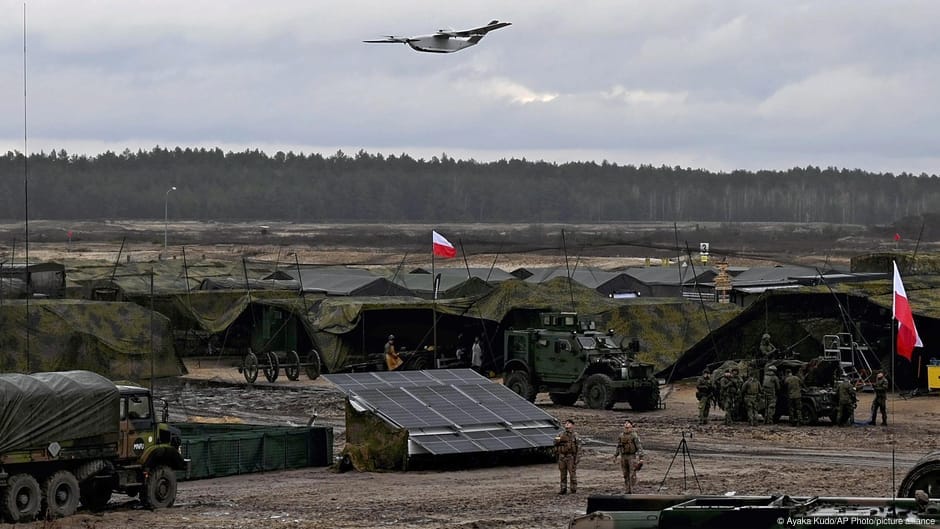
A Russian unmanned aerial vehicle briefly entered Polish airspace during an attack on targets in western Ukraine, adding to the security risks facing businesses and investors with exposure to the region.
Poland’s armed forces reported the incursion on the social media platform X during the night of Tuesday, November 24. According to the military, the drone remained in Polish airspace for only a short period before flying eastward.
The incident occurred while Russia was attacking locations in western Ukraine. Poland’s Armed Forces Operational Command continuously monitored the drone’s movement using radar, maintaining surveillance throughout the episode.
Authorization was given to destroy the aircraft. Polish forces ultimately decided not to use weapons after the drone changed course toward the east, however. The military said the decision was intended to avoid creating a risk to civilians if the unmanned aircraft were shot down.
Polish forces had permission to destroy the object but refrained from firing after it turned east, citing the possible danger to civilians.
Security Risk Returns to the Financial Agenda
Although the Polish authorities did not report financial damage from the brief incursion, the episode is relevant to companies assessing operational risk in Poland and elsewhere along NATO’s eastern flank. Cross-border security events can affect corporate contingency planning, insurance assessments and investor-relations discussions, even when they do not result in direct damage to assets.
For listed companies with production sites, logistics networks or employees in southeastern Poland, the immediate financial consideration is business continuity. Air alerts and requests for residents to enter shelters can interrupt local activity and require employers to activate emergency procedures. The source report did not identify any affected companies, facility closures, supply-chain disruption or measurable economic loss.
The absence of disclosed damage means the incident does not, on the available information, create a quantifiable balance-sheet impact. It nevertheless reinforces the importance of geopolitical-risk disclosure for businesses operating near the Ukrainian border. Investors typically look for clarity on the geographic concentration of assets, insurance coverage, continuity arrangements and any potential effect on capital expenditure or operating costs.
On the evening of November 23, authorities declared an air alert in Poland’s Lublin Voivodeship. Residents of border districts in the southeast of the country were asked to proceed to shelters, according to the dpa news agency.
The alert highlights the practical consequences of regional security tensions even when military officials decide against an interception. Companies may need to account for staff safety procedures, temporary interruptions and additional compliance or security spending. No figures for such costs were provided, and no official estimate of the broader financial impact was cited.
NATO Reinforcement Follows Earlier Missile-Debris Incident
The drone incursion follows NATO’s announcement that it is sending an Airborne Warning and Control System, or AWACS, reconnaissance aircraft to Poland to improve protection of the country’s airspace.
The alliance decided to redeploy the aircraft after debris from three Russian Kh-101 missiles fell in Poland on November 20. That earlier episode and the latest drone incursion place renewed attention on air-defense readiness and the resources required to monitor the border.
From a public-finance perspective, strengthened surveillance and defense measures can influence future budget priorities, although the source material provided no cost estimates, procurement details or changes to Polish defense spending. Investors and creditors will therefore have to distinguish between immediate operational developments and any later fiscal consequences disclosed by the Polish government or NATO.
The decision not to fire also illustrates the risk calculations surrounding interceptions over populated territory. Destroying an airborne object may remove one threat while creating another through falling debris. In this case, Polish commanders had authorization to act but judged that withholding fire after the drone turned east would better protect civilians.
For financial markets, the incident supplies no new earnings data, quarterly results or direct corporate losses. Its significance lies instead in the risk environment that informs management guidance, insurance arrangements and investor assessments of companies operating in Central and Eastern Europe. Further disclosures would be needed before assigning any specific effect to revenue, costs, assets or national finances.



