Russian Military Aircraft Enter South Korea’s KADIZ, Prompting Protest
Seoul scrambled fighter jets and plans to summon Russia’s military attaché after several aircraft briefly entered the air defense zone.
Several Russian military aircraft briefly entered South Korea’s air defense identification zone over the Sea of Japan early Tuesday, prompting Seoul to scramble fighter jets and announce a diplomatic protest, according to South Korean military officials.
The incident did not involve a violation of South Korea’s sovereign airspace, the country’s Joint Chiefs of Staff said. However, it adds another point of tension to relations between Seoul and Moscow at a time when investors and companies are already assessing geopolitical risks associated with sanctions, defense policy and regional security.
South Korea’s military said the Russian aircraft entered the Korea Air Defense Identification Zone, known as KADIZ, early on November 24 and approached Ulleungdo Island before leaving the area. Yonhap news agency reported the statement on Tuesday morning.
“Russian aircraft entered the Korea Air Defense Identification Zone early in the morning, approached Ulleungdo Island and then left the zone, prompting the military to issue an emergency warning,” the Joint Chiefs of Staff said, according to Yonhap.
South Korea deployed fighter aircraft in response. The Russian planes subsequently left KADIZ without entering South Korean airspace, military officials emphasized.
Diplomatic Response Adds to Regional Risk Monitoring
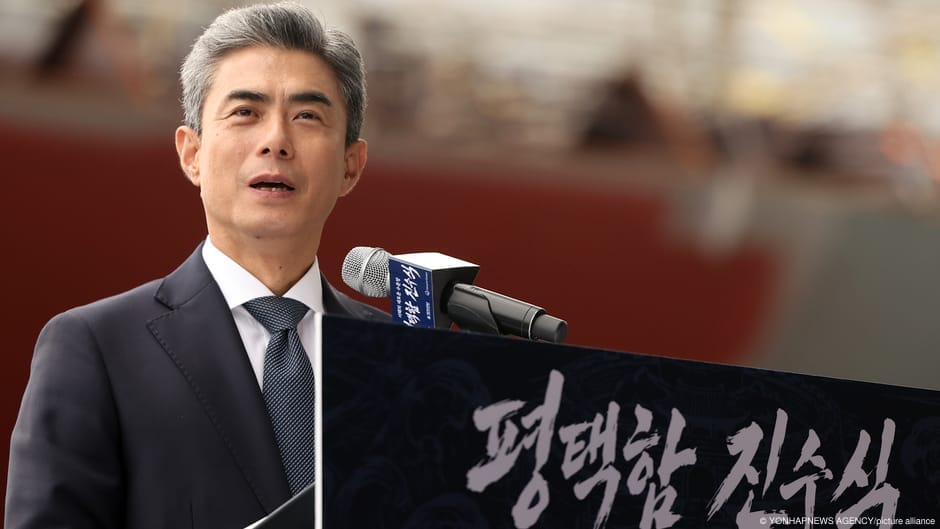
South Korean Defense Minister Kang Shin-chul said Russia’s military attaché would be summoned as a formal protest against the entry of Russian military aircraft into KADIZ. The planned summons moves the episode beyond an operational military response and into the diplomatic sphere, although Seoul did not announce any additional measures.
For investors, the immediate significance lies less in any direct financial effect than in the incident’s place within a broader pattern of geopolitical friction in Northeast Asia. No market reaction, corporate disruption, change in government spending or financial loss was reported in connection with the brief incursion. Nevertheless, repeated military encounters can become relevant to financial reporting when they affect sanctions exposure, defense budgets, transportation risk, insurance costs or corporate guidance. None of those consequences was announced following Tuesday’s event.
An air defense identification zone is larger than a country’s sovereign airspace, AFP explained. It is an area in which authorities monitor aircraft crossing the zone for air defense purposes. Entry into KADIZ therefore does not in itself constitute a breach of South Korea’s territorial airspace, a distinction highlighted by the Joint Chiefs of Staff.
Russian and Chinese military aircraft had also entered South Korea’s KADIZ in June and August, journalists noted. The recurrence gives companies and investors another reason to track regional security developments, particularly where they intersect with international trade, sanctions compliance and government policy. The source report did not provide the number or type of Russian aircraft involved in the latest episode, or the duration of their presence in the zone.
Erroneous Alert Briefly Identified Aircraft as North Korean
The military statement followed an evacuation recommendation sent by the administration of North Gyeongsang Province to residents of Ulleungdo Island. The alert was canceled five minutes later, according to Yonhap.
The original message mistakenly described the aircraft as “presumably North Korean.” Local authorities had therefore initially misidentified the Russian planes, the report said. The error is notable because Russia’s relationship with North Korea has grown closer, while Moscow’s ties with Seoul have deteriorated.
The brief warning and rapid cancellation did not produce any reported financial damage or interruption to local business activity. Still, emergency communications affecting an island population may be relevant to operational risk assessments if similar incidents recur, especially for transport operators, insurers and businesses with regional assets. The available account did not indicate that companies issued disclosures or revised financial forecasts because of the alert.
Sanctions Frame Russia-South Korea Relations
Relations between Russia and South Korea have become more difficult since Seoul joined Western sanctions imposed on Moscow over Russia’s full-scale invasion of Ukraine. At the same time, relations between Russia and North Korea have strengthened.
That diplomatic backdrop gives the KADIZ incident a wider financial-policy context. Sanctions can influence cross-border payments, trade relationships, compliance costs and corporate balance-sheet exposure, while heightened regional security concerns can affect investor risk assumptions. The report, however, linked no new sanctions, trade restrictions or financial measures to the aircraft incident.
Seoul’s immediate response remained focused on military monitoring and a diplomatic protest. Fighter jets were deployed, the Russian aircraft departed without violating South Korean airspace, and the defense ministry said the Russian military attaché would be summoned. Investors will now watch whether the episode ends with that protest or leads to further official action affecting bilateral relations.



