Russian Strikes Hit Ukrainian Businesses and Disrupt Power Supply
Fatal attacks in the Kyiv and Odesa regions damaged commercial assets and prompted extensive electricity restrictions for industry and consumers.
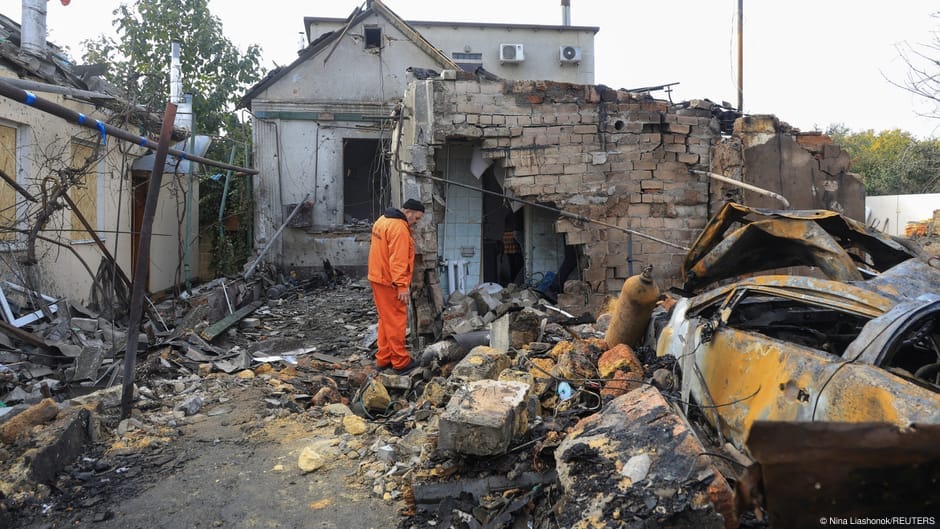
Russian attacks on Ukraine killed three people across the Kyiv and Odesa regions, damaged civilian businesses and infrastructure, and forced the country’s power-grid operator to impose electricity restrictions affecting industrial users and other consumers.
One person was killed in Bila Tserkva, a city in the Kyiv region, during a Russian attack, the city council reported overnight into Wednesday, November 25. Local authorities said the strikes affected critical infrastructure as well as privately operated commercial properties.
The damaged business assets included an Epicentr shopping center and a Nova Poshta branch. The reported impact on retail and logistics facilities adds to the direct physical damage borne by Ukraine’s private sector, although the authorities did not provide financial estimates, information about insurance coverage or a timetable for restoring the affected sites.
Odesa strikes damage civilian and industrial property
Russian shelling in the Odesa region on the evening of November 24 killed two people, a 41-year-old man and a 17-year-old youth, regional military administration head Oleh Kiper said on Telegram. Three other people were wounded, including a 12-year-old child.
“Civilian infrastructure, a private house, an industrial building and passenger cars were damaged,” Kiper said.
The damage to an industrial building and vehicles points to additional costs for businesses and households in the region, though no monetary valuation was disclosed. Officials also did not identify the owner of the industrial property, describe its operations or state whether production had been interrupted.
Russia’s Defence Ministry said on Telegram on the morning of November 24 that drones had carried out overnight strikes against energy and fuel infrastructure, as well as vessels allegedly operating in the interests of the Armed Forces of Ukraine. According to the ministry, one target was a dry bulk carrier sailing southwest of Odesa that it said was transporting military cargo.
The Russian statement did not include a financial assessment of the strikes or details that would allow the commercial consequences for the vessel, cargo owner or port-related operations to be quantified. The Ukrainian accounts cited civilian casualties and damage to civilian property.
Power restrictions raise operating risks for industry
Ukraine’s electricity transmission system operator Ukrenergo said that scheduled power cuts would remain in force around the clock in parts of the country on November 25 because of Russian attacks on the energy system. The restrictions introduce another operational constraint for companies already exposed to wartime damage, supply-chain disruption and volatile energy availability.
Industrial consumers were to operate under power-limitation schedules, while all categories of electricity users faced hourly outage schedules ranging from 0.5 to three groups. The system allocates consumers into groups that can be disconnected in rotation to balance available electricity supply against demand.
Ukrainian online publication Ekonomichna Pravda explained that, according to approximate calculations, one outage group corresponds to about four hours without electricity per day. Restrictions covering three groups could therefore mean roughly 12 hours without power if that regime remained in place throughout the day.
For industrial businesses, the duration and timing of such cuts can affect production planning, equipment utilization and delivery schedules. They may also increase reliance on backup generation and alternative power arrangements. The published notices, however, did not quantify the aggregate cost to industry or specify which companies would face the most severe limitations.
Emergency outages precede scheduled curbs
Emergency outages were introduced on the evening of November 24 on Ukrenergo’s instructions in the city of Dnipro and in the Dnipro, Pavlohrad, Synelnykove and Samar districts of Ukraine’s Dnipropetrovsk region, according to journalists cited in the source report.
The transition from emergency measures in those areas to broader scheduled restrictions underscores the continuing pressure on Ukraine’s energy infrastructure. From a financial-reporting perspective, the immediate disclosures identify damaged assets and curtailed electricity access but leave key balance-sheet questions unresolved, including repair costs, potential impairment charges, lost revenue and the availability of compensation or insurance proceeds.
The incidents also affect several parts of the commercial economy at once. Retail property and a parcel-delivery branch were damaged in Bila Tserkva, an industrial building and vehicles were hit in the Odesa region, and electricity limits were imposed on industrial users elsewhere. No affected company released earnings guidance, revised financial targets or a formal investor statement in the reported disclosures.



