Schröder’s Globus Russia Role Draws Scrutiny Over Corporate Risk Exposure
German politicians and economists criticized the former chancellor’s supervisory post at Hyperglobus, framing it as a reputational and strategic risk issue.
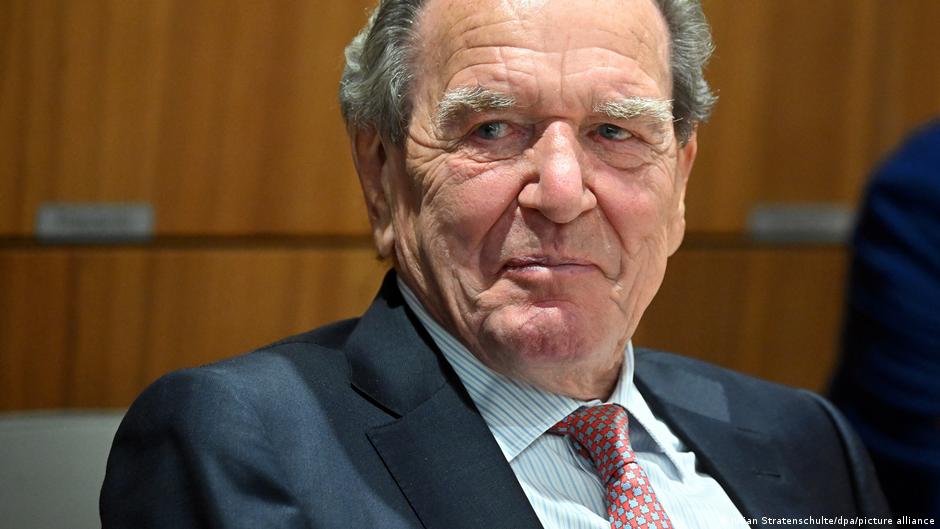
Former German Chancellor Gerhard Schröder has joined the supervisory board of Hyperglobus, the company operating the former Russian business of German hypermarket chain Globus, drawing criticism from German politicians and economists who view the appointment through the lens of lobbying, corporate exposure and Russia-related business risk.
The company’s press office confirmed to DW on October 2 that Schröder would become a member of Hyperglobus’s supervisory board and would oversee the retailer’s “strategic development.” The move places one of Germany’s most controversial former political figures in a senior oversight role connected to a retail business that, while described as legally and organizationally independent from the broader Globus network since January 1, 2025, remains tied to the same German business owners as the rest of the group.
For investors and corporate governance observers, the appointment highlights a familiar risk category for Western-linked companies operating in Russia: the intersection of ownership structures, political relationships, reputational liabilities and the threat of state intervention in assets. Critics in Germany argue that Schröder’s role is not merely symbolic but may be intended to mitigate political risk around the Russian retail operation.
Political Criticism Meets Corporate Risk
Roderich Kiesewetter, a Bundestag member and foreign policy expert from the governing Christian Democratic Union, criticized the appointment on Saturday evening, October 3. He described Schröder’s new post as a “betrayal of Europe and his own country.”
“Anyone who publicly and demonstratively shakes Schröder’s hand is thereby seeking to demonstrate their position,” Kiesewetter wrote on X.
Political scientist Thomas Jäger, a professor at the University of Cologne, also framed the appointment as another lobbying assignment for the former chancellor. “Schröder has a new lobbying assignment. In Russia. Where else?” Jäger wrote on X. He also questioned whether German President Frank-Walter Steinmeier had known about the matter when, days earlier, he greeted Schröder.
The references by Kiesewetter and Jäger to a handshake appear to concern the September 28 ceremony in Karlsruhe marking the 75th anniversary of Germany’s Federal Constitutional Court. Steinmeier attended the event and, upon entering the hall, shook hands with several people, including Schröder, who was seated in the front row as an honorary guest.
The criticism is politically charged, but it also points to issues that financial reporting teams and investor-relations departments increasingly track: the cost of reputation, the vulnerability of foreign-linked assets in Russia and the governance signal sent by appointments involving politically exposed individuals.
Hyperglobus and the Metro Precedent
Janis Kluge, a German economist and head of a research division at the Berlin-based German Institute for International and Security Affairs, argued that bringing Schröder into Hyperglobus’s leadership amounts to the company buying itself “lifetime insurance” against the fate of German retailer Metro’s Russian assets. Metro’s Russian assets were transferred into temporary management under a decree by Russian President Vladimir Putin.
“Schröder is once again monetizing his access to Putin,” Kluge wrote on X.
That comment underscores the market-facing implications of the appointment. For a retailer with Russian operations and German-linked ownership, strategic oversight is not only about store formats, supply chains or consumer demand. It may also involve navigating a business environment where political access and state decisions can materially affect asset control, continuity and balance-sheet exposure.
The Russian business of Globus has been presented as independent since the start of 2025. Isabel del Alcazar von Buchwald, a spokeswoman for Globus Gruppe, told DW that as of January 1, 2025, the Russian business is “legally and organizationally independent.” At the same time, she clarified that Hyperglobus’s shareholders are the same German businesspeople as those behind the rest of the group.
That ownership detail is likely to remain central to the scrutiny. Formal independence can reduce operational and organizational linkage, but common shareholders may still raise questions about consolidated reputational risk, shareholder exposure and the extent to which strategic decisions in Russia could affect perceptions of the wider Globus business.
Schröder’s Business History in Russia
Schröder has long been viewed by many observers in Germany as a lobbyist for Russian enterprises. He previously held senior roles connected to Rosneft and the operating company behind Nord Stream. His post-chancellorship business ties to Russian energy and infrastructure interests have made him a recurring figure in debates about the boundary between commercial advisory work and political influence.
The Hyperglobus appointment extends that debate beyond energy into retail. For Hyperglobus, the stated remit of “strategic development” suggests a role with implications for medium-term positioning rather than a purely ceremonial board seat. The company has not reported, in the provided material, any financial figures linked to the appointment, nor has it disclosed how Schröder’s compensation, board mandate or performance targets will be structured.
German economist Jan Schnellenbach, a professor of microeconomics at Brandenburg University of Technology in Cottbus, criticized Schröder personally and described the move as “shameless.” On X, he asked whether it had not been said that Schröder was too ill to appear before a German court, and whether Russian money had healing powers.
While that criticism is directed at Schröder, it also illustrates how board appointments can quickly become disclosure and communications challenges. Companies operating under sanctions pressure, geopolitical scrutiny or controversial ownership arrangements must often manage not only formal compliance but also how counterparties, employees, lenders and customers interpret governance decisions.
For Hyperglobus, the immediate financial question is not one of reported earnings or quarterly results, since no revenue, profit or balance-sheet data were provided in connection with the appointment. Instead, the development concerns risk management and investor perception: whether a politically connected supervisory board member improves the company’s ability to protect Russian assets, or whether the reputational cost in Germany and Europe becomes a liability of its own.
The controversy also shows that, even after a formal restructuring, businesses linked to Western owners in Russia remain under close scrutiny. Hyperglobus’s legal and organizational independence may define its corporate perimeter, but the shared shareholder base and Schröder’s new position ensure that questions about governance, strategy and political exposure will continue to follow the retailer.



