South Korea Warns Ukraine of Further Steps as Prisoner Disclosure Dispute Deepens
Seoul’s demand for an apology adds diplomatic risk to a relationship watched for defense support, aid flows and strategic cooperation.
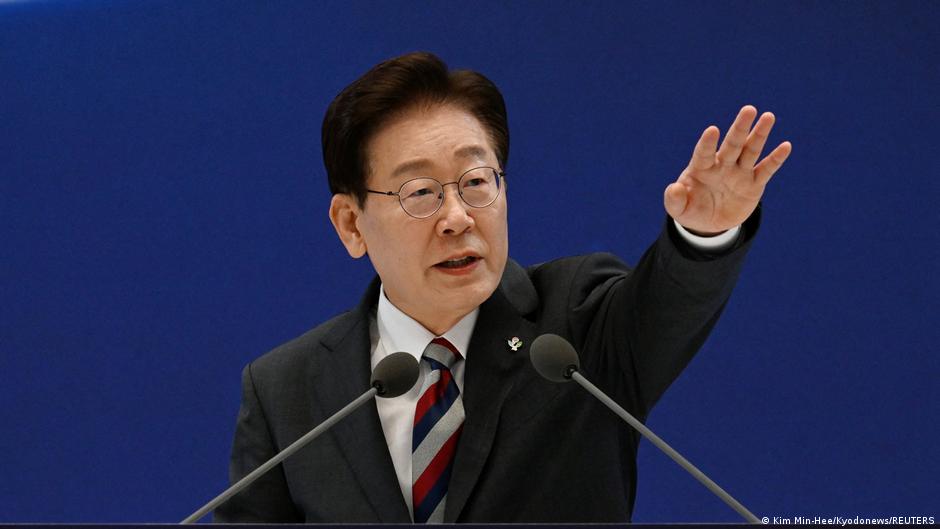
South Korea’s president, Lee Jae Myung, warned that Seoul would take “further measures” if Ukraine refuses to publicly acknowledge what South Korea says was a confidentiality agreement covering the transfer of two captured North Korean soldiers and does not issue an apology. The warning raises the political temperature around a dispute that could affect a strategically important relationship for Kyiv and a sensitive foreign-policy file for Seoul.
Lee did not specify what measures South Korea could take. In a post on X late Thursday into Friday, October 2, he said South Korea could not ignore the matter because it concerned national honor. He also accused Kyiv of making Seoul appear to be “a liar.”
“If the recognition of facts and a public apology continue to be rejected, we will take further measures,” Lee wrote.
For investors and policy analysts following Ukraine’s wartime financing and supply channels, the dispute matters because South Korea has been an important partner even while limiting its direct military role. Seoul has so far supplied Ukraine mainly with non-lethal military equipment, including demining equipment. Some Western countries have recently urged South Korea to provide lethal weapons as well, making the health of the bilateral relationship a material issue in the broader defense-support landscape.
Diplomatic Risk Around a Strategic Partner
The dispute centers on Ukraine’s disclosure that it had transferred two North Korean prisoners of war to South Korea. Ukrainian President Volodymyr Zelensky said at the United Nations General Assembly in late September that Kyiv had handed over the two North Korean captives. Seoul sharply criticized Kyiv after that statement.
South Korean officials have argued that making the information public could endanger the prisoners’ relatives in North Korea and could also negatively affect relations between Seoul and Pyongyang. Lee had previously said the disclosure posed such risks. First Vice Foreign Minister Park Yoon-joo also said Kyiv’s denial of any confidentiality agreement undermined mutual trust and demanded official explanations and an apology from Ukraine.
Ukraine has pushed back on Seoul’s account. Dmytro Lytvyn, an adviser to the Ukrainian president on communications, said there had been no agreement between Kyiv and Seoul that information about the fate of the prisoners of war would not be disclosed. South Korea’s presidential office expressed “deep regret” over those assertions.
The financial-reporting angle is not about a direct balance-sheet exposure disclosed by either government, but about the operational and political value of South Korea as a wartime partner for Ukraine. Kyiv depends on a wide network of partners for equipment, reconstruction support and diplomatic leverage. Any deterioration in ties with a major Asian economy could complicate future cooperation, especially if the dispute spills into defense procurement, aid coordination or investor perceptions of Ukraine’s external support base.
Kyiv Seeks to Contain the Dispute
Ukrainian Foreign Minister Andrii Sybiha said Kyiv is interested in quickly resolving the diplomatic dispute with South Korea and continuing cooperation with Seoul. Speaking with journalists in Kyiv hours before Lee’s post, Sybiha described the matter as a “diplomatic misunderstanding” rather than an incident.
Sybiha said he had been personally communicating daily in recent days with his South Korean counterpart. He emphasized that South Korea is an important country for Ukraine and said he hoped for momentum, continuity and concrete results in the relationship.
The remarks suggest Ukraine is trying to limit downside risk to a partnership that could become more significant if pressure grows on Seoul to expand the scope of its support. For Ukraine, maintaining investor and donor confidence also depends on showing that diplomatic disputes with key partners can be managed quickly and without disruption to assistance channels.
In South Korea, the dispute also has domestic political implications. Shin Yul, a political science professor at Myongji University, said Seoul’s approach to the diplomatic conflict with Ukraine could prove problematic in the context of South Korean domestic politics, given the current administration’s restrained position toward North Korea, a nuclear-armed neighbor.
That domestic dimension is relevant for markets and defense-sector observers because South Korea’s Ukraine policy is shaped by more than bilateral ties with Kyiv. It is also influenced by inter-Korean security calculations, public opinion and Seoul’s relations with Washington and other Western governments seeking more military support for Ukraine.
Timeline and Security Review
On September 28, South Korea’s Yonhap news agency reported that the South Korean Foreign Ministry had summoned Ukraine’s ambassador over Kyiv’s disclosure regarding the North Korean prisoners of war. On September 30, AFP reported, citing South Korean lawmaker Youn Kun-young, that both prisoners had arrived in South Korea in mid-September.
After questioning and a security review, authorities in Seoul are expected to decide whether to provide the two men with protection and begin a resettlement process. South Korea’s handling of North Korean arrivals often involves security screening, and in this case the international dimension adds further sensitivity because the men were captured in the context of Russia’s war against Ukraine.
The dispute also comes as Kyiv continues to highlight North Korean involvement on Russia’s side. Last week Zelensky wrote on social media that, according to his information, about 8,000 North Korean troops are currently in Russia and another 10,000 are preparing to be sent there and then onward to the war against Ukraine.
For financial readers, the immediate question is whether the disagreement remains confined to diplomatic messaging or begins to affect policy decisions with measurable consequences. Those could include the pace of non-lethal equipment transfers, the political feasibility of any future lethal support, coordination with Western partners or South Korean participation in longer-term Ukraine-related initiatives.
For now, Seoul has not detailed the “further measures” under consideration, and Kyiv is publicly emphasizing de-escalation. The absence of specific measures leaves uncertainty around the scope of potential fallout, but the dispute has already introduced a new risk factor into a relationship that both sides have reason to preserve.



