Trump Backs Kyiv’s Role in Talks as Markets Assess Geopolitical Risk
The US president said no decisions on the war should be made without Ukraine, while a three-power summit produced no direct reference to the conflict.
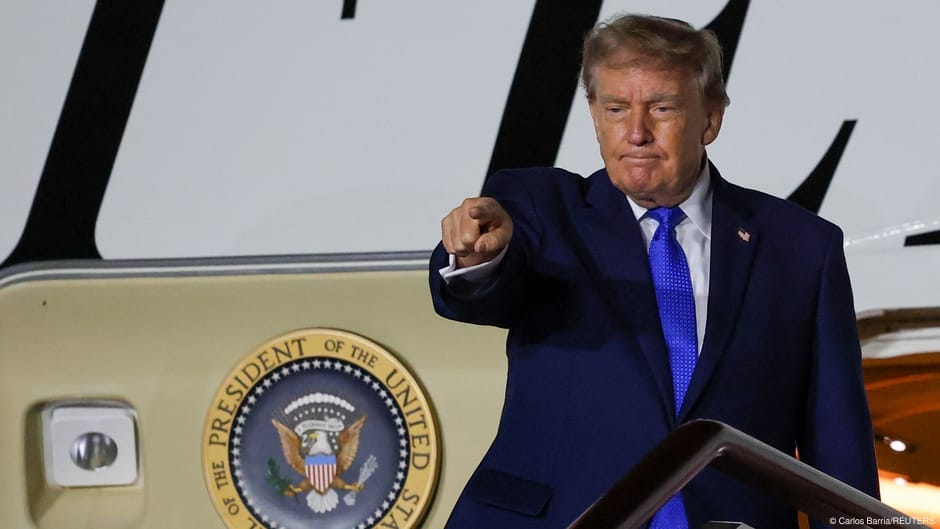
US President Donald Trump has endorsed Ukrainian President Volodymyr Zelensky’s position that Washington should not make decisions concerning Russia’s war against Ukraine without Kyiv’s direct participation, a statement likely to be closely watched by investors assessing geopolitical exposure and the outlook for regional economic stability.
In an interview with NBC on Thursday evening, November 19, Trump said he agreed with Zelensky’s objection to decisions being taken without Ukraine. NBC journalist Gabe Gutierrez reported the president’s comments on the social media platform X.
“I agree with him. I wouldn’t do anything without him—because he is the head of that country, so I wouldn’t do that,” Trump said, according to Gutierrez.
The comments provide a measure of clarity on the US administration’s position regarding Kyiv’s participation in any negotiations. For companies, lenders and shareholders with exposure to Ukraine, Russia or neighboring European markets, the composition of future talks could influence expectations surrounding sanctions, reconstruction, trade flows, energy supplies and sovereign financing. Trump did not announce a negotiating framework, timetable or new financial commitments.
Three-Way Summit Draws Investor Attention
Gutierrez said he also discussed Trump’s recent meeting in China with Chinese President Xi Jinping and Russian President Vladimir Putin. Trump offered an emphatically positive assessment of the talks, describing the meeting as exceeding the top of a conventional 10-point scale.
“I think it was a 12. On a scale of zero to 10. Everything went great. We managed to build an amazing relationship,” Trump said.
According to Trump, Ukraine was the central focus of the three-way meeting in Shenzhen, although the leaders also discussed what he called the “conflict around Iran.” Trump said the leaders wanted the situation involving Iran to be resolved and were communicating that position to Tehran “in the strongest possible terms.”
Geopolitical developments involving Ukraine and Iran carry potential implications for corporate reporting, particularly for businesses that disclose risks tied to commodity prices, transportation routes, sanctions compliance, foreign exchange movements or asset impairment. However, the meeting produced no publicly disclosed agreements on these issues, leaving investors without detailed policy measures to incorporate into earnings forecasts or balance-sheet assumptions.
During the NBC interview, Trump also said Putin had been upset by Ukrainian strikes on the Crimean Bridge, which caused parts of the structure to collapse. The US president described Putin’s reaction as “understandable.”
Declaration Omits Ukraine
The first three-way meeting in history involving the leaders of the United States, China and Russia took place earlier the same day in Shenzhen, on the sidelines of the Asia-Pacific Economic Cooperation summit. Before the talks began, Trump said the gathering would “go down in history.” Xi said the event was of “historic significance.” Putin, meanwhile, said the three countries had “many overlapping interests” in resolving regional conflicts, including the conflict in Ukraine.
The meeting lasted only about an hour and a half. All three participants departed afterward without issuing a joint statement to the press. Xi characterized the talks as “positive and constructive,” while Russian presidential aide Yuri Ushakov described the atmosphere as “good.”
A joint “Declaration of Peace” by the leaders of the United States, Russia and China was subsequently published. Its central points included support for reforming the United Nations, agreement that the International Criminal Court had “not abused its powers,” and a commitment to continue dialogue on reducing nuclear risks and preventing the proliferation of nuclear weapons.
Despite Trump’s statement that Ukraine had been at the center of the summit, the war was not mentioned in the declaration. That omission may limit the document’s immediate value as a signal for markets seeking evidence of progress toward a settlement or a change in the sanctions environment.
Limited Financial Visibility
For investor-relations teams and financial-reporting departments, the summit offers political signals but few concrete inputs for quarterly guidance. Trump’s support for Ukraine’s direct participation may reduce concern that Kyiv could be excluded from decisions affecting its future. At the same time, the absence of a joint press conference, the omission of Ukraine from the formal declaration and the lack of announced implementation measures preserve significant uncertainty.
Companies exposed to the region will therefore still need to evaluate existing geopolitical risks using currently available information. The talks did not produce disclosed figures for reconstruction funding, defense assistance, sanctions relief, trade arrangements or other financial measures. As a result, any effect on revenue forecasts, provisions, valuations or capital-allocation plans remains dependent on subsequent negotiations and policy announcements.



