Trump Plans Putin Call as Russia Health Reports Draw Market Attention
The White House and WHO are seeking clarity after reports of a possible plague-linked death in Irkutsk raised operational and investor-risk questions.
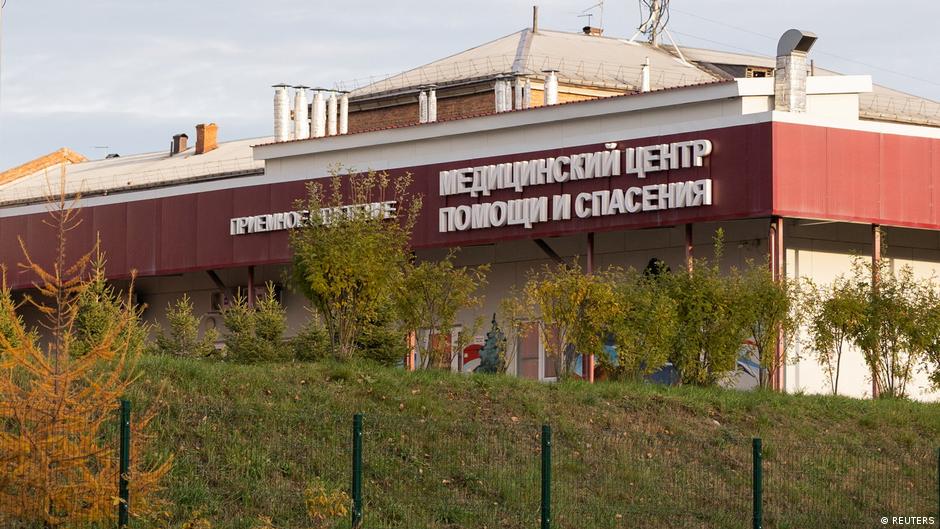
U.S. President Donald Trump is preparing to speak by phone with Russian President Vladimir Putin amid reports surrounding the death of a 28-year-old laboratory worker in Irkutsk and questions over whether a high-risk pathogen may have been involved. The issue has moved beyond public health channels and into the sphere of political risk, with potential implications for investors monitoring Russian industrial operations, regional disruption and state communications.
Trump said on Tuesday, October 6, that a call with Putin had been scheduled for the near future. He made the comment in response to a journalist’s question about whether he had discussed the incident in Irkutsk with the Russian leader. The reported death of Daria Shipilova, a laboratory assistant at the Irkutsk Anti-Plague Institute, has drawn attention from health authorities and international observers because of initial claims that plague may have been involved.
The World Health Organization said it is in contact with Russian health authorities and has offered technical support. WHO Director-General Tedros Adhanom Ghebreyesus wrote on X overnight on October 7 that Russian health officials had informed the organization that no plague cases had been registered recently in the Irkutsk region. For market participants, the distinction matters: an isolated medical investigation carries a different operational risk profile than a confirmed outbreak affecting regional movement, workforce availability or industrial continuity.
Russian health authorities informed the WHO that an epidemiological investigation had been carried out, preventive and control measures had been taken, and identified contacts had been placed under medical observation and tested.
According to Ghebreyesus, Russian authorities said no high-threat pathogens were detected among the contacts and that medical observation for all identified contacts had been completed. At the same time, the WHO requested additional information to clarify the cause of the severe pneumonia, the pathogen that prompted public health measures and media reports of a second employee with pneumonia of unknown origin.
Investor Focus Turns to Disclosure and Operational Continuity
While the available information remains limited and contested, the episode illustrates how health-related uncertainty can become an investor-relations issue for companies and regions exposed to sudden containment measures. The Irkutsk region is home to industrial assets and transport links, and any restrictions involving hospitals, workplaces or local movement can affect perceptions of operational resilience even before a confirmed public health emergency is established.
Reports from the outlet People of Baikal on October 4 said several Irkutsk medical institutions had been closed for quarantine, including city clinical hospitals No. 1, 3 and 10, a maternity hospital and the Ivano-Matreninskaya Children’s Clinical Hospital. The source article also said a mask regime was being introduced at the Irkutsk Aluminum Plant, known as IrkAZ, in Shelekhov. The plant director, Artyom Fominykh, reportedly announced that measure a day earlier.
For companies with employees, contractors or logistics exposure in affected areas, such measures may raise questions about absenteeism, health protocols, supplier coordination and contingency costs. The source article does not provide financial figures, balance-sheet exposure, production data or earnings impact for IrkAZ or any other company. As a result, any assessment of materiality remains preliminary and dependent on confirmed public health findings and company disclosures.
The White House had already signaled close monitoring of the situation. On October 5, Trump said the United States was “watching very closely” what was happening in Russia. He said U.S. officials had just heard about the matter and that Russian authorities were calling it pneumonia. He added that pneumonia had previously been easier to treat, but that germs and bacteria had become disproportionately stronger, and said the United States would help Russia.
Those remarks are notable from an investor perspective because they indicate the matter has reached the level of bilateral political attention. Even when health incidents remain localized, diplomatic engagement can increase scrutiny of official disclosures, crisis-management capacity and cross-border coordination. Investors often focus less on the clinical label itself than on the timeliness and consistency of information from government agencies and corporate operators.
Conflicting Signals From Regional and Federal Sources
Shipilova died during the night of October 2 at the Shelekhov District Hospital in the Irkutsk region. Alexey Tsydenov, the head of neighboring Buryatia, initially wrote on Max that the cause of her death was plague. He later edited the post, adding the word “possibly.” That revision has become central to the uncertainty surrounding the case, because Russian federal and regional health communications have not confirmed plague as the diagnosis.
Rospotrebnadzor said the deceased woman had been diagnosed with pneumonia, the cause of which had not been established. Igor Kobzev, governor of the Irkutsk region, referred to a suspected “particularly dangerous infection” but did not name the presumed diagnosis. The combination of a severe pneumonia case, anti-plague institute employment and quarantine-related reports has kept the issue in public view despite official statements that no recent plague cases were registered in the region.
From a financial reporting standpoint, the next key disclosures are unlikely to be earnings numbers in the immediate term. Instead, investors and analysts will be watching for official confirmation of the pathogen, the scope and duration of any quarantine measures, updates on the reported second employee with pneumonia of unknown origin, and whether industrial sites in the Irkutsk area report changes to staffing or production schedules.
The WHO’s request for additional information underscores that the factual record is still developing. Until Russian authorities provide more detailed findings, the balance of risk remains tied to uncertainty rather than confirmed economic disruption. For now, the event is best understood as a public health inquiry with political visibility and possible operational relevance for businesses in the Irkutsk region.



