Ukraine Delegation to Discuss Trump Envoys’ War Plan With Economic Stakes in Focus
Talks scheduled for October 9-10 will address a new proposal to end the war as Kyiv presses for sanctions and broader operational support.
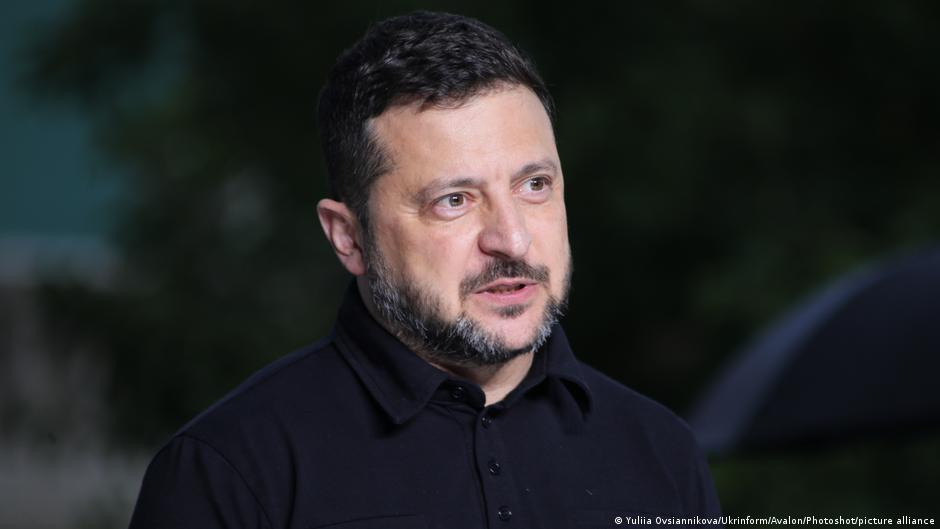
A Ukrainian delegation is set to hold talks in the United States on October 9 and 10 with special representatives of U.S. President Donald Trump over a new plan aimed at ending Russia’s war against Ukraine, President Volodymyr Zelensky said on Thursday, October 8.
The meetings are expected to bring together Ukrainian officials and Trump’s representatives Jared Kushner and Steve Witkoff. For Kyiv, the discussions come at a moment when the military and diplomatic agenda is closely tied to financial pressure on Russia, the future cost of the war, and the economic instruments that Ukraine argues could change the Kremlin’s calculations.
Zelensky said the Ukrainian side would be represented by the head of the presidential office, Kyrylo Budanov; deputy head of the presidential office Serhiy Kyslytsya; Davyd Arakhamia, head of the Servant of the People faction in parliament; and Rustem Umerov, head of Ukraine’s Foreign Intelligence Service. Zelensky also said European representatives could join the talks.
According to the Ukrainian service of Voice of America, citing a senior U.S. official, the meeting will focus on a new proposal that covers all aspects of the conflict and is intended to bring the war to an end. No financial terms, security guarantees, reconstruction mechanisms, or implementation timetable were disclosed in the source material.
Economic Pressure Emerges as a Central Issue
Although the planned talks were described primarily as diplomatic, Zelensky framed the path to negotiations in explicitly economic terms. His comments followed remarks by U.S. Secretary of State Marco Rubio, who said the war in Ukraine had reached a deadlock and that he saw no prospects for resolving the conflict through negotiations. Rubio made the comments in an interview with the Greek newspaper Kathimerini.
Zelensky sharply criticized Rubio’s position, arguing that it was inconsistent to discuss potential future economic projects with Russia while simultaneously describing the situation as a diplomatic impasse. His response underlined Kyiv’s view that economic restrictions, rather than statements about stalemate, should be central to any strategy designed to force Moscow into talks.
“We are not in a diplomatic deadlock. Shut down his entire economy. Sew Russia’s mouth shut. Do not feed them with your sales. Just impose sanctions on their weapons,” Zelensky said, referring to Russian President Vladimir Putin.
For investors, policymakers, and companies tracking sanctions exposure, the remarks point to the continuing importance of financial and trade restrictions in Ukraine’s diplomacy. Zelensky’s comments suggest that Kyiv is seeking broader enforcement against sectors that support Russia’s war effort, including military supply chains and sales that Ukraine says continue to sustain Moscow’s capacity to fight.
The source article did not specify whether the new proposal to be discussed in the United States contains sanctions provisions, funding commitments, or measures affecting frozen Russian assets. It also did not provide details on whether any prospective European participation would focus on security, financing, enforcement, or reconstruction.
Starlink Request Adds Technology and Defense Dimension
Zelensky also called on the United States to allow Ukraine to use Starlink over Russian territory. He said such access would help Ukraine “dominate” in the sky and ultimately force Putin to sit down at the negotiating table.
The request highlights the role of private and dual-use technology infrastructure in the war effort. Satellite communications have implications not only for battlefield operations but also for the companies, regulators, and governments involved in controlling access to communications networks. The source article did not state whether U.S. officials had responded to the request or whether Starlink access would be part of the discussions with Kushner and Witkoff.
From a financial reporting perspective, the issue sits at the intersection of defense needs, commercial technology platforms, and government policy. Any change in authorized usage could carry broader implications for service providers, export-control compliance, and the operating risks faced by companies whose infrastructure is used in conflict zones.
Ukraine Says It Is Responding Symmetrically to Russian Strikes
Zelensky separately said Ukraine is responding in kind to Russian attacks, including strikes on data centers. He said Russia had attacked Ukrainian data centers and that Ukraine had answered, while adding that he could not disclose all details.
“Data centers, you all know, they struck and are striking our data centers. We responded to them. I cannot say all the details,” Zelensky said.
The comments came after Ukraine’s armed forces used drones to strike a Yandex data center in the city of Sasovo in Russia’s Ryazan region during the night of October 8, according to the source article. A fire broke out, and the data center completely stopped operations. No one was injured.
For businesses and market observers, attacks on data centers point to the growing operational and infrastructure risks created by the war. Data centers are critical assets for digital services, cloud operations, communications, and corporate continuity planning. The reported shutdown of the Yandex facility illustrates how the conflict can affect technology infrastructure beyond traditional military targets.
The source article did not provide a financial estimate of the damage, details on service disruptions, or information on whether Yandex reported any material impact. It also did not say whether the facility was insured, how long operations would remain suspended, or whether any customer data or services were affected.
The planned U.S. talks therefore arrive against a backdrop in which diplomacy, sanctions policy, technology infrastructure, and wartime balance-sheet risk are increasingly linked. Kyiv’s public position is that Russia can be moved toward negotiations through stronger economic pressure, tighter restrictions on military-related trade, and expanded operational capabilities for Ukraine.
As of the statements reported on October 8, the central facts remain limited: a Ukrainian delegation is expected in the United States for talks on October 9 and 10 with Jared Kushner and Steve Witkoff; a new proposal to end the war is expected to be discussed; European participation is possible; Zelensky rejected the view that diplomacy is at a deadlock; and Ukraine says it has responded to Russian strikes on data centers, including through an attack that halted operations at a Yandex facility in Ryazan region.



