Ukraine Talks Broaden to Europe as Investors Assess Postwar Risks
Moscow and Kyiv agreed to include European partners in the next negotiating round after three days of US-mediated diplomacy.
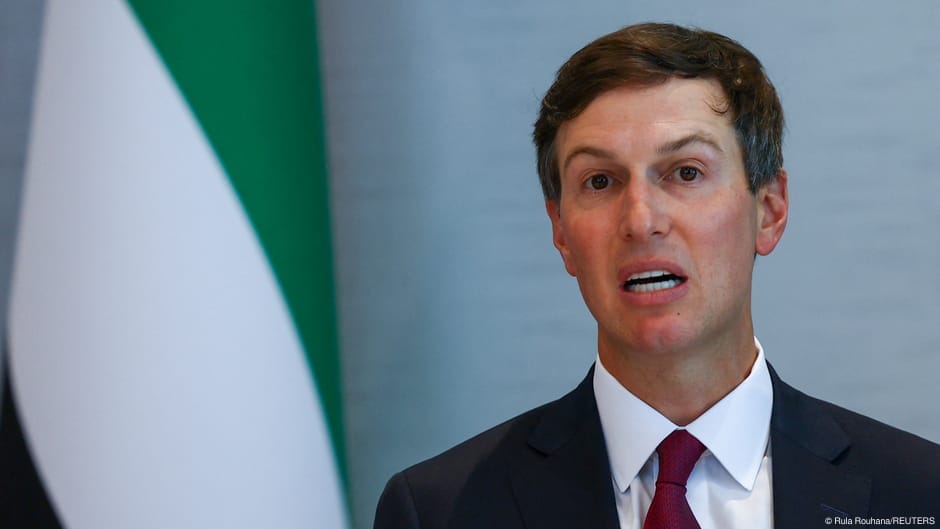
Moscow and Kyiv have agreed to bring European countries into the next round of negotiations on ending Russia’s war against Ukraine, US presidential envoy Jared Kushner said after three days of talks in several formats. The expansion could give European governments a more direct role in discussions with significant implications for regional security, public finances and the longer-term economic outlook.
Kushner, who is also US President Donald Trump’s son-in-law, announced the development on X during the night of Friday, November 13. The diplomatic effort ran from November 10 through November 12 and included meetings in Abu Dhabi, Moscow and Dublin, followed by consultations involving national security advisers from Ukraine and several European countries.
For investors and corporate finance teams, the addition of European partners increases the relevance of the negotiations to fiscal planning across the region. Any eventual settlement could affect defense expenditure, reconstruction financing, sovereign borrowing requirements and the risk assumptions used by companies with exposure to European markets. The talks remain at a preliminary stage, however, and Kushner did not disclose any financial commitments, economic terms or timetable for a broader agreement.
Three-day diplomatic push expands negotiating format
Russian and Ukrainian delegations discussed possible conditions for ending the war during US-mediated talks in Abu Dhabi on November 10 and 11. Kushner then traveled to Moscow with Steve Witkoff, another envoy for the US president, for negotiations with Russian President Vladimir Putin.
On November 12, the American negotiators flew to Dublin, where they met Ukrainian President Volodymyr Zelensky. They concluded the day with consultations involving national security advisers from Ukraine, Germany, Italy, France, Ireland and Poland, as well as representatives of the European Union.
Kushner said the intensive diplomacy had produced significant progress in understanding the concerns of both Russia and Ukraine. He also said the US representatives had identified possible solutions and established a path for further discussions.
“Both sides have now agreed to expand the next round of negotiations to include European partners,” Kushner said.
According to the envoy, the broader format will allow negotiators to address the postwar European security architecture alongside territorial issues between Russia and Ukraine. That wider agenda could prove material for governments preparing multiyear budgets and for businesses evaluating capital allocation, financing costs and geopolitical exposure. No proposed security framework or territorial arrangement was detailed in the announcement.
Ukraine’s security concerns remain part of wider framework
Kushner said the American representatives had agreed with Zelensky that no broader agreements on European security would be concluded without taking Ukraine’s security concerns into account. The statement places Kyiv’s position within any discussion that extends beyond bilateral territorial questions and into the future structure of European security.
The participation of European countries may also bring the negotiations closer to the institutions likely to confront the financial consequences of a settlement. European governments and the EU would potentially have to account for security policy, defense readiness and Ukraine’s recovery in their budget frameworks. The source announcement, however, contained no figures for reconstruction, military support, guarantees or other potential balance-sheet obligations.
Companies reporting quarterly results have frequently had to assess the war through its effects on operational risk, supply chains and macroeconomic uncertainty. A broadened negotiating process offers a diplomatic development that finance executives and investors may monitor, but it does not yet provide measurable inputs for earnings guidance or impairment calculations. The next round’s composition has been outlined, while its timing and prospective deliverables were not specified.
Large prisoner exchange under preparation
Kushner also announced preparations for what he described as the largest exchange of prisoners of war since the conflict began. He said thousands of people could return home as a result.
No exact number, implementation date or operational details were provided. The planned exchange is separate from corporate financial reporting, but it represents a tangible humanitarian initiative emerging from the same three-day diplomatic process.
The negotiations now move toward a wider format combining Russian and Ukrainian territorial questions with debate over Europe’s postwar security arrangements. For financial markets and company reporting, the principal issue will be whether the diplomatic progress eventually develops into sufficiently concrete terms to change assumptions about regional risk, government spending and economic recovery. Based on Kushner’s account, the latest meetings established a broader channel for talks but did not yet produce a final settlement or quantified financial framework.



