US Envoys Seek Direct Russia-Europe Dialogue as Investors Track War Risk
Washington is preparing another round of Ukraine negotiations as markets and companies assess the financial impact of prolonged conflict.
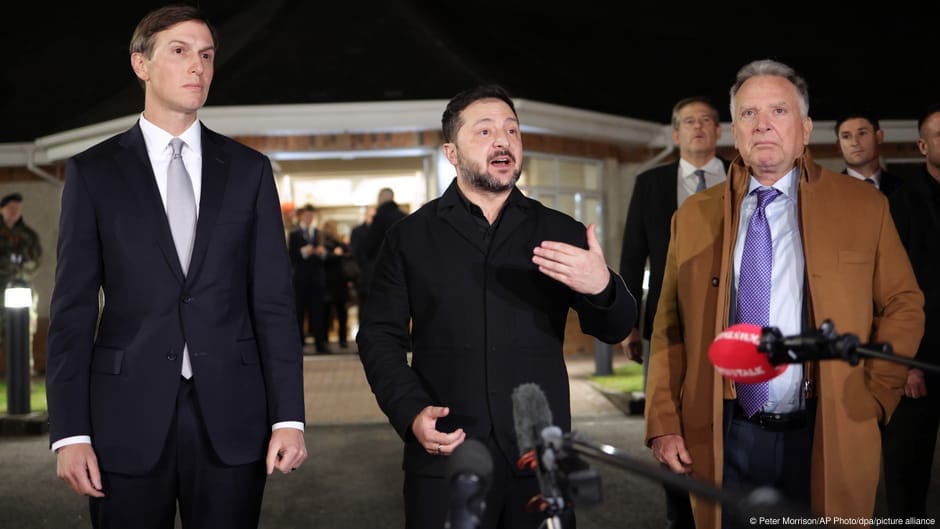
US presidential envoys Steve Witkoff and Jared Kushner are focused on facilitating direct engagement between Moscow and European partners as part of peace negotiations over Ukraine and wider discussions about security on the continent, Kushner said on Saturday, November 14.
The diplomatic initiative carries significant implications for companies and investors exposed to European security risks, even though Kushner disclosed no financial commitments, sanctions changes or economic terms. Any progress toward an agreement could affect corporate risk assessments, financing conditions and investor communications across sectors sensitive to the war and its consequences. For now, however, the talks remain at a preparatory stage, leaving businesses without a firm timetable or a defined framework for evaluating potential outcomes.
Kushner wrote on the social media platform X that efforts were under way to bring European representatives into the Ukraine negotiations. He said NATO, which includes the United States, would remain a central pillar of European security in the future.
“Any final agreement must be approved by all interested parties, and President Trump will support only arrangements that strengthen the security of Ukraine and Europe and make future conflicts less likely,” Kushner said.
The statement indicates that Washington views European participation as necessary for securing a durable settlement. From a financial-reporting perspective, the involvement of all affected parties may also be important to the credibility of any assumptions companies eventually make about geopolitical exposure, asset valuations, supply arrangements and longer-term investment plans.
Next round of talks enters preparation
Kushner identified preparation of the agenda for another round of trilateral negotiations involving Russia, the United States and Ukraine as a second focus of the envoys’ work. He said both Moscow and Kyiv understood that practical compromises would be required to end the war.
The envoy added that several new ideas emerged during negotiations held earlier in the week and that some of them could produce a breakthrough. He did not provide details about those proposals, their economic dimensions or the concessions under consideration. That lack of specificity limits the conclusions investors can draw about the near-term outlook, including any possible effects on sanctions, trade, reconstruction funding or corporate balance sheets.
Kushner and Witkoff participated in several meetings during the week aimed at ending the war in Ukraine. On November 10 and 11, they represented Washington at trilateral talks in Abu Dhabi attended by delegations from Moscow and Kyiv.
On November 12, the two envoys travelled to Russia for a meeting with Russian President Vladimir Putin. The following day, they arrived in Dublin, where they met Ukrainian President Volodymyr Zelensky. The sequence of meetings underscores the pace of the diplomatic effort, although no agreement or measurable milestone was announced.
European participation could shape corporate risk outlook
The date of the next negotiations has not been publicly confirmed. In comments to the Russian television programme Vesti before departing Moscow, Kushner said further discussions would take place as early as the following week. He described the planned format as multilateral.
Witkoff separately said that the date for the next talks had already been determined and that European representatives would attend. Neither envoy disclosed the venue, a participant list or the issues scheduled for formal consideration.
For finance executives and investor-relations teams, the immediate significance lies less in a specific deal than in the possibility of a broader negotiating structure. European participation may increase the number of parties whose approval is required, while potentially strengthening the legitimacy and implementation prospects of any eventual agreement.
Companies with material exposure to the region have had to account for the conflict through operational-risk disclosures, asset reviews, supply-chain planning and forward-looking statements. The envoys’ comments do not, by themselves, provide a basis for changing reported financial assumptions. They do, however, establish another diplomatic development that management teams may monitor when evaluating geopolitical scenarios and communicating risks to shareholders.
The absence of a confirmed public schedule and the lack of detail about the new proposals mean uncertainty remains high. A breakthrough could alter expectations surrounding European security and the duration of the war, but the negotiations have not yet produced terms that can be translated into financial metrics, revised forecasts or balance-sheet adjustments.
The next multilateral meeting will therefore be watched for concrete evidence of progress, including whether Russia, Ukraine, the United States and European participants can agree on an agenda and identify practical compromises. Until then, Kushner’s statement signals intensified engagement rather than a completed diplomatic or economic settlement.



