Zelensky Calls U.S.-Russia Diesel Deal an Investment in War
Ukraine’s president said easing restrictions on Russian diesel exports would strengthen Moscow’s war financing without a firm de-escalation deal.
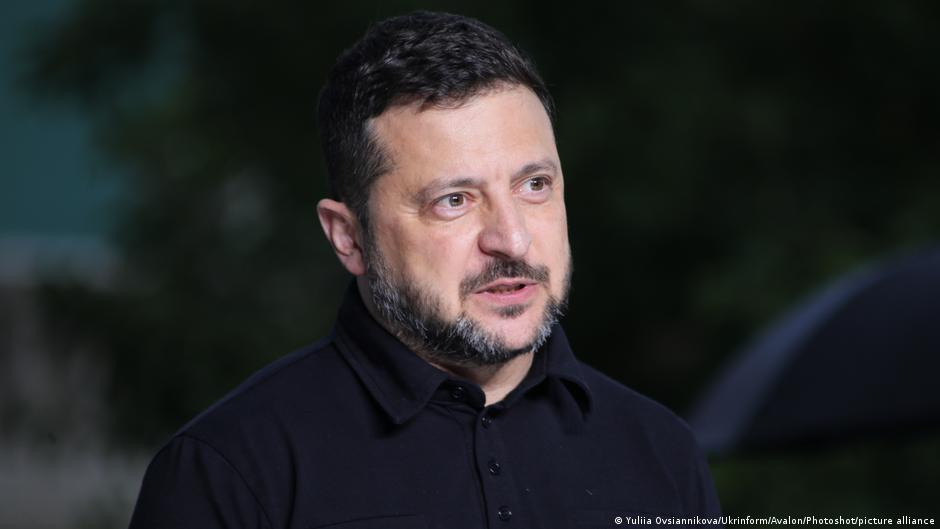
Ukrainian President Volodymyr Zelensky on Friday, October 9, criticized an agreement between the United States and Russia on global supplies of Russian diesel fuel, describing the White House decision as an “investment in war.” His remarks framed the fuel arrangement not only as a diplomatic concession, but as a financial and sanctions-policy issue with direct implications for Russia’s ability to sustain military operations.
Zelensky’s criticism followed U.S. President Donald Trump’s statement the same day that he had held “very successful” talks with Russian President Vladimir Putin. According to Trump, the talks produced an agreement on supplies of Russian diesel to the United States and to the global market. The development was accompanied by a U.S. Treasury Department announcement that the Office of Foreign Assets Control, acting on Trump’s order, was immediately issuing a temporary general license authorizing shipments of Russian diesel fuel to the world market.
For Ukraine, the issue is not limited to fuel availability or energy-market logistics. Zelensky argued that allowing Russia to sell petroleum products would provide Moscow with additional economic room at a time when sanctions are intended to restrict its revenue base. In financial terms, his comments cast the policy change as a loosening of pressure on a sanctioned exporter and as a potential source of cash flow for a government continuing its war against Ukraine.
“Permission for Russia to sell petroleum products is an investment in the war, which must be ended, not continued,” Zelensky said.
Sanctions Relief and War Financing
Zelensky said that “gifts to Putin” would not bring peace and warned that Russia would “thank” others for diesel with further terror and wrongdoing. His statement suggested that any policy enabling the export of Russian refined products should be assessed against its likely effect on Russia’s war budget and operational capacity. From Kyiv’s perspective, diesel revenue is not a neutral commercial matter when the proceeds may help sustain military activity.
The Ukrainian leader added that any easing of sanctions against Russia without a clear de-escalation arrangement would amount to obvious weakness. He said such a move would play into Russia’s hands by enabling it to kill more people and fight longer. The central financial argument was direct: sanctions are designed to constrain Russia’s resources, and loosening them without reciprocal security commitments risks weakening that constraint.
The U.S. Treasury Department’s move, as described in the announcement cited in the source material, involved a temporary general license from OFAC. Such licenses can alter the practical scope of sanctions compliance for companies, shippers, traders and financial intermediaries by permitting certain transactions that would otherwise be restricted. In this case, the license was described as authorizing Russian diesel fuel shipments to the global market immediately.
Russian Deputy Prime Minister Alexander Novak told TASS that Russia was “immediately” beginning to remove diesel export restrictions earlier than planned. He also confirmed Trump’s statement that Russian diesel exports could eventually reach 3 million tons per month. That figure, if reached, would represent a substantial export flow, although the source article did not provide pricing, revenue estimates or contract values.
Ukraine Offers a Reciprocal Energy Deal
Zelensky said Ukraine was ready for reciprocal de-escalation steps and urged Washington to increase pressure on Russia to achieve a ceasefire. He presented a specific proposal tied to energy infrastructure: Ukraine would refrain from burning Russian oil refining facilities if Russia stopped destroying Ukraine’s energy system.
“Ukraine will not burn Russian oil refining if Russia does not destroy our energy sector,” Zelensky said, adding that Kyiv was proposing exactly such an arrangement to the United States. He said he believed the United States had enough strength to achieve that compromise.
The proposal placed energy assets at the center of a potential de-escalation framework. For investors and companies following the region, the issue intersects with several financial risks: sanctions exposure, commodity flows, insurance and shipping availability, and the wider security risk to energy infrastructure. While the reported U.S.-Russia diesel arrangement may be presented as a supply measure for global markets, Ukraine is arguing that the financial effect on Russia should be treated as part of the war calculus.
Zelensky’s comments also underscore the tension between energy-market stabilization and sanctions enforcement. Diesel is a key refined product used across transport, agriculture, industry and military logistics. Any authorization that increases Russian access to global buyers may influence supply conditions, but Kyiv’s position is that such access should not be granted without binding security concessions.
The Russian side, through Novak’s comments, indicated readiness to move quickly on exports. His statement that restrictions would be lifted ahead of schedule suggests Moscow sees the arrangement as immediately actionable. The possible scale of 3 million tons per month gives the issue significance beyond a symbolic policy shift, though the article did not state when such volumes might be achieved or under what commercial terms.
For Washington, the decision creates a new sanctions-policy signal. OFAC’s temporary general license, ordered by Trump, indicates a defined opening for Russian diesel shipments even as broader restrictions on Russia remain politically and economically sensitive. For Kyiv, however, the timing and structure of that opening are the problem: Zelensky said sanctions relief without de-escalation would strengthen Russia rather than move it toward peace.
The dispute is therefore likely to be read by markets and policymakers as more than a bilateral diplomatic disagreement. It concerns whether energy trade exemptions can be separated from war financing, and whether temporary licensing can be used without undermining the deterrent value of sanctions. Zelensky’s answer was unequivocal: in the absence of a clear agreement to reduce attacks, allowing Russian petroleum products back into wider markets amounts to financing the continuation of the war.



