Trump Administration Weighs Lifting Sanctions on Russia’s RDIF
Removing restrictions could allow the sovereign investment fund to participate in planned Russian diesel supplies to the United States.
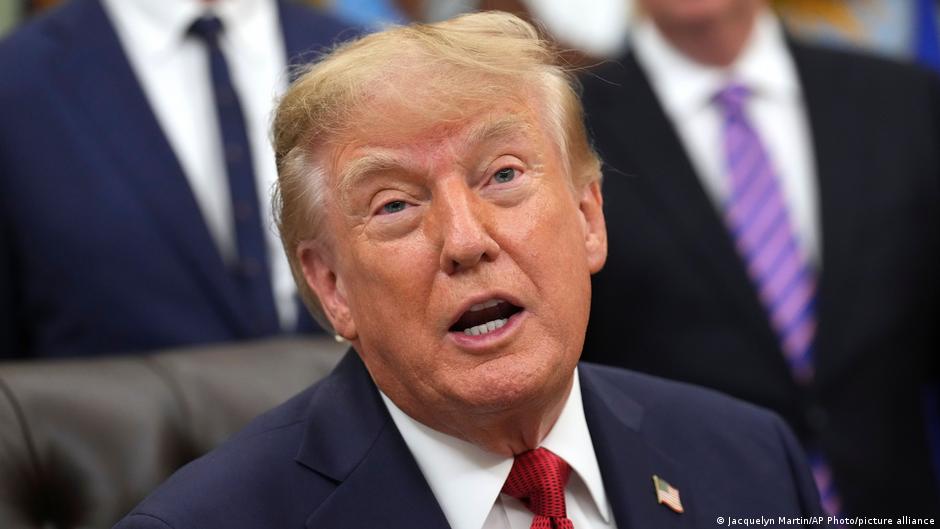
The Trump administration is considering lifting US sanctions on the Russian Direct Investment Fund, a step that could restore the sovereign fund’s ability to participate in cross-border transactions and facilitate planned shipments of Russian diesel fuel to the United States, The New York Times reported on October 27.
Moscow is pressing Washington to remove the restrictions so that RDIF can take part in the diesel supply arrangements, according to people familiar with US-Russian negotiations cited by the newspaper. The request places the fund’s sanctions status at the intersection of energy trade, bilateral diplomacy and the financial controls governing transactions involving Russian state-linked entities.
The US Treasury Department is reviewing RDIF’s application through its standard delisting procedures, one source told the newspaper. Under that process, the fund would have to demonstrate that the circumstances forming the original basis for sanctions no longer apply. No decision has been reported, and a review does not itself guarantee that the restrictions will be removed.
Sanctions review carries financial and compliance implications
RDIF was established in 2011 to attract foreign investment into Russia. Led by Kirill Dmitriev, it has served as a vehicle for investments and joint projects involving international partners. One of its projects was Russia’s Sputnik V vaccine during the COVID-19 pandemic.
The Biden administration imposed sanctions on RDIF four days after Russia launched its full-scale invasion of Ukraine. Although the entity is formally a sovereign investment fund, the US Treasury at the time described it as widely viewed as a financial vehicle for President Vladimir Putin and an example of the kleptocracy it said characterized Russia’s system of government.
Any delisting would alter the compliance framework around RDIF, potentially reopening access to counterparties and transactions currently constrained by US sanctions.
For investors, banks and commodity traders, the central issue would be whether sanctions relief is broad enough to permit financing, settlement, insurance and other services connected with Russian diesel deliveries. The report did not specify the proposed structure of RDIF’s involvement, the value of any transactions, or whether additional Russian entities would require separate authorization.
Dmitriev is a key participant in Russian-US talks, including discussions concerning the war in Ukraine. He has promoted Kremlin proposals for potential joint business projects between Russia and the United States and has met repeatedly with representatives of the current US administration. His dual role in diplomacy and investment discussions gives the sanctions application significance beyond RDIF’s own balance sheet and portfolio.
The New York Times said consideration of further sanctions relief, which had not previously been reported, showed how the Kremlin was using the recent diplomatic activity surrounding the war in Ukraine to advance objectives that appeared to have little connection with securing peace.
Diesel volumes put trade flows in focus
President Donald Trump said on Truth Social on October 9 that he had held “very successful” talks with Russian President Vladimir Putin. Trump said the discussions produced an agreement covering supplies of Russian diesel to the United States and the wider global market.
According to Trump, Russia would immediately deliver more than 300,000 metric tons of diesel to US and global markets, followed by another 500,000 tons during November and 1 million tons afterward. He added that Moscow could provide a further 3 million tons within a short period, depending on the condition of Russian oil refineries.
Those announced volumes could represent a substantial commodity flow, but the source material provided no pricing, contract values, delivery schedules by destination or estimates of RDIF’s prospective financial exposure. The absence of those details limits any assessment of the potential effect on the fund’s assets, liabilities, revenue or investment returns.
Trump said Russian energy supplies, combined with what he called US “full control” over the Strait of Hormuz, would cause diesel prices to fall rapidly and significantly for Americans and consumers worldwide. His statement framed the arrangement as an intervention in fuel availability and pricing, although no projected price reduction was disclosed.
On the same day, the US Treasury announced that the Office of Foreign Assets Control, acting at the president’s direction, was immediately issuing a temporary general license permitting Russian diesel supplies to the global market. Putin later formally confirmed both the telephone conversation with Trump and the agreement concerning Russian petroleum-product deliveries to world markets.
The temporary license and RDIF’s separate request address different layers of the transaction environment. The license permits specified diesel trade, while a decision on RDIF would determine whether the sanctioned investment fund can participate without breaching US restrictions. Market participants would still need to examine the final scope, duration and conditions of any authorization before committing capital or processing payments.
A removal of sanctions could improve RDIF’s ability to transact internationally and pursue US-Russian projects. Continued designation, however, could restrict its proposed role even as licensed diesel shipments proceed through other channels. The Treasury review therefore represents a material regulatory decision for the fund, prospective counterparties and institutions assessing sanctions, settlement and reputational risks.