Alt-right Politician Alexander Eichwald Expelled from AfD After Controversial Speech
The German far-right party AfD excludes Alexander Eichwald over speech resembling Adolf Hitler’s rhetoric, citing reputational damage.
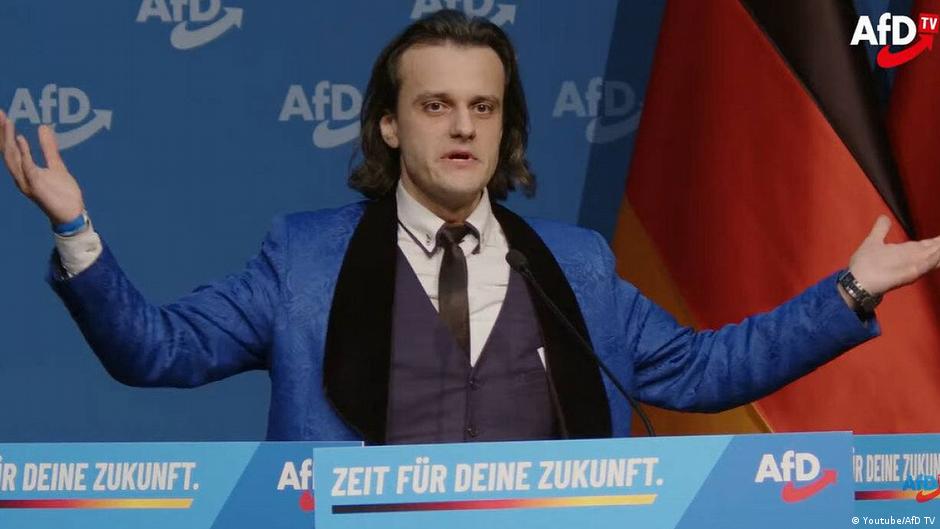
Alexander Eichwald, a 30-year-old politician of Russian-German descent, has been expelled from the right-wing populist party Alternative for Germany (AfD) following a disciplinary tribunal decision. Eichwald's notoriety surged after a speech at the AfD youth wing congress where his rhetoric closely mimicked that of Adolf Hitler.
Party Discipline and Financial Implications
The disciplinary court of AfD ruled that Eichwald's conduct inflicted significant damage on the party’s reputation, prompting his removal. The decision, announced on April 25, 2026, highlights the party’s attempt to manage internal controversies that could impact investor confidence and overall brand integrity ahead of critical political funding cycles.
Despite the expulsion, Eichwald retains the right to appeal the ruling in the party’s federal arbitration court. He has confirmed his intention to contest the decision, emphasizing that he had submitted a written defense prior to the disciplinary hearing and chose not to attend in person.
"The party’s harsh reaction to my speech exposed its own contradictions," Eichwald stated, defending his actions as a strategic move to spotlight alleged neo-Nazi elements within AfD leadership.
His removal may prompt scrutiny from donors and political backers concerned about the party's stability and public image, potentially influencing future fundraising and electoral support.
Background and Controversy
Eichwald first attracted media attention in November 2025 during a congress of AfD’s youth organization, "Generation Germany," in North Rhine-Westphalia. His speech featured exaggerated gestures, elongated words, and a trilled "r" reminiscent of Hitler’s oratory style.
He attributed his accent and speech patterns to his upbringing in Russia, having immigrated from Rostov-on-Don to Germany at age nine. Eichwald reportedly learned German through songs by the band Rammstein, according to Süddeutsche Zeitung. While the ZDF broadcaster confirmed he speaks with a Russian accent in daily life, the specific mannerisms in his speech at the congress were not consistent with his usual pronunciation.
Following sharp criticism, Eichwald admitted the speech was a planned action intended to expose extremist tendencies within AfD leadership by holding up a "mirror to society." He compared contemporary Germany to the Weimar Republic era, from which Hitler rose to power.
Rejecting claims that his speech was satirical or a parody, Eichwald said he portrayed a "persona" to provoke reflection on the party's direction. He also condemned AfD co-chair Alice Weidel for a previous statement likening Hitler and Stalin as "spiritual brothers," calling it an affront to his Russian-German identity and a distortion of the history of Slavic suffering under Nazi policies.
Potential Impact on AfD’s Financial and Political Standing
The episode underscores ongoing challenges for AfD in managing internal dissent while preserving its support base and donor trust. Eichwald’s expulsion may be seen as a move to mitigate reputational risks but could also deepen factional divides within the party.
Investor relations and funding sources for AfD may be sensitive to such controversies, as public perception directly influences political donations and media partnerships critical to campaign financing. The party’s handling of Eichwald’s case will likely be closely watched by political analysts and financial stakeholders monitoring Germany’s right-wing political landscape.
In a recent YouTube video posted days before his expulsion, Eichwald reiterated his willingness to repeat the speech and maintain his provocative stance, signaling potential ongoing disputes that could affect AfD’s cohesion and electoral prospects.
Overall, the AfD faces a complex balancing act between enforcing discipline and managing the fallout from internal controversies that carry financial and strategic implications for the party’s future.