EU Opens Market and Competitiveness Talks With Ukraine and Moldova
The move advances accession negotiations while keeping reform delivery, budget support and investor-facing policy alignment in focus.
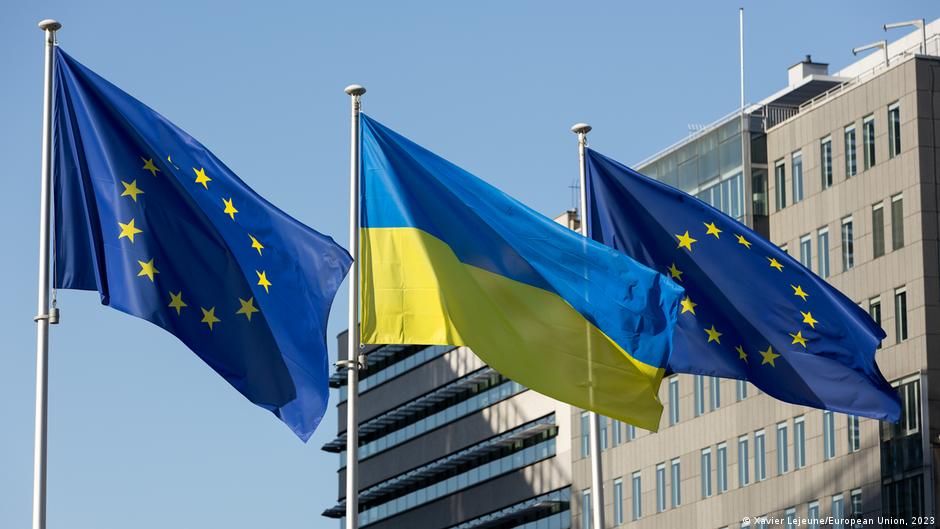
European Union member states have agreed to open negotiating clusters 2 and 3 in accession talks with Ukraine and Moldova, a step that brings both candidate countries deeper into the bloc's policy-screening process and places renewed emphasis on reforms with direct relevance for markets, competition and public finance.
Irish Minister of State for European Affairs Thomas Byrne announced the agreement on X on Monday, October 12. The decision concerns the thematic clusters titled "Internal Market" and "Competitiveness and Inclusive Growth," two areas that are closely watched by businesses, investors and public-sector lenders because they cover the conditions under which companies operate, compete and access wider European markets.
"I can confirm that all EU member states have agreed to open clusters 2 and 3 for Ukraine and Moldova," Byrne wrote, also referring to steps in the accession processes of Albania and Montenegro.
Byrne said that after "Montenegro Monday" there would be a "Super Tuesday" for Albania, Moldova and Ukraine. He added that EU member states had also agreed to close chapters 17, 18 and 19 for Albania and chapter 20 for Montenegro. For Ukraine and Moldova, however, the central development is the formal move into two clusters that touch the regulatory architecture behind trade, competition policy, growth models and economic integration.
Market Rules Move to the Foreground
The opening of the Internal Market cluster is a significant procedural marker for Ukraine and Moldova because it brings the countries into detailed negotiations over rules that affect the free movement of goods, services, capital and people inside the EU framework. For companies operating in or trading with the two countries, that process can become a benchmark for future regulatory convergence, even though membership remains a longer-term objective.
The Competitiveness and Inclusive Growth cluster is also material from a financial reporting perspective. It is tied to the policy environment in which productivity, enterprise development, labor-market conditions, education and innovation are evaluated. As the accession process advances, governments are expected to show that reforms are not only legislated but capable of being implemented in practice.
The EU accession framework is organized into six large thematic sections, known as clusters, that cover different areas of legislation and public policy. During negotiations, the European Union assesses how ready a candidate country is to apply EU rules and standards. The six clusters are "Fundamentals," "Internal Market," "Competitiveness and Inclusive Growth," "Green Agenda and Sustainable Connectivity," "Resources, Agriculture and Cohesion," and "External Relations."
Ukraine opened the first of the six negotiating clusters, "Fundamentals," on June 15. That cluster generally serves as the base of the accession process, as it concerns governance, rule-of-law and institutional readiness. The move to open the second and third clusters therefore broadens the scope of the negotiations into areas with more direct economic and commercial implications.
The latest agreement followed a legislative step in Kyiv earlier the same day. On October 12, Ukraine's Verkhovna Rada approved, in two readings and as a whole, amendments to the law on education concerning the rights of national minorities. The document was described as necessary to secure Hungary's consent to the opening of the second and third negotiating clusters for Ukraine's accession to the European Union.
Later on October 12, Ukrainian lawmaker Yaroslav Zhelezniak said on Telegram that the adopted law had been signed by President Volodymyr Zelensky. The sequence highlights how accession milestones can depend on specific domestic policy commitments, including those that may appear outside the narrow field of finance but can still determine the timing of broader economic integration talks.
Reform Timetable and Budget Context
The timing of the EU decision had been signaled earlier in October. On October 5, EU Commissioner for Enlargement Marta Kos said at a press conference after a meeting of the Moldova-EU Association that the EU could open two negotiating clusters for Ukraine and Moldova during an intergovernmental conference on the sidelines of the EU General Affairs Council, scheduled for October 13 in Luxembourg.
Kos said Ukraine and Moldova were carrying out systemic reforms "in very difficult conditions" and were among four countries leading in accession negotiations. She also said the European Commission would publish a detailed assessment of reform progress across all areas in candidate countries on October 28 in its annual enlargement report.
For finance ministries, lenders and investors, that annual assessment will matter because it can influence expectations around reform credibility, access to external support and the durability of policy commitments. The opening of clusters does not itself complete the accession process, but it adds structure to the reform timetable and gives market participants clearer areas to monitor.
Kos also urged observers not to forget that Ukraine is fighting for survival while simultaneously pursuing EU accession and implementing reforms, including in order to obtain additional funds for the budget and military needs. That statement links the accession process directly to fiscal capacity, external financing and wartime budget pressures.
In Ukraine's case, the financial dimension is particularly acute. The country is advancing reforms while managing the demands of war, defense spending and budget support needs. In Moldova's case, the opening of the same clusters places the country on a parallel negotiating track and underscores the EU's assessment that both countries are moving through reform benchmarks at a pace sufficient to advance the process.
The agreement by all EU member states removes a near-term procedural barrier and allows attention to shift toward implementation. The next phase will test how Ukraine and Moldova translate legislative and regulatory commitments into enforceable systems aligned with EU standards. For investors and institutions tracking the region, the relevant question is not only whether new chapters open, but how the reforms behind them affect market access, competition policy, governance standards and the public balance sheet over time.