Trump Says Putin More Motivated Than Zelenskyy to Reach Ukraine Peace Deal
The U.S. president’s comments put renewed focus on the financial and energy-sector costs of Russia’s war in Ukraine.
U.S. President Donald Trump said Russian President Vladimir Putin appears more interested than Ukrainian President Volodymyr Zelenskyy in reaching a peace agreement over Ukraine, even as questions mount over reported violations of an energy-sector ceasefire that Trump had said would halt attacks on energy infrastructure.
Speaking to reporters late on Monday, ahead of Tuesday, October 13, Trump was asked how he assessed Putin’s willingness to compromise while Russia continues to attack Ukraine. The U.S. president said he believed the sides would ultimately reach an agreement.
“I think they will make a deal. I really think Putin is more interested than Zelenskyy in making a deal,” Trump said.
The remarks are significant for investors, creditors, energy-market participants and public finance analysts tracking Ukraine’s wartime fiscal position. Attacks on power generation and heating infrastructure have direct implications for the country’s budget needs, external financing requirements, reconstruction costs and winter energy resilience. Any ceasefire covering energy assets would be closely watched as a potential stabilizing factor for Ukraine’s macroeconomic outlook and for donor planning.
Energy Ceasefire Under Scrutiny
Trump was also asked about Russia’s alleged breach of the energy ceasefire, which he himself had announced. He responded that the situation needed to be examined first, adding that “there were violations on both sides.”
When pressed on how he intended to ensure that Putin complied with the energy ceasefire, Trump said, in his view, Putin wanted an agreement and that Zelenskyy would need to be persuaded to move toward one. The framing shifts part of the diplomatic burden toward Kyiv at a time when Ukrainian officials are calling for Washington to use its leverage on Moscow.
Zelenskyy had earlier urged the United States to influence Russia so that it would begin observing the ceasefire regime in the energy sector. Speaking at the Warsaw Security Forum, the Ukrainian leader said Kyiv was waiting to see what concrete steps the Americans were prepared to take.
“We are waiting to see what specific steps the Americans are ready to take,” Zelenskyy said.
For financial markets and international lenders, the distinction matters. A ceasefire that materially reduces strikes on energy assets could lower emergency repair spending, ease pressure on public utilities and reduce the risk of broader economic disruption. Conversely, continued attacks would keep Ukraine’s energy system exposed to repeated capital losses and could require additional foreign assistance to maintain basic services.
Kyiv Cites Damage After Ceasefire Announcement
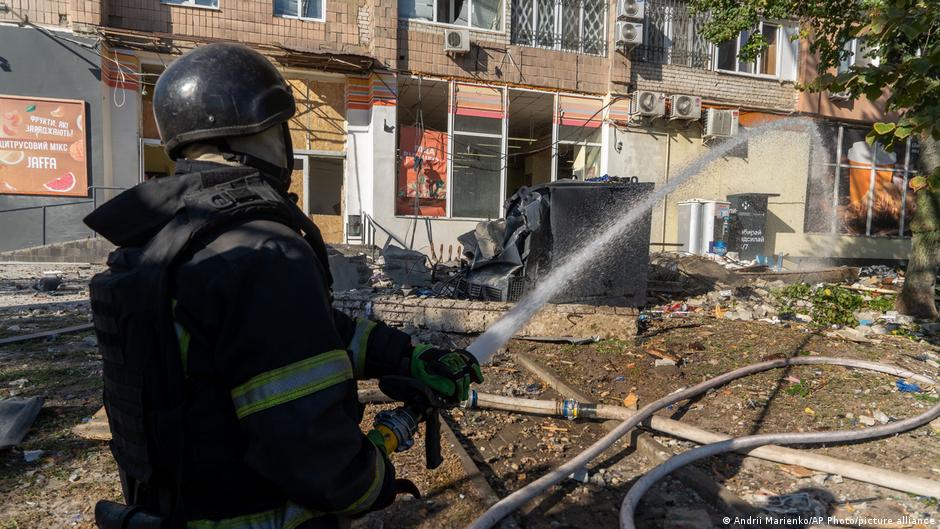
Zelenskyy said Ukraine was very surprised on October 11 by social media reports that all attacks on energy facilities in Russia’s war against Ukraine would stop immediately. According to the Ukrainian president, Russia struck a thermal power plant in Kharkiv shortly after that statement was published, causing additional damage to Ukraine’s energy system.
Kyiv’s position, as set out by Zelenskyy, is that Ukraine supported the energy ceasefire announced by the U.S. president and was prepared to guarantee it. The Ukrainian side argues that Russia must take corresponding steps and that, so far, Moscow has not been observed fulfilling the conditions that Trump had stated.
In a Telegram post on the evening of October 12, Zelenskyy wrote that Ukraine’s position was “absolutely clear”: the country was ready to guarantee an energy ceasefire as announced by the U.S. president, and Russia had to take the relevant steps. He added that much depended on the U.S. position if de-escalation was to work and said pressure needed to be applied to Russia.
Those comments underline the role of U.S. diplomacy not only in the military and political dimensions of the war, but also in the financial architecture surrounding Ukraine’s defense and recovery. Ukraine’s public finances remain deeply tied to the condition of critical infrastructure, particularly the energy grid. Damage to power plants, heating facilities and transmission assets can feed through to higher budgetary outlays, reduced industrial output, weaker municipal finances and more complex reconstruction planning.
Trump’s comments therefore arrive at a sensitive moment for investor relations around Ukraine-related risk. International backers and bondholders are likely to focus less on the rhetoric of willingness to negotiate and more on verifiable changes in battlefield and infrastructure conditions. For balance-sheet analysis, the critical question is whether the energy ceasefire can reduce recurring impairment to national assets or whether reported violations will keep adding to Ukraine’s liabilities and future capital needs.
The latest exchange also highlights a gap between U.S. assessments and Ukrainian messaging. Trump expressed confidence that Putin wanted a deal and suggested Zelenskyy needed persuasion. Zelenskyy, meanwhile, emphasized that Ukraine had accepted the energy ceasefire framework and that Russia had not implemented the conditions announced by Washington.
That gap may complicate expectations for near-term de-escalation. If the United States treats compliance as a matter requiring further verification while Ukraine says Russian implementation is absent, the ceasefire’s credibility could remain uncertain. For financial reporting purposes, that uncertainty is material: energy infrastructure damage is not only a military issue, but a continuing cost center affecting fiscal projections, aid requirements and the outlook for Ukraine’s economic recovery.