Finland Completes 200-Kilometer Russia Border Fence as Security Spending Rises
The project, described by Finnish officials as a major infrastructure undertaking, highlights how border security has become a strategic public investment.
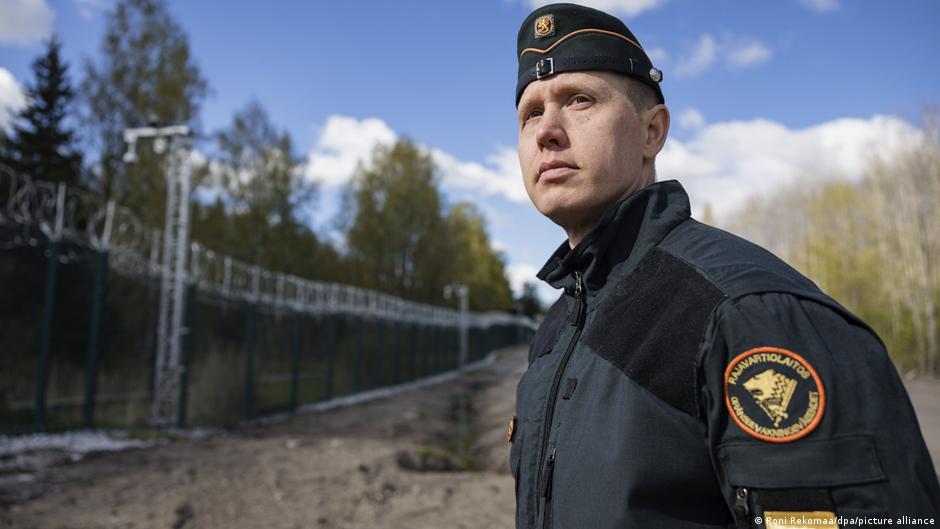
Finland has completed construction of a 200-kilometer barrier along its border with Russia, marking the conclusion of one of the country’s largest infrastructure projects and underscoring the financial and operational scale of Europe’s changing security priorities.
The Finnish Border Guard, part of a NATO member state’s security architecture, said on Monday, September 7, that the barrier had been finished. The project was launched against the backdrop of Russia’s war against Ukraine and amid concerns in Helsinki that Moscow could use migrants as a tool of pressure against Finland.
Interior Minister Mari Rantanen framed the completed barrier as a core state security asset rather than a symbolic construction project. She said the state’s main duty is to ensure the safety of its citizens, adding that the wall on Finland’s eastern border is an essential part of an effective border-security system in uncertain times.
“The barrier wall on the eastern border is an integral part of an effective border security system in these unpredictable times,” Rantanen said.
For investors, contractors and public-finance observers, the completion of the barrier offers a window into how national-security spending is increasingly taking the form of large civil-engineering programs. While Finnish authorities did not provide a project cost in the source report, the operational footprint described by the Border Guard points to a substantial deployment of labor, equipment and private-sector capacity.
Large-Scale Infrastructure With Security Objectives
The border barrier consists of a 4.5-meter-high fence, a technical surveillance system, a road network and a 25-meter-wide cleared strip. That combination makes the project more than a physical fence: it is a layered security platform combining construction, monitoring technology, access routes and maintenance corridors.
The Finnish Border Guard described the initiative as one of the most extensive infrastructure projects in Finland. Hundreds of companies were involved in carrying it out, with up to 600 people and 150 pieces of equipment working on construction sites each day. Those figures suggest broad participation from contractors, subcontractors, equipment suppliers and technical-service providers, even though no financial breakdown was disclosed.
From a financial reporting perspective, the project illustrates how security-related capital expenditure can flow through domestic supply chains. Construction contractors, surveillance-system providers, transport and machinery operators, and site-support firms all typically form part of the delivery base for projects of this kind. The Finnish account did not identify individual corporate beneficiaries, contract values or procurement terms.
The barrier also comes with likely ongoing operational implications. A system that includes surveillance technology, roads and a cleared strip requires maintenance, monitoring and periodic upgrades. The source material does not quantify future operating expenses, but the design indicates that the asset will remain part of Finland’s border-security infrastructure rather than a one-time construction outlay.
Schengen Responsibilities and NATO Context
Rantanen also linked the project to Finland’s position within the Schengen Area. She said Finland, as a Schengen member state, carries its share of responsibility for security at the external borders. That framing is important for understanding the barrier as part of a wider European security perimeter, not only a bilateral measure on the Finnish-Russian frontier.
The completion of the fence follows Finland’s shift in security posture after Russia’s full-scale war against Ukraine. Construction began in March 2023, when Helsinki was concerned that Russia could use migrants to exert pressure on the country. The project therefore reflects a public-policy response to geopolitical risk, with physical infrastructure used to reduce perceived vulnerability at the border.
The political and social backdrop has also shaped local reaction. In Imatra, a city near where construction took place, Mayor Matias Hilden previously told DW that no one was enthusiastic about the project, though residents had come to terms with it. He said it was “a little sad that we need this.”
That sentiment captures the tension often seen in security infrastructure: the projects can be economically significant and operationally necessary in the eyes of government, while still reflecting a deterioration in cross-border conditions. In Finland’s case, the eastern border has become a front line in a broader reassessment of European defense, migration management and state resilience.
The fence also follows the events of September 2022, when a large number of Russians fled to Finland after Russian President Vladimir Putin announced a partial mobilization in Russia. That episode contributed to the security environment in which Finland later advanced the border-barrier project.
Implications for Public Investment Priorities
Although the Finnish Border Guard’s announcement focused on security rather than financial metrics, the scale of the project makes it relevant to public-sector capital allocation. A 200-kilometer barrier incorporating fencing, surveillance, road access and land-clearing requires coordination across budgeting, procurement, project management and long-term asset stewardship.
For financial analysts tracking government expenditure, Finland’s completed border project is a case study in how geopolitical shocks can redirect infrastructure priorities. Traditional public works are often evaluated through transport, housing, energy or productivity lenses. This project instead sits at the intersection of defense-adjacent spending, border control and civil construction.
The absence of disclosed cost data limits any direct assessment of budget efficiency, contractor revenue impact or return on public investment. However, the reported involvement of hundreds of companies and daily deployment of hundreds of workers indicates a project with meaningful economic activity during its construction phase.
Its completion may now shift attention from build-out to operational readiness and maintenance. The technical surveillance system, road network and cleared strip suggest continuing budget requirements, including staffing, monitoring, repairs and technology upkeep. No specific financial guidance or future spending schedule was provided in the source report.
Finland’s 200-kilometer barrier is therefore both a security measure and a completed capital project. It reflects how governments facing geopolitical uncertainty are converting risk assessments into durable infrastructure, with consequences for procurement markets, public balance sheets and the allocation of state resources.