AfD Win in Saxony-Anhalt Raises Political Risk Signals for Investors
Preliminary results point to a decisive far-right victory in eastern Germany, prompting regional leaders to warn of wider European risks.
Preliminary election results in the eastern German state of Saxony-Anhalt have delivered a clear victory for the far-right Alternative for Germany, or AfD, creating a new political risk marker for investors assessing Europe’s largest economy and its regional policy environment.
The AfD was projected to win 44% of the vote in the state parliamentary election, according to preliminary figures cited in the source article. The result places the party well ahead of the Christian Democratic Union, whose incumbent state premier, Sven Schulze, is a member. The CDU was provisionally on 17.4%.
For companies, lenders and investors with exposure to Germany, the result is not a balance-sheet event in itself. But it adds to a broader set of political variables that can affect regulatory expectations, labor-market assumptions, cross-border investment sentiment and European policy coordination. Saxony-Anhalt is a regional economy, yet state elections in Germany are closely watched because they can influence national party strategy and coalition dynamics.
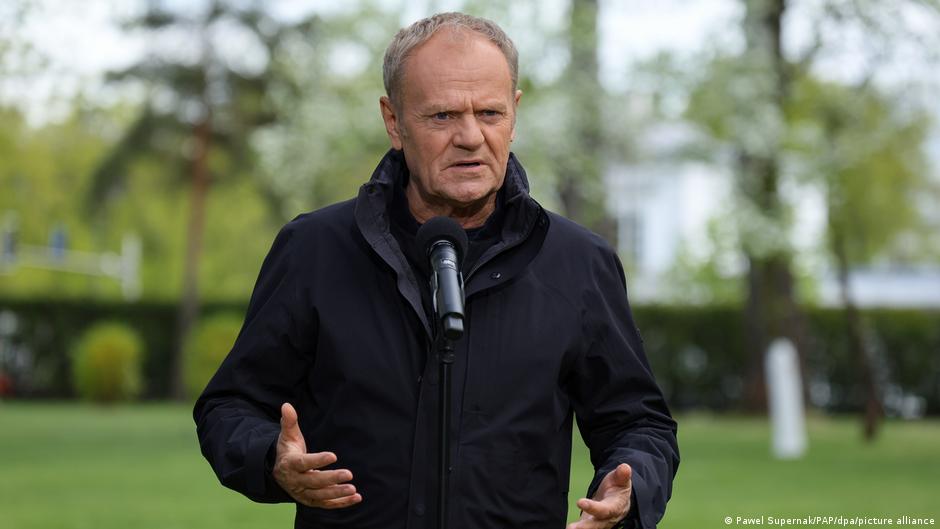
Polish Prime Minister Donald Tusk reacted sharply to the AfD’s performance, framing the result as a serious political development for countries neighboring Germany. In a post on X on Sunday evening, September 6, Tusk said that in Poland only “idiots or traitors” could be pleased by the triumph of the AfD in Germany. He added that, in his view, a number of such people had accumulated in the opposition Polish parties Confederation and Law and Justice, known as PiS.
“In Poland only idiots or traitors can rejoice at the triumph of the AfD party in Germany,” Tusk said, according to the Russian-language source article.
Coalition Arithmetic Becomes the Immediate Test
The financial significance of the vote begins with the practical question of whether the preliminary percentages can translate into a governing majority. The AfD’s candidate for state premier is Ulrich Siegmund. Under the seat distribution indicated by the preliminary results, the 83-seat Saxony-Anhalt parliament could give the AfD 39 mandates.
The CDU would receive 15 seats under that projection. The Left Party, the Greens and the Social Democratic Party of Germany, or SPD, would each receive eight seats. The Sahra Wagenknecht Alliance, or BSW, would receive five. The Free Democratic Party and other parties failed to cross the 5% threshold, according to the preliminary results.
Those figures matter because regional government formation can determine spending priorities, administrative policy and the tone of engagement with business. While investors generally focus on federal fiscal policy, EU regulation, interest rates and corporate earnings, state-level politics also affects infrastructure planning, education and workforce policy, public procurement and permitting.
The source article said preliminary final results were expected during the night leading into September 7. Until then, the reported figures remain provisional. Still, the scale of the AfD’s lead suggests a result with political weight beyond a routine regional vote.
Neighboring Governments Watch Policy Spillovers
The reaction from neighboring countries underlines why the election is being read through a broader European risk lens. Germany is a key trading partner for Poland, the Czech Republic and France, and political shifts inside German states can influence debate over migration, industrial policy, EU funding and the future of European integration.
In the Czech Republic, Tomio Okamura, speaker of the lower house of parliament and founder of the right-wing Freedom and Direct Democracy party, or SPD, congratulated the German far-right party on its success during an appearance on public broadcaster CT. Okamura said he hoped the AfD would enter the new governing coalition in Saxony-Anhalt.
The article noted that Okamura is a politician of Japanese-Korean origin and that the Czech Republic has been governed since late 2025 by a coalition made up of billionaire Andrej Babis’s right-populist ANO party, Okamura’s SPD and the Motorists party. That regional context matters for investors tracking whether similar political platforms are gaining institutional traction across Central Europe.
France also responded in explicitly European terms. Benjamin Haddad, France’s minister for European affairs, wrote on X that the result represented a difficult moment for Europe. He said leaders must listen to anger, anxieties and fears and respond to them, but stressed that nationalism and xenophobia would never be the solution. Haddad also urged Europeans not to forget their history, saying that this was the meaning of decisions taken by France and Germany.
For financial reporting, such remarks are relevant because they indicate that the outcome is not being treated solely as a local electoral result. Political responses from Poland, the Czech Republic and France suggest the vote could become part of a larger debate over Europe’s institutional direction. That debate can shape investor relations messaging for German and European companies operating in politically sensitive sectors, including energy, defense, transport, banking and manufacturing.
The preliminary outcome also arrives at a time when markets generally assign value to policy predictability. Companies preparing quarterly statements and investor presentations may not need to revise financial guidance because of a state election, but management teams may face questions about labor access, regional investment commitments, supply-chain exposure and public-sector demand if political uncertainty persists.
The AfD’s projected 44% share, the CDU’s 17.4%, the Greens’ 8.9%, the SPD’s 9.2%, the Left Party’s 8.6% and BSW’s 5.1% offer the first quantitative framework for that assessment. The key follow-up will be whether those figures hold in the preliminary final count and how parties approach coalition formation in an 83-seat parliament.
For now, the election has produced a clear headline risk: a far-right party has won decisively in an eastern German state, and senior officials in neighboring European countries are treating the result as consequential. For investors, the issue is less the immediate market reaction than the longer-term implications for Germany’s political operating environment and the stability assumptions that underpin capital allocation across the region.