Putin Backs Wider Volunteer Pool as War Manpower Pressures Mount
The proposal would allow Russians deemed fully unfit for military service to guard rear facilities from drones, adding a new variable to wartime staffing plans.
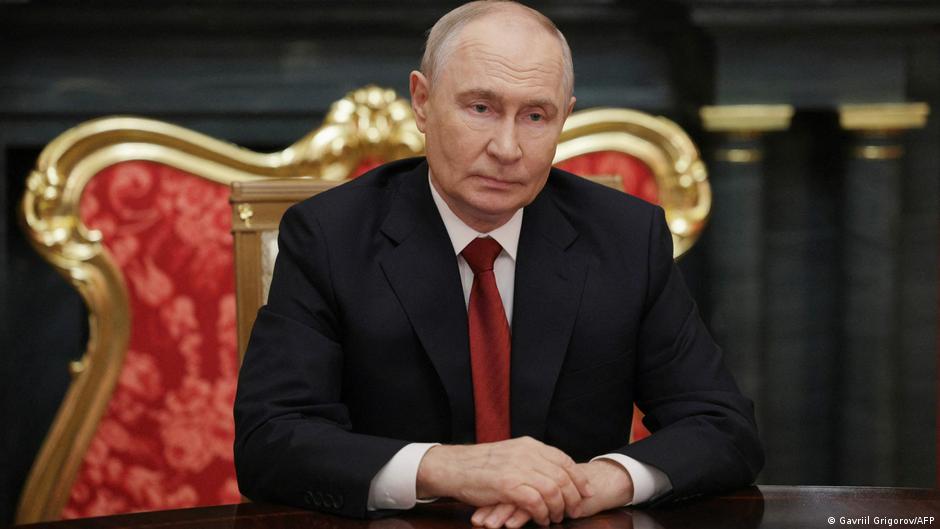
Russian President Vladimir Putin has backed a proposal to involve volunteers formally deemed completely unfit for military service in tasks linked to the war against Ukraine, a move that points to continuing pressure on Russia’s wartime manpower model and the regional systems used to sustain it.
The proposal was put forward by pro-Kremlin war correspondent Yevgeny Poddubny and supported by Putin at a meeting of the leadership of the ruling United Russia party, according to reports published on Saturday, September 5, by The Moscow Times and Ekho. The idea would permit people with health category “D,” meaning “absolutely unfit for military service,” to be used in combat-related functions, particularly for protecting rear-area facilities from drones.
For investors, companies and regional administrations tracking Russia’s wartime economy, the development is relevant less as a battlefield change than as another sign of how the state is widening the pool of people available for security and military-adjacent work. The focus on guarding infrastructure in the rear also underscores the financial and operational costs created by Ukrainian drone attacks, which have forced Russia to devote more resources to domestic air defense, site security and regional response units.
Rear-Area Security Becomes a Resource Question
Poddubny’s proposal was presented as a response to requests from fighters who had received category “D” after combat wounds. He said such people were capable of carrying out assignments, for example in regional units tasked with repelling Ukrainian drone attacks away from the front line. Putin supported the proposal at the same meeting.
“There is no scenario that would require mobilization,” Putin said at the Eastern Economic Forum in Vladivostok on September 3, describing speculation about a new wave as an information attack before State Duma elections.
The legal and administrative implications are substantial. Category “D” is assigned to people with severe chronic illnesses and disabilities, including active tuberculosis, HIV infection, cancer, schizophrenia, missing limbs, blindness or deafness. Citizens in this category are removed from military registration, and their files are sent to archives. Under current Russian law, they cannot sign a contract with the Defense Ministry.
Any mechanism to bring such people into regional anti-drone units or other rear-area security structures would therefore require either a legal workaround, a new classification of service or changes to existing rules. From a public-finance perspective, that raises questions about budget lines, compensation, medical liability, insurance and whether such personnel would be counted as military contractors, volunteers or members of regional defense formations.
The proposal also comes as Russia is trying to balance competing fiscal and political pressures: sustaining a high-intensity war, limiting the visibility of mobilization, and keeping regional authorities accountable for recruitment outcomes. Regional budgets and employers have already been affected by enlistment bonuses, recruitment campaigns and the diversion of labor into defense-related activity.
Mobilization Denials and Recruitment Targets
Putin has repeatedly denied that a new mobilization wave is planned. At the plenary session of the Eastern Economic Forum in Vladivostok on September 3, he said there was no scenario requiring mobilization and characterized rumors to the contrary as an “information attack” by the enemy ahead of State Duma elections intended to influence the result. It was his second recent statement on the issue. A day earlier, after the Shanghai Cooperation Organization summit in Bishkek, he called such fears “complete nonsense.”
Those statements sit alongside unresolved legal and operational realities. The 2022 decree on partial mobilization has not formally been canceled and remains in force. Russians have continued to report receiving draft notices, being called to military training, and seeing intensified recruitment for the war against Ukraine.
In July, pro-war Z channels reported that forced recruitment for the front could affect 1.2 million Russians and might be accompanied by undisclosed arrangements with neighboring countries, under which men of draft age would be unable to leave Russia for adjacent states. These claims have not been confirmed in the source article as official policy, but their circulation adds to uncertainty around the scale and timing of potential manpower measures.
The numbers cited by outside analysts and media reports highlight why the issue remains financially material. In August, according to the Institute for the Study of War, total Russian troop losses exceeded 40,000 people for the second consecutive month. Separately, the Financial Times, citing sources, reported that the Kremlin and Russia’s Defense Ministry had instructed Russian regions to secure the recruitment of 409,000 contract soldiers by the end of 2026 for participation in the war.
Meeting a target of that size would require continued pressure on regional officials, according to the source article, and could deepen the fiscal burden on local administrations. Recruitment bonuses, social payments, medical support and family benefits are all costs that may be absorbed through a mix of federal, regional and quasi-corporate channels. For companies operating in Russia, the broader labor-market effect is also significant: more aggressive recruitment can tighten available labor pools in regions already affected by defense production demands and demographic constraints.
The potential inclusion of category “D” volunteers in rear-area security roles therefore belongs to a wider pattern. It does not amount to a declared mobilization, and the reported proposal focuses on facilities away from the front. But it suggests that the Kremlin is looking for incremental ways to expand capacity without publicly triggering a broader mobilization framework.
For financial reporting, the key questions are practical: who pays, how personnel are classified, what benefits and liabilities attach to the roles, and whether regional authorities will be given new quotas or budget obligations. Until those details are clarified, the proposal remains a political signal rather than a fully costed policy. Still, its timing alongside large recruitment targets and sustained casualty figures shows that manpower remains one of the central variables in Russia’s war budget and regional financial planning.